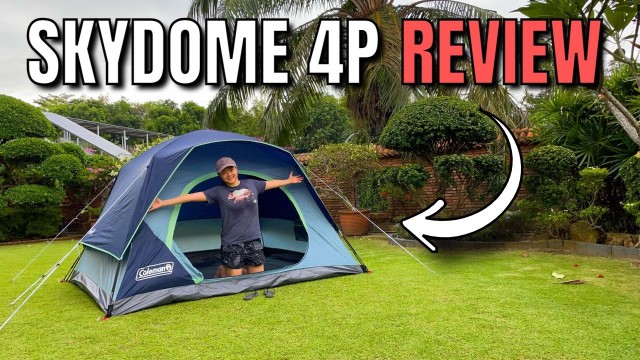
Coleman tents · Guide
Why Are Coleman Tents So Cheap? (REAL Experience!)
I’ve bought 14 Coleman tents with my own money and gone over every one of them. There are four real reasons the price is this low, and one honest catch.
- 14 tents bought
- $50 my cheapest
- 4 reasons
- ~4 min read
This page contains affiliate links, and that means that I may earn a commission if you buy something, at no extra cost to you. You can find my full disclosure policy here.
Jump to a section
Four reasons, short version
Cheaper materials
Polyethylene floors, 68D bodies and thin fiberglass poles: the least expensive options in every category.
The specs ↓Part 1 of 5
Coleman uses the cheapest option in every category
Coleman tents are not made of top-of-the-line materials, and that’s the biggest single reason for the price. Here’s the same three parts, Coleman versus a higher-end tent:
| Part | Coleman | REI Co-Op / North Face |
|---|---|---|
| Flooring | Polyethylene (tarp material) | 150D polyester |
| Tent body | 68D polyester | Thicker polyester |
| Poles | Fiberglass, on the thin side | Aluminum, sometimes DAC |
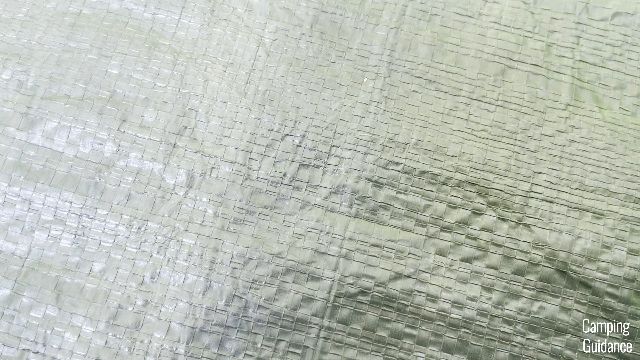
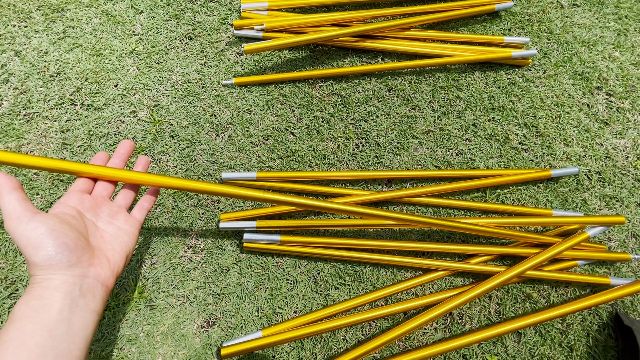
Polyethylene is about the least expensive flooring material any tent can use, and fiberglass is the same story for poles.
Part 2 of 5
The design shortcuts nobody mentions
It isn’t only materials. Small design decisions save money too, and you notice them once you’ve set up enough tents.
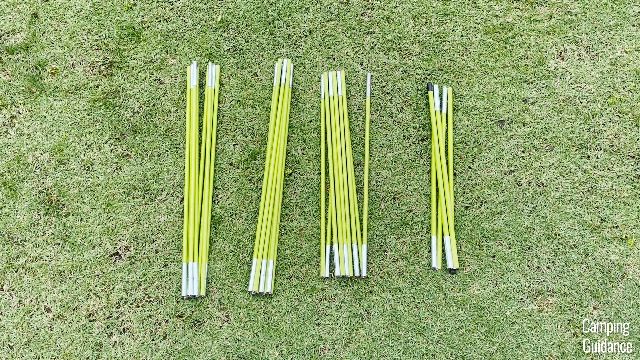
- No colour-codingHigher-end tents colour-code the body poles, screen-room pole and rainfly pole. On my Carlsbad, every single pole is green. Making them all one colour is cheaper.
- Seams aren’t factory tapedColeman’s WeatherTec system uses inverted seams, which held out heavy rain for 15-30 minutes in my hose tests. My REI and North Face tents are 100% factory taped instead. If you expect prolonged heavy rain in a Coleman, you buy seam sealant and tape the inside yourself.
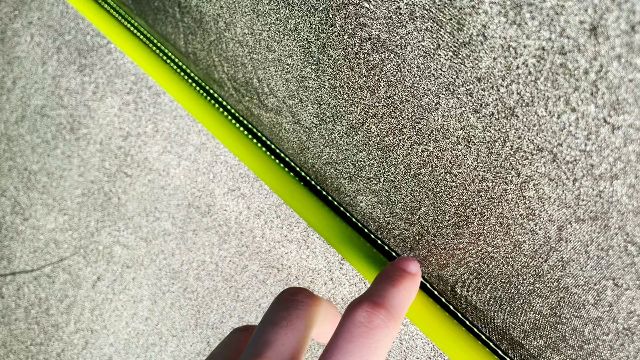
What this costs youInverted seams are the reason a Coleman starts to weep after about 15 minutes of heavy rain.
Part 3 of 5
Where Coleman tents are actually made
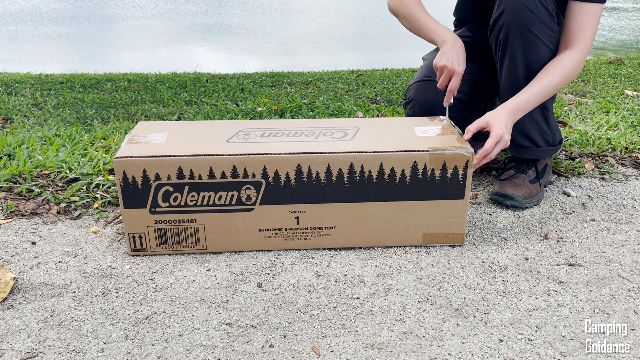
I checked the outer cardboard packaging on all 14 of mine as they arrived. They’re made in China. One went further and said “Made in China” but “Cut and sewn in Bangladesh”.
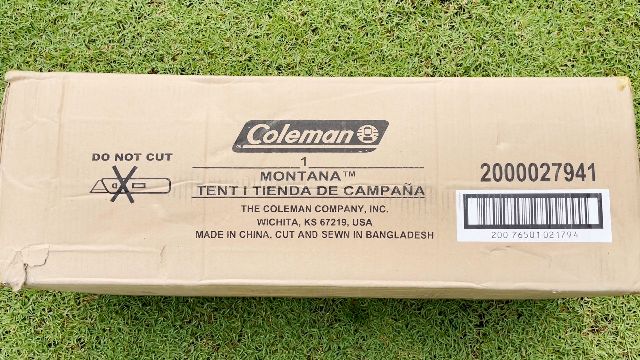
Labour in China and Bangladesh costs far less than labour in the United States. Some campers are put off by that; it’s also a straight answer to why the tent costs what it costs.
Part 4 of 5
A century of scale, and parts shared between tents
Coleman was founded in 1900, so they’ve had 120-odd years to build out suppliers and volume. Two things I can see from my own shelf:
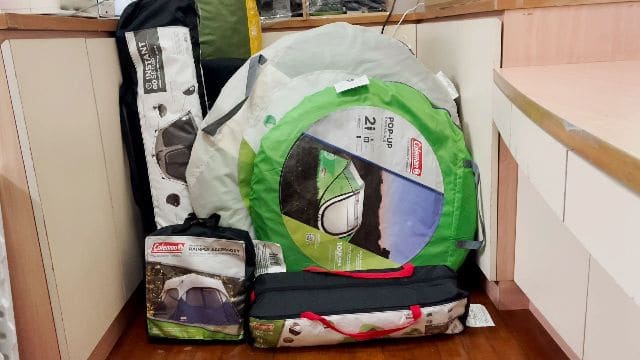
- Enormous rangeDozens of tents, and dozens of options for lanterns, sleeping bags, everything else. I own 14 tents and I’ve barely started.
- Shared partsMy Carlsbad’s poles and my Dark Room Sundome’s poles look practically identical. Manufacturing one part for several products is a real saving, and it lands in the price.
- Global availabilityI live in Singapore. Brands like The North Face and Marmot often won’t ship here at all. Coleman I can buy on Amazon, or walk into an outdoor shop and pick up. That reach is volume, and volume is cheap.
- Constant discountsColeman runs promotions often, and Amazon prices are usually the most competitive you’ll find anywhere.
Part 5 of 5
So what does “cheap” actually get you?
$50what I paid for my Sundome 2, a tent that fits a queen bed, with decent rain protection and decent ventilation.
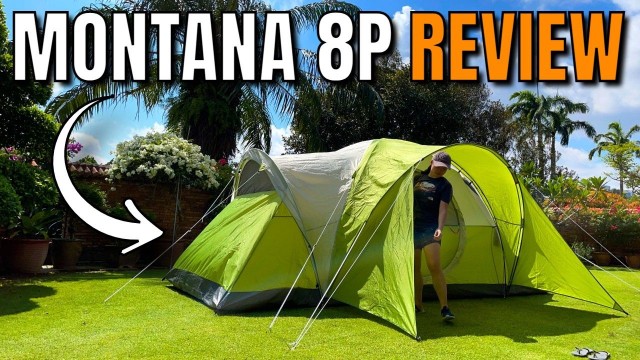
One of my YouTube viewers found a Sundome 2 for $23. My Montana 8 sleeps 8 (or three queen beds) and cost me about $150. The mid-range ones (WeatherMaster 10, Instant Cabin 10) run $250-300, and you get hinged doors and steel poles for it. You do get what you pay for.
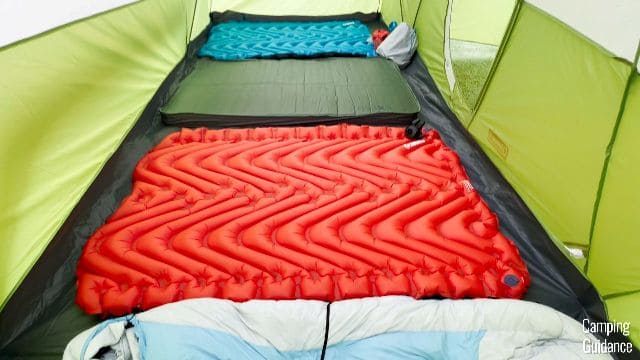
And cheap doesn’t have to mean bare. My Dark Room Sundome 6 cost $100 and still gave me the dark room fabric, room for 6, and a 6-foot peak height I can stand under. A great budget tent for the money.
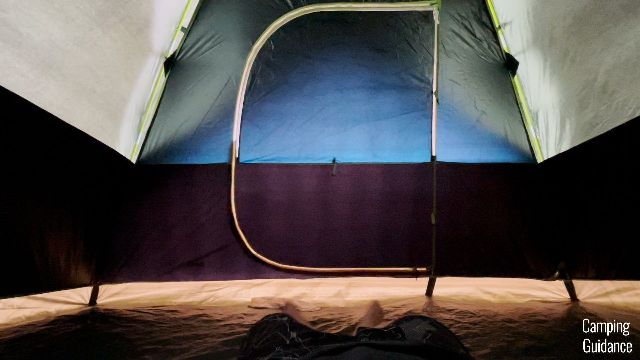
My adviceThe honest catch: Coleman tents are fair-weather tents. They’re not for strong winds, serious storms or deep winter. That’s what a performance tent like the REI Base Camp is for. Looked after, though, a Coleman will run at least 5 years. Some of mine are at 4 and counting.
The bottom line
Cheap materials, a few design shortcuts, low-cost manufacturing, and 120 years of scale. None of it is a con. You’re buying a decent fair-weather tent at a price nobody else matches. Just don’t take one into a storm. See which one I’d actually buy →
Quick questions
FAQ
Are Coleman tents made in China?
Yes. The packaging on all 14 of mine said made in China, and one added “cut and sewn in Bangladesh”. Lower labour costs there are one of the reasons the tents are so affordable.
Are cheap Coleman tents any good?
For the money, yes. I find the quality decent and I’d recommend them on a budget. Looked after, a Coleman lasts at least 5 years. They are fair-weather tents though: not for strong winds, storms, or deep winter.
What’s the cheapest Coleman tent?
The cheapest one I own is the Sundome 2 at around $50, and a viewer of mine found one for $23. It fits a queen bed and has decent rain protection and ventilation.
Keep going
Where to next
The materials
What Are Coleman Tents Made Of?
Every denier rating, coating and pole material, measured off my own 14.
The verdict
What 14 tents and 4 years actually taught me about the brand.
Every figure on this page comes from the 14 Coleman tents I bought with my own money.