Tents under $100 · Vs review
ALPS Mountaineering Lynx 1-Person V.S. 2-Person Tent (I Bought & Tested Both!)
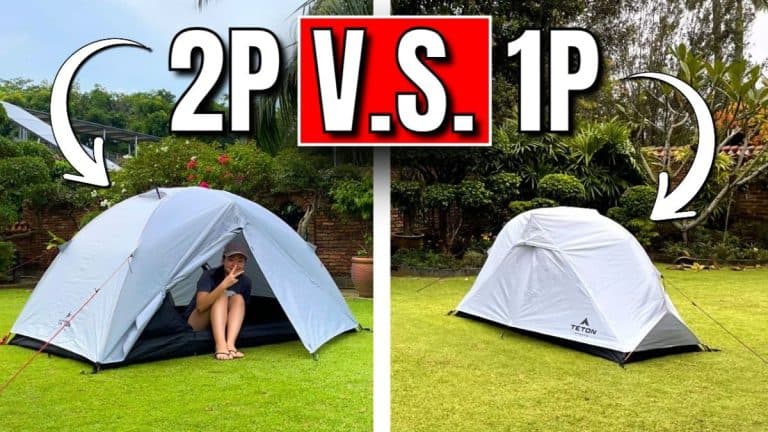
Two budget backpacking tents, side by side in my yard, across 9 head-to-head tests.
This page contains affiliate links, and that means that I may earn a commission if you buy something, at no extra cost to you. You can find my full disclosure policy here.


The short answer
Take the Lynx 2 unless weight, packed size or the extra $20 to $30 is the problem. Ten inches more headroom, double the floor, double the vestibule.
The Lynx 2 has a 47-inch peak height against 37, 36.5 square feet of floor against 18.9, and 19.2 square feet of vestibule against 8.5. And it is the one whose rainfly I can pull 11 inches off the tent body instead of 2.5. The Lynx 1 answers on exactly the three things that would change my mind: 4.0 lbs against 6.0, a 19.5 by 7 by 5 inch pack, and about $20 to $30 off the price. Unless weight, packed size or budget is the deciding factor, the 2-Person is the one I'd buy.
Side by side
Where they actually differ
| Measured | Lynx 1 | Lynx 2 |
|---|---|---|
| Set up (1 person) | 4.5-5 minutes | 6.5 minutes |
| Pole clips | 13 | 17 |
| Guylines | 5 | 6 |
| Peak height | 37 inches | 47 inches10 inches more |
| Base dimensions | 88 × 31 inches | 89 × 59 inches |
| Base area | 18.9 sq ft | 36.5 sq ftNearly double |
| What fits inside | An extra-wide pad, 25-30 inches | 2 regular pads, or an 80 × 56 inch airbed |
| Thickest mattress I'd use | 3-4 inches | 6 inches |
| Vestibules | 1 | 2One at each length |
| Vestibule width (longest) | 28 inches | 31 inches |
| Vestibule area | 8.5 sq ft | 19.2 sq ft9.6 sq ft each |
| Doors | 1 | 2 |
| Door size | 36 × 27 inches | 41 × 39 inches |
| Gear loft | 12 × 6 inches | 21 × 12 inches |
| Rainfly pulled off the body at the widths | 2.5 inchesNo stake loop | 11 inchesWith my own guylines |
| Mesh | About 40% | About 30%, maybe less |
| Cross ventilation | No, one door | Yes, 2 doors |
| Weight (everything in the box) | 4.0 lbs | 6.0 lbs50% more |
| Packed size | 19.5 × 7 × 5 inches | 22 × 8 × 7.5 inchesNearly double the volume, 10-15% longer |
| Price | About $20-30 less | About $20-30 more |
✓ = the better result, from my own testing. Shared: both bought myself · both pitch on 2 orange poles crossing over, into corner grommets and pole clips, with the rainfly on quick-attach buckles · both have 2 pre-attached pockets and 1 lantern loop · neither takes a full 80 by 60 inch queen.
Which applies to you?
Get this one if…
Get the Lynx 1 if…
- Weight is the deciding factor: 4.0 lbs against 6.0.
- Packed size is the deciding factor: 19.5 by 7 by 5 inches against 22 by 8 by 7.5.
- Budget is the deciding factor: it is about $20 to $30 less.
- Just know what you give up: 10 inches of headroom, so a pad of 3 to 4 inches is the ceiling, plus half the floor, half the vestibule and one door.
Get the Lynx 2 if…
- You don't usually camp alone: 36.5 square feet takes 2 pads, or an almost-queen airbed.
- You want the headroom. 47 inches against 37 is a huge difference. I fit a 6-inch mattress and could crouch inside to deflate it.
- You want the storage outside the tent: 19.2 square feet of vestibule against 8.5, across 2 of them.
- You want 2 doors at 41 by 39 inches, for getting in and out and for cross ventilation in summer.
- You want to guy the rainfly out all round: 11 inches off the tent body at the widths, against 2.5.


Set Up
| Measured | Lynx 1 | Lynx 2 |
|---|---|---|
| Set up (1 person) | 4.5-5 minutes | 6.5 minutes |
| Poles | 2 | 2 |
| Pole clips | 13 | 17 |
| Guylines | 5 | 6 |
| Rainfly vents to set | 0 extra | 2 extra at the bottom |
Same tent to pitch, both of them: 2 orange poles crossing over each other, into the grommets at the corners and then the pole clips on the body, and the rainfly goes on with quick-attach buckles.
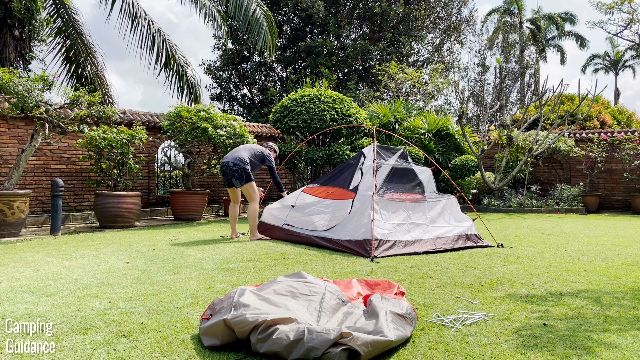
The 2-Person just has more of everything to do: a bigger rainfly, 4 more pole clips, a second vestibule and 2 extra rainfly vents at the bottom. That comes out as 6.5 minutes against 4.5 to 5.
Peak Height
| Measured | Lynx 1 | Lynx 2 |
|---|---|---|
| Peak height | 37 inches | 47 inches10 inches more |
| Thickest mattress I'd use | 3-4 inches | 6 inches |
| Can I crouch inside? | No | Yes, enough to deflate a pad |
Ten inches, and that is a huge difference on a tent this size. The Lynx 2 was so roomy that a 4-inch pad left plenty of headroom and even a 6-inch mattress left lots. When I was deflating both pads I could crouch inside with no trouble at all.

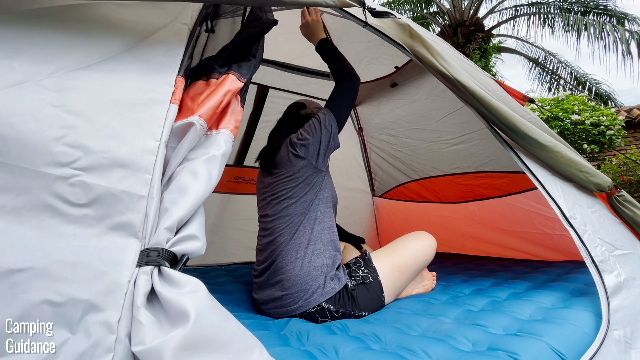
In the Lynx 1 I would keep the pad to 3 or 4 inches. If you are 6 feet or taller, go thinner still, something like my 1.5-inch Sea to Summit pad, so it doesn't eat into your livable space.
Base Area & What Fits
| Measured | Lynx 1 | Lynx 2 |
|---|---|---|
| Base dimensions | 88 × 31 inches | 89 × 59 inches |
| Base area | 18.9 sq ft | 36.5 sq ftNearly double |
| What fits | An extra-wide pad, 25-30 inches | 2 regular pads, or an 80 × 56 inch airbed |
| A true queen (80 × 60 in) | No | No |
Same length within an inch, 88 against 89, and then the width goes from 31 inches to 59, which is slightly less than double. In square feet that is 18.9 against 36.5.
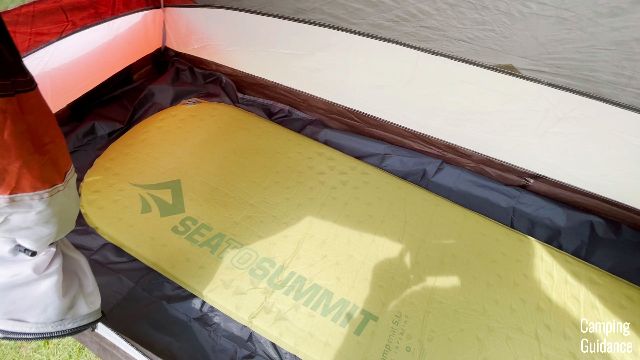
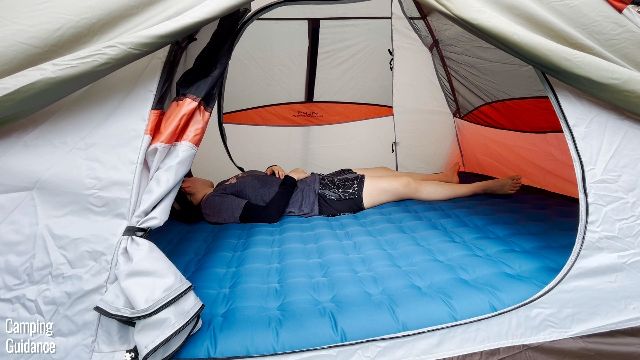
The Lynx 1 takes an extra-wide pad of 25 inches, or 30 at a push. The Lynx 2 takes 2 regular pads with plenty of space left, and it took my ALPS Vertex Airbed, which measures 80 by 56 inches, perfectly. A full queen at 80 by 60 won't squeeze in. The width isn't there.
Vestibules & Doors
| Measured | Lynx 1 | Lynx 2 |
|---|---|---|
| Vestibules | 1 | 2One at each length |
| Vestibule width (longest) | 28 inches | 31 inches |
| Vestibule area | 8.5 sq ft | 19.2 sq ft9.6 sq ft each |
| Doors | 1Same side as the vestibule | 2One at each length |
| Door size | 36 × 27 inches | 41 × 39 inches |
One vestibule on the Lynx 1, 28 inches at its widest, 8.5 square feet. Two on the Lynx 2, 31 inches each, 9.6 square feet each, a whole square foot more per side, and 19.2 square feet once you count both.


The doors go the same way. The Lynx 1 has one, on the vestibule side, at 36 by 27 inches, which is not big. The Lynx 2 has two identical ones, one at each length, at 41 by 39 inches.
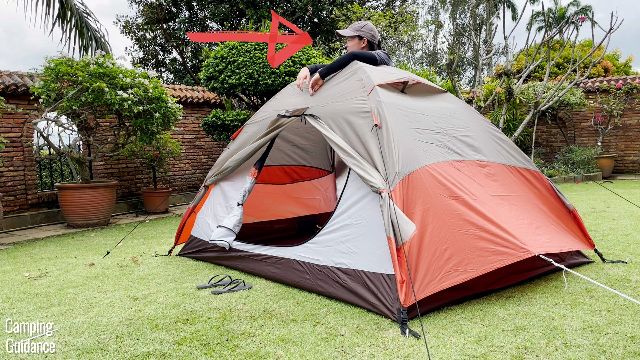
That, plus the peak height, is why getting in and out of the Lynx 2 is so much easier. And I am not tall.
Storage
| Measured | Lynx 1 | Lynx 2 |
|---|---|---|
| Pre-attached pockets | 2, 9 × 6 inches | 2, 9 × 7 inches |
| Extra pocket / gear loft | Removable, 12 × 6 inches | 21 × 12 inches |
| Lantern loops | 1 | 1 |
I expected the Lynx 2 to have double the storage. It doesn't. Both have 2 pre-attached pockets inside (9 by 6 inches on the Lynx 1, 9 by 7 on the Lynx 2) and both have exactly one lantern loop at the top.


The one real difference is the loft. The Lynx 1's removable side pocket is 12 by 6 inches; the Lynx 2's gear loft is 21 by 12. That’s a decent step up, so it counts for something, but the storage is basically the same tent twice.
Rainfly
| Measured | Lynx 1 | Lynx 2 |
|---|---|---|
| Stake loop at the widths | None | I attached my own guylines |
| Rainfly pulled off the body at the widths | 2.5 inches | 11 inches |
| Pulled away at the back | Yes, guyline there | Yes |
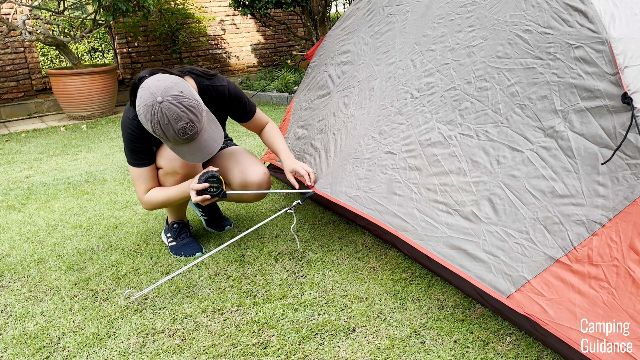
What I look for in a rainfly is whether it can be pulled away from the tent body on all 4 sides. The Lynx 1 can't do it at the 2 short widths: there’s no stake loop to guy it out, so the fly sits at most 2.5 inches off the body. The vestibule pulls away at the front and there’s a guyline at the back, so it’s those 2 sides only.


On the Lynx 2 I attached my own guylines and guyed the widths out, which gave me a small vent at each one, about 11 inches off the tent body. That’s much better for rainy-day ventilation and for keeping condensation down.
Mesh & Summer Ventilation
| Measured | Lynx 1 | Lynx 2 |
|---|---|---|
| Mesh | About 40%Back and sides about half mesh | About 30%, maybe lessOnly the sides |
| Doors | 1 | 2 |
| Cross ventilation | No | Yes, leave both doors open |
| In summer | A lot stuffier | Manageable |
Here’s the odd part: there’s actually more mesh on the 1-Person. Its front is mostly fabric, but the back and sides are about half mesh, so I’d put it around 40%. On the 2-Person, the 2 doors mean the front and back are almost all fabric and only the sides have much mesh. I’d guess 30% or less.

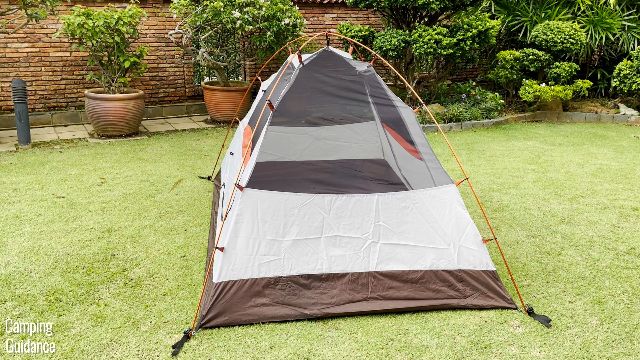
In practice the 2-Person still wins, because of those doors. In summer, if the bugs aren't bad, you can leave both open and get real cross ventilation through the tent. The 1-Person has no way to do that, so it’s a lot stuffier in the heat.
Weight & Packed Size
| Measured | Lynx 1 | Lynx 2 |
|---|---|---|
| Weight (everything in the box) | 4.0 lbs | 6.0 lbs50% more |
| Packed size | 19.5 × 7 × 5 inches | 22 × 8 × 7.5 inchesNearly double the volume, 10-15% longer |
Exactly 4.0 lbs against exactly 6.0, for everything that came in the box: stakes, guylines, all of it. I didn't swap anything out. Packed, the Lynx 2 is nearly double the volume on paper, but it really doesn't look it: only about 10 to 15% longer.

Price
| Measured | Lynx 1 | Lynx 2 |
|---|---|---|
| Price | About $20-30 less | About $20-30 more |
I bought both of these a while ago and can't remember exactly what I paid, but checking Amazon now, the 2-Person runs about $20 to $30 more than the 1-Person. Teton's budget pair splits the same way, and my Mountain Ultra 1 vs 2 comparison lands on the same rule.
My recommendation
Both Lynx tents are great, especially for the price point they sit at. My rule with these two: the ALPS Mountaineering Lynx 2 unless weight, packed size or budget is the deciding factor. I don't usually camp alone, so the option to fit 2 pads or an almost-queen airbed matters; the 10 inches of extra headroom adds a lot of comfort and lets me use a 6-inch mattress; and there’s an extra vestibule, bigger vestibules, an extra door and bigger doors, which brings cross ventilation with them.
The one that really sold me is the rainfly: on the Lynx 2 I can guy it out all the way round the tent, 11 inches off the body at the widths instead of 2.5. I love car camping, so taking on 50% more weight and 15% more length is no issue to me, and at about $30 more I’d spring for it every time. Yes, it takes about 2 minutes longer to pitch. For that much more comfort, that’s worth it.
That said, if weight, packed size or the $20 to $30 is what decides it (camping alone and carrying it on the trail), the Lynx 1 is still a fantastic pick and still great bang for your buck.
Bonus: I bought and tested 6 of the best tents under $100 against each other. Set-up timings, rain tests, base areas, the lot. Every figure on this page comes out of that run.
Every figure on this page comes from my own measurements of the tents I bought and tested in my own yard, not from a spec sheet.