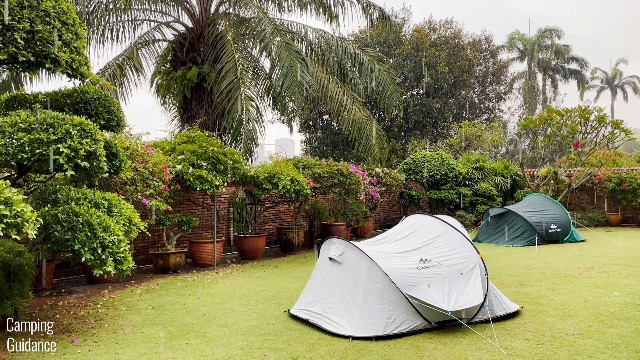
Pop up tents · Review
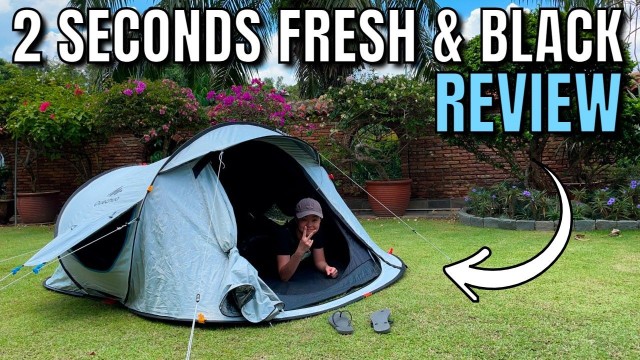
Decathlon Quechua 2 Seconds Fresh & Black Tent Review (Bought & Tested!)
I bought this tent with my own money and put it through 12 hands-on tests.
- Setup 3 min
- Peak 38in
- Base area 28.7 sq ft
- Weight 7.2 lbs
This page contains affiliate links, and that means that I may earn a commission if you buy something, at no extra cost to you. You can find my full disclosure policy here.
Test scorecard · scored against pop up tents
The Quechua 2 Seconds Fresh & Black Tent is an incredibly feature-packed pop-up tent. It’s storm proof, protects against the sun, has plenty of ventilation, and is pretty inexpensive. One of its few cons is that the blackout fabric will degrade after years of use; mine did.
- Stormproof
- Full coverage rainfly
- 7 guy-out points
- Great ventilation
- Blackout feature
- High quality
- Inexpensive
- Base area not very big
- Blackout fabric can degrade after lots of use
If you prefer watching to reading, check out my video here instead.
See the 12 tests
In the Box
I bought this one in-store from Decathlon. The tent body arrives with its rainfly and poles already attached, inside the carry bag.
- Poles Pre-attachedfiberglass, built into the tent
- Rainfly Pre-attachedwhite, full coverage
- Stakes 9
- Guylines 5 providednot pre-attached, and the tent has 7 guy-out points
Set Up & Take Down
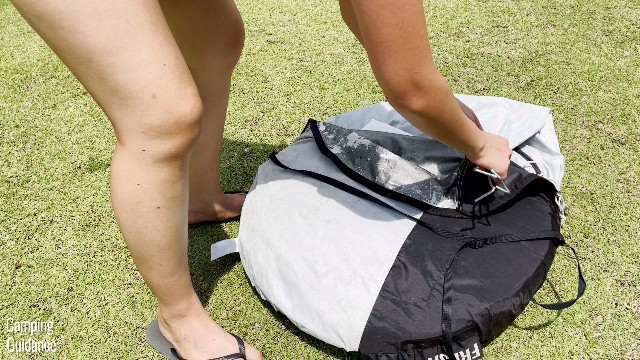
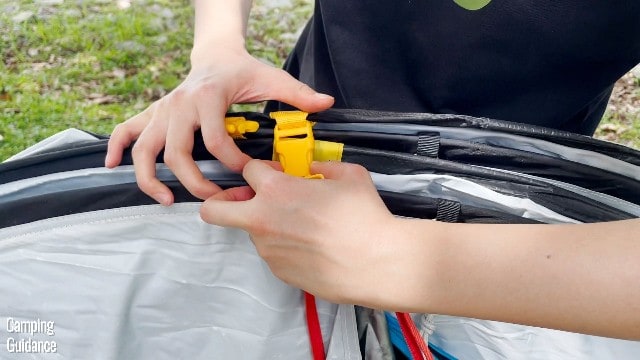
Unzip the carry bag, take the tent out, and slide it out of the yellow strap. It opens into a bigger circle.
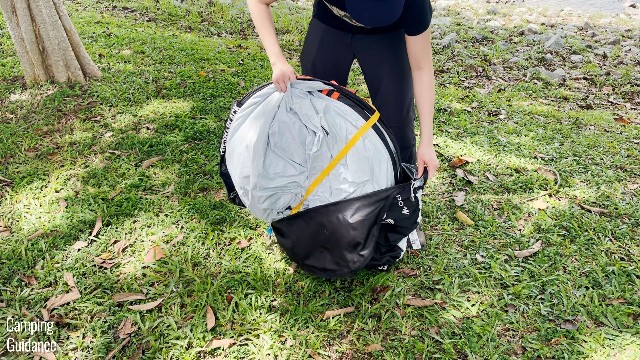
Undo the 2 red buckles, turn the tent 180 degrees, undo the 2 yellow buckles, then unfold it. It pops up quite intuitively by itself, and that part takes just 30 seconds.
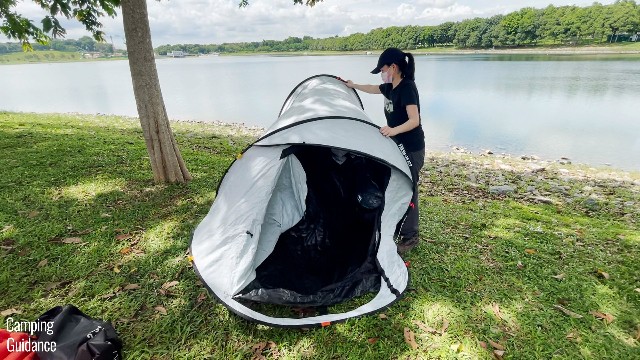
- Pop up (no staking) 1 min
- Full set-up (with staking) 3 min
- Take down (no staking) 2.5 min
- Take down (with staking) 3 min
- Stake loops 42 at the front, 2 at the back
Zip both the white door and the black window shut before you stake it down, so they still open easily afterwards. Then guy it out: 3 loops at the back, 4 at the front, though Decathlon only gives you 5 guylines for 7 points.
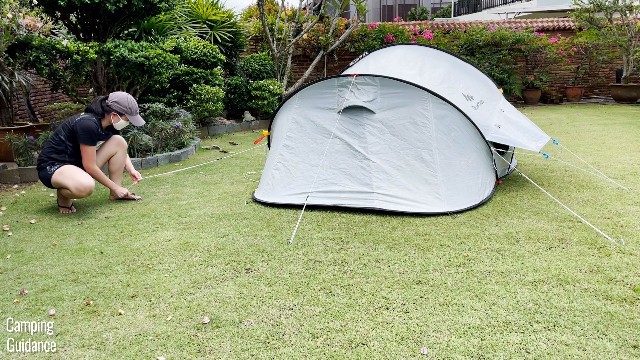
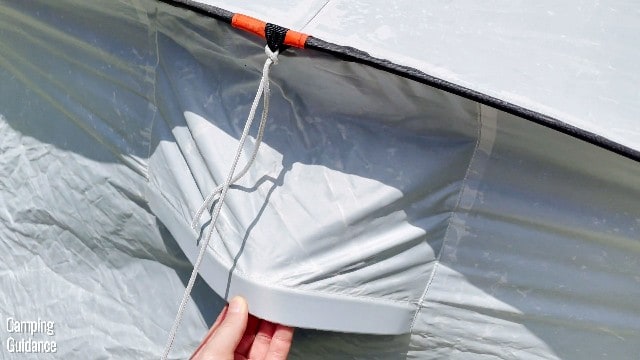
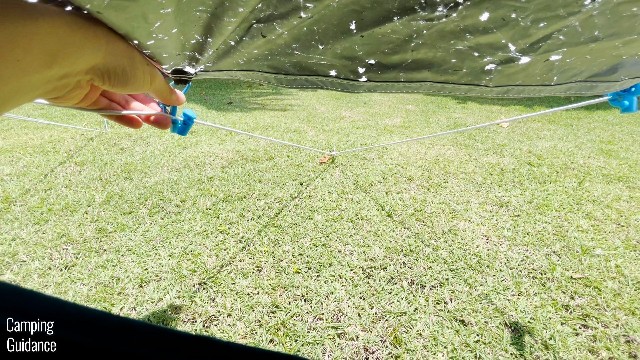
The 2 side vents get staked out too. Each has a loop already tied for you to drive a stake through, and 2 S-hooks that clip onto the guylines. Staking and guying the whole tent, vents included, takes about 2 and a half minutes, so 3 minutes all in if you leave the guylines attached.
Pack-up is the same guided routine as the regular 2 Seconds. Stakes out, each vent’s S-hooks clipped back onto the poles and its guyline tied off at the black latch, doors unzipped, then reach inside for the red buckle at the back and pull. Pick it up, fasten the red pair, flip it, fasten the yellow pair, then grab the red strap and push the body down into a figure 8.
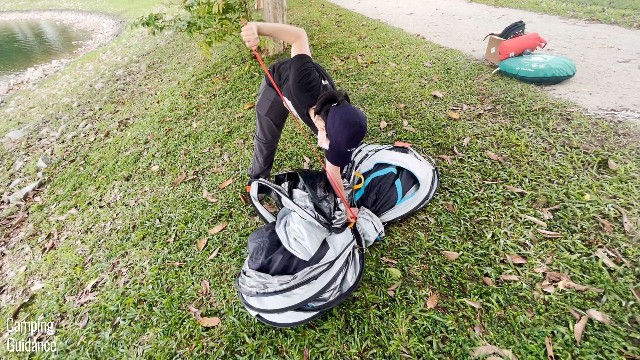
Fold that in half, yellow strap back across, into the bag. 1 minute for the stakes and vents, 2 minutes for the tent itself, so about 3 minutes.
It’s easier to watch than to read: here’s my set up and take down video.
Peak Height
- Peak height 38inat the front of the tent
- Lowest height 29inat the back
- Max pad thickness 2.4inDecathlon’s own recommendation
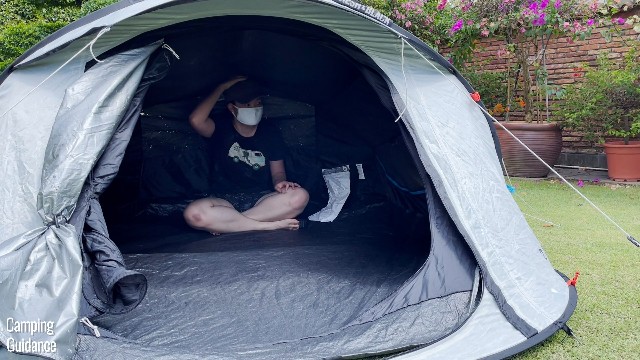
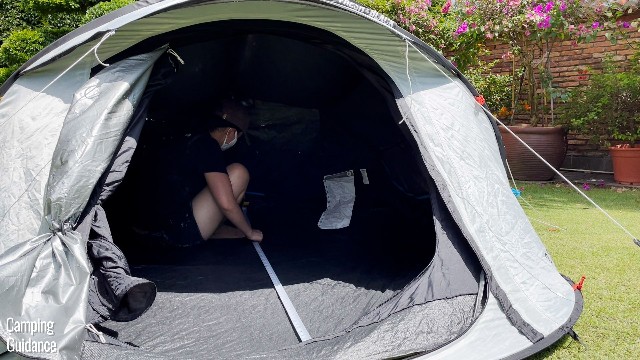
With nothing on the floor I can sit upright at the front without my head touching the top.

At the back it touches, even with no mattress in.
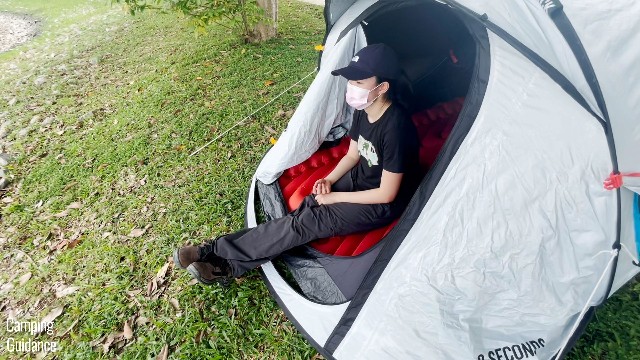
A Klymit Double V with 2.5 inches of loft didn’t cost too much livable space, and I could still sit up everywhere inside.
Base Area
- Length 81in / 6.75ft
- Width 51in / 4.25ft
- Base area 28.7 sq ft
That Klymit (74 x 47in) is only slightly bigger than 2 regular pads put together, so it fit perfectly.
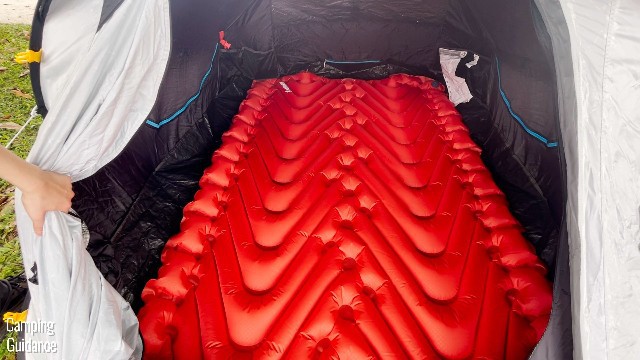
- Single sleeping pads 2
- Full and queen mattresses None
A full-sized Coleman mattress (73 x 53in) is too wide. I tried it in my other Quechua Regular (not the Fresh and Black) and it bulged out the side, because the width is too narrow. Full and queen mattresses won’t fit inside here.
Doors
- Doors 1a white outer door over a black inner panel
- Door size 38 x 39in
Windows
- Windows 1the black inner panel, zipped shut
- Window size 33 x 11in
- Zippers 2 per paneleach one opens from the inside and the outside
If it gets a bit stuffy and you don’t want the door open, zip up the black inner fabric instead and that leaves you a small window. To zip the door up from inside, you have to unzip the window first.
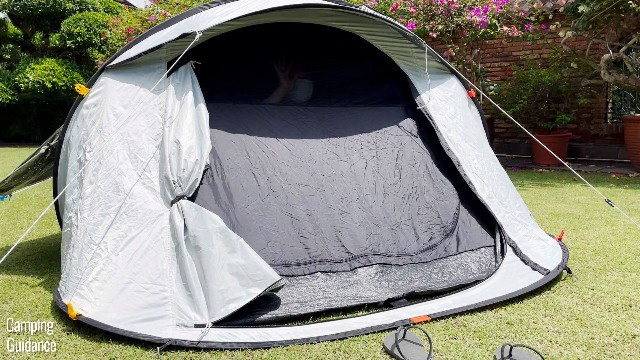
Storage
- Pockets 221 x 8in each, and each one is split into 2
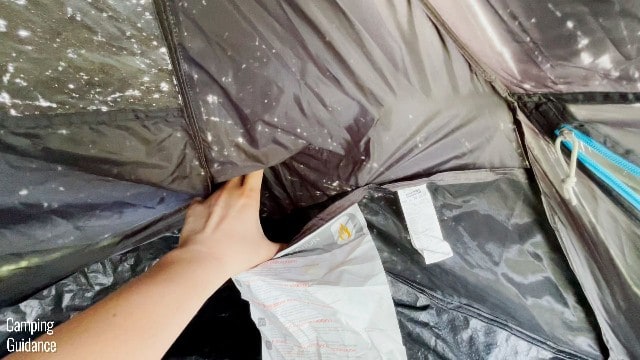
- Lantern loops 1at the back of the tent
- Gear lofts None
- E-port No
The lantern loop takes something small like a Black Diamond Moji.
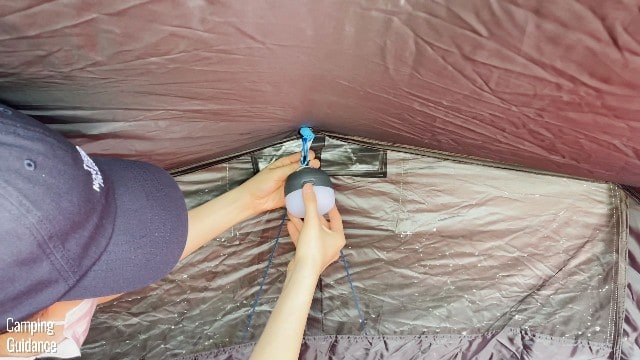
Blackout
- Blackout fabric Yespatented Fresh and Black
- UV protection SPF 50+
The blackout fabric blocks out a significant amount of sunlight during the day, and it keeps you cooler in the tent than a regular tent without it.
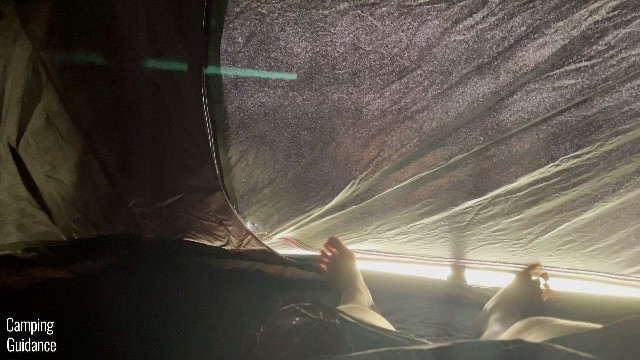
Ventilation & Condensation
- Vents 31 small rear vent, 2 large side vents
- Rainfly gaps 2under the side vents, for more breathability
- Rear zip 1opens for a bit of fresh air from outside
The rear vent is really quite tiny. Unbuckle the blue buckle inside that rear zip and you can pull a blue string near the lantern loop to lift the rainfly off the ground for a bit more air at the back.
The 2 side vents are the real story, one on each length, and they’re huge. Fully open for maximum ventilation…
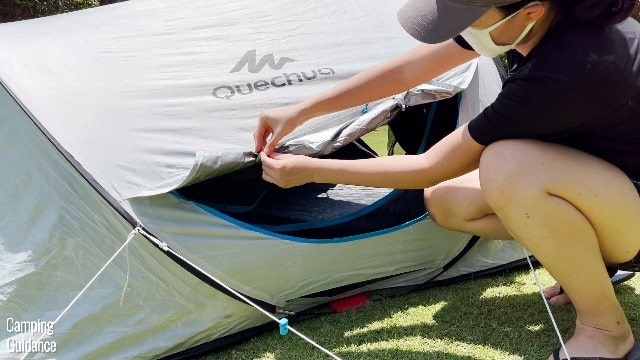
…completely closed, by hooking each vent’s 2 S-hooks onto the fiberglass poles…
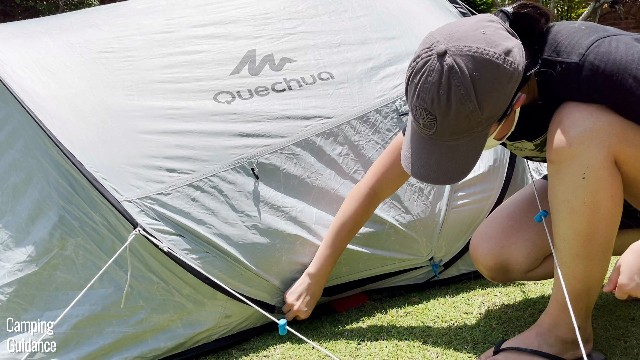
…or partially open, hooked onto the 2 guylines instead. The mesh behind them opens and closes separately with a blue zip, and there’s a latch to tie that fabric up.
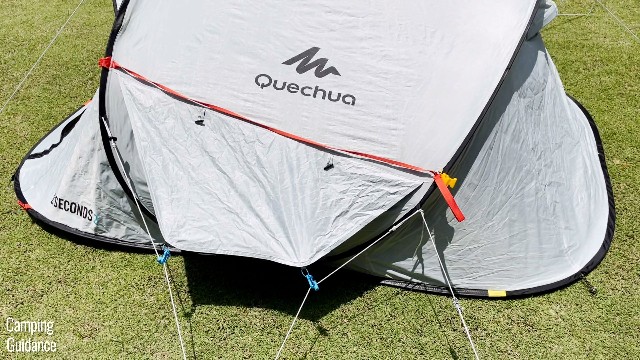
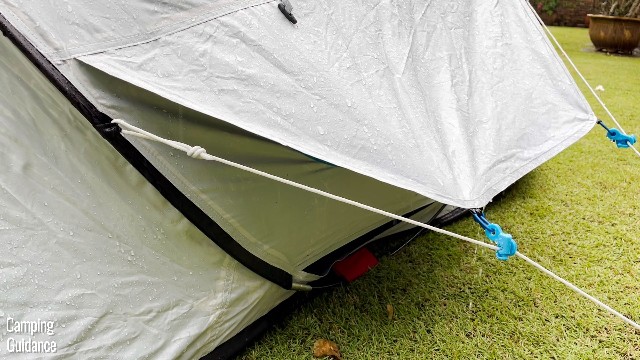
I really like the design of these guylines, because the loop is already tied for you to stake down, and the blue adjusters pull each vent as taut as possible. What I like even more is that I can unhook and re-hook the S-hooks from inside the tent. The design is phenomenal and very user-friendly.
On rainy days the outer white door has to close completely, and the rainfly has to be fully protecting the inner body. But I could still leave both large vents partially open with no leaking, and nothing came through the small rear vent or the 2 rainfly gaps either.
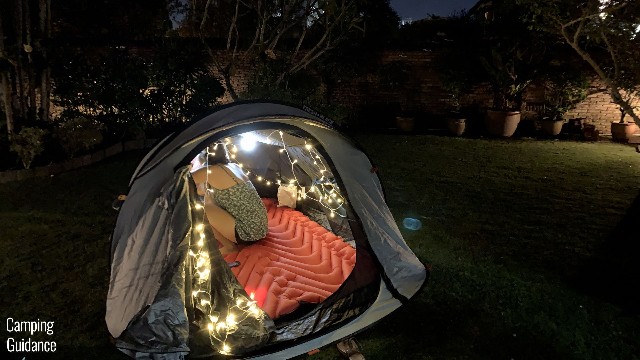
For condensation I slept in it on my own overnight with the white outer door and black inner window closed, leaving the 2 ground vents completely open. It was quite cool during the night and I didn’t notice any condensation at all when I woke up.
Rain & Wind Protection
- Rainfly 2,000mmpolyester, full coverage, every seam factory taped
- Flooring 5,000mmpolyethylene
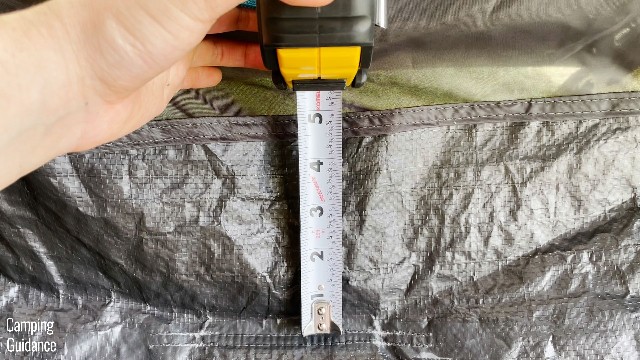
- Bathtub flooring Yes, 5in
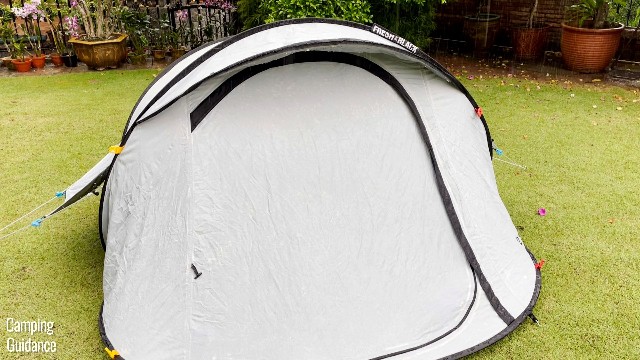
The roof is curved, so water drips down instead of collecting at the top. If you don’t pull the tent taut by guying it out though, a little does pool up there.

Guyed out properly, nothing pools. And the bathtub feature extends about 5 inches up, which I found especially useful in minor flooding.
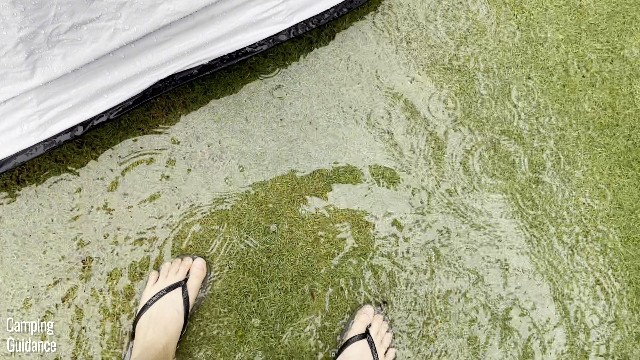
When it rains for many hours my yard partially floods and the tent ends up sitting in about an inch of water. No water leaks in through the flooring itself, which is seriously awesome.
- Rain test, light 1 hrno leaking at all
- Rain test, moderate 1 hrleaked through the degraded floor seam
- Rain test, heavy 3 days
- Body seams Untapedthey sit fully under the rainfly anyway
The floor seams are the weak point. They were factory taped, but they’ve degraded over the years I’ve had this tent.
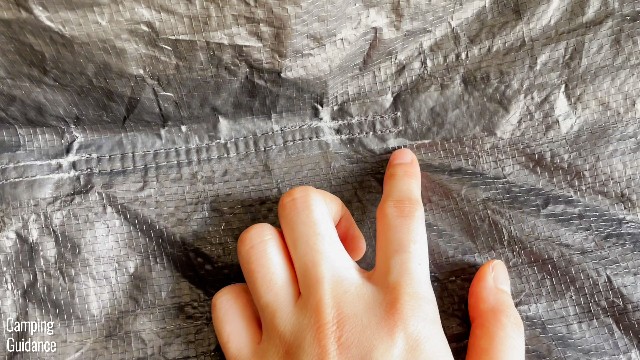
So when there’s flooding, water starts leaking in through the seams near the front. That’s my fault for not re-sealing them, and it’s the most vulnerable part of the tent. The seams at the back weren’t as leaky.

The rest of the tent body was always dry though. From the 1-hour light rain test right through to the 3-day heavy rain test, I never once found the walls or the roof wet, because the full coverage rainfly is just that good. Results like that are why the 3-person version earned its spot among the waterproof tents I recommend for heavy rain.
For wind, there are enough loops for 7 guylines. Fully guyed out it was super stable even when I tried to shake it quite vigorously. I didn’t actually test for wind protection, but I’m pretty sure this tent can take quite a beating.
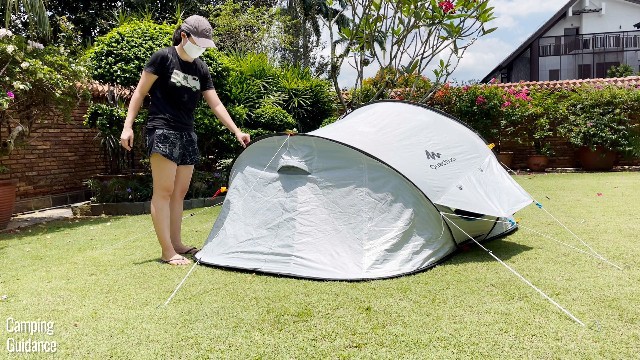
You can watch the rain test on my channel. It covers both of my Quechua 2 Seconds tents.
Quality
- Flooring Polyethylenethick and rugged
- Rainfly Polyesteralso thick and rugged
- Tent body Polyesterquite a bit thinner, but no issues with it
- Stitching Double, consistent
- Zippers Catch-freenot super smooth, but nothing snags
The poles are still going strong after a few years of light use and none have broken on me. The carry bag is polyester with pockets for the stakes and guylines, and the tent has always gone back in without a fight.
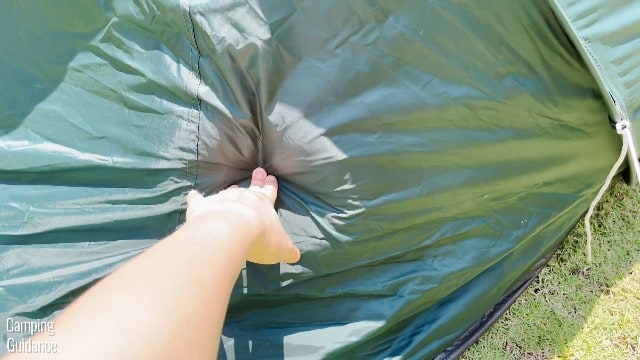
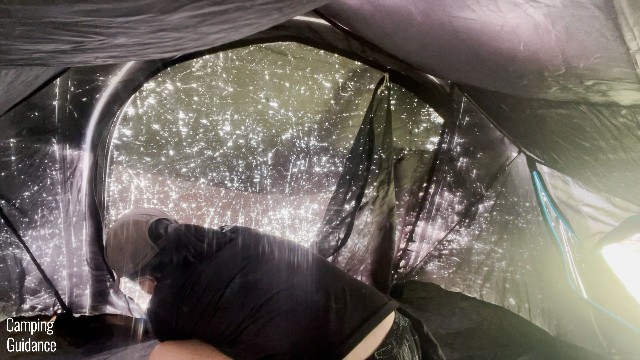
But here are 2 things I wasn’t quite a big fan of. First, after some time of usage the blackout fabric starts fading and showing a few tiny holes. After a few years, mine started flaking.
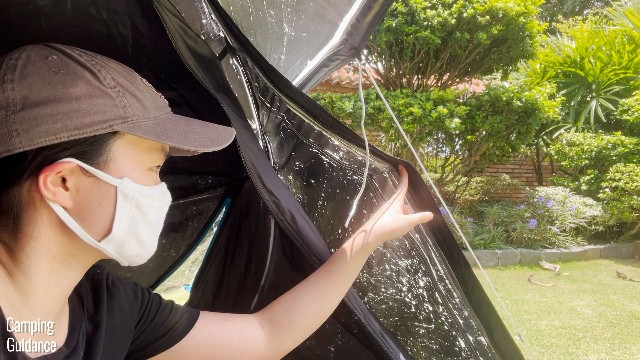
It’s gotten to a point where every time I touch the fabric, it’ll flake off on my hands.
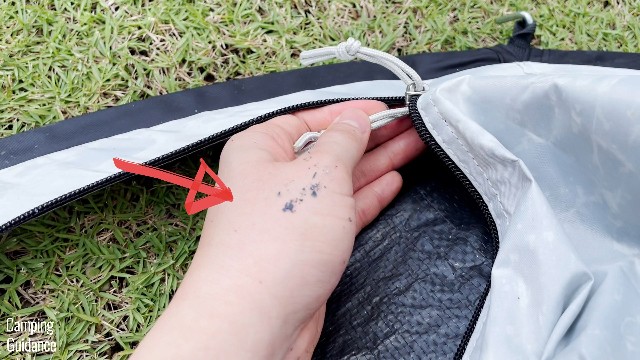
Entire strips of fabric have started to come loose too, especially near the front of the tent at the door area. The tent is still completely functional, of course, but the flaking gets kind of gross after a while. I live in a very humid climate, so I suspect the tent wore out because of that.
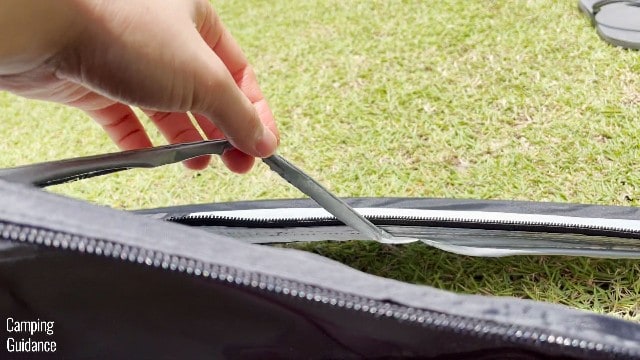
- Blackout fabric Fades and flakesafter a few years in a humid climate
- Carry bag zippers Failedafter a few years of usage
Second, the zippers of the carry bag finally gave way.
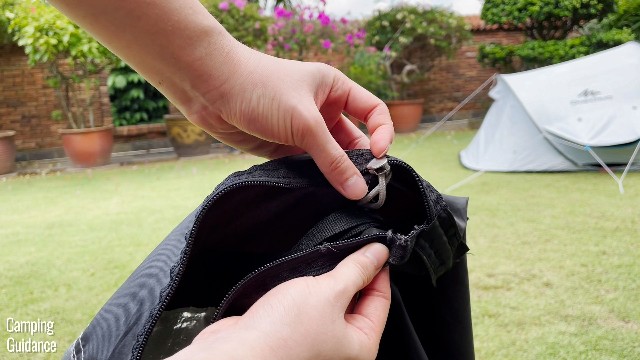
Now it can’t close, and I do have to be careful not to let the tent fall out.

Portability
- Packed size 27 x 27 x 6in
- Weight 7.2 lbsthe tent and carry bag alone, without the stakes
- Straps 1 handle, 1 shoulder strap

That’s it beside a Coleman Sundome 2 and a 32-ounce Nalgene bottle, for scale.
Pros, Cons, Recommendation
So what are the pros and cons, and would I recommend the Quechua 2 Seconds Fresh & Black Tent?
Stormproof
I found this Fresh and Black 2 Seconds Tent great against rain. My tent is quite a few years old, so the seam tape on the flooring had degraded a little and let water in, but it was perfectly fine when I first got it.
Full coverage rainfly
No water leaked through the rainfly into the tent body, not once.
7 guy-out points
When I guyed out the entire tent, it was super stable even when I tried to shake it quite vigorously.
Great ventilation
Another huge benefit of this Fresh and Black 2-Seconds Tent is that there’s plenty of ventilation even on rainy days. These 2 vents are huge.
Blackout feature
It doesn’t exactly block out 99% of sunlight like it’s advertised, but it’s still definitely a lot darker and cooler in this tent than my other pop-up tents.
High quality
I also found the materials high quality.
Inexpensive
And it’s pretty inexpensive for a good quality 2-person pop-up tent.
It takes a little longer to set up and pack up than the regular 2 Seconds Tent
Because you do have to stake out the 2 vents for ventilation. The full set up takes 3 minutes, and the full pack up takes another 3 minutes.
Base area not very big
You can fit only 2 pads with a little leftover space. To be able to fit a full or queen mattress, you have to get the 3-person version instead.
Blackout fabric can degrade after lots of use
Just a reminder that the blackout feature doesn’t last forever. Mine looked like this after a few years of use.
Overall recommendation
Overall, I found this Quechua 2 Seconds Fresh & Black Tent super feature-rich and high quality for a very inexpensive price. If you need a pop-up tent to take you through lots of storms, while shielding you from ridiculously scorching summer days at the same time, this is one of the best pop-up tents for that job.
Bonus: Must Read!
I bought, tested and compared 7 of the best pop up tents on the market in this pop up tent roundup, so if you want to see how this one stacks up, that’s the place to go.
Or, check out the Quechua 2 Seconds Fresh & Black Tent:
Every figure above is from my own testing. Measured by hand, bought with my own money.