Pop up tents · Rain
Are Pop Up Tents Good in Rain? (I Rain Tested All 7)
The good ones are excellent. One of mine survived 3 days of thunderstorms. Another soaked through in 15 minutes.
- 7 tents rain tested
- 3 days longest test
- $0 sponsored
- ~5 min read
This page contains affiliate links, and that means that I may earn a commission if you buy something, at no extra cost to you. You can find my full disclosure policy here.
Jump to a section
The short answer
Yes, if it is a camping tent
Most pop up tents from outdoor brands have the same waterproofing as a regular tent.
What to check ↓Quechua 2 Seconds Fresh & Black
2,000 mm fly, 5,000 mm floor, and it never once let water in.
Why it wins ↓The Coleman Pop Up Tents
Soaked through after 15 minutes of heavy rain, rainfly included.
What went wrong ↓Over the past couple of years I’ve used and thoroughly rain tested 7 different pop up tents, from a one-hour hose test to 3 days of real thunderstorms. The gap between the best and the worst is enormous.
Part 1 of 5
Can you use one in the rain?
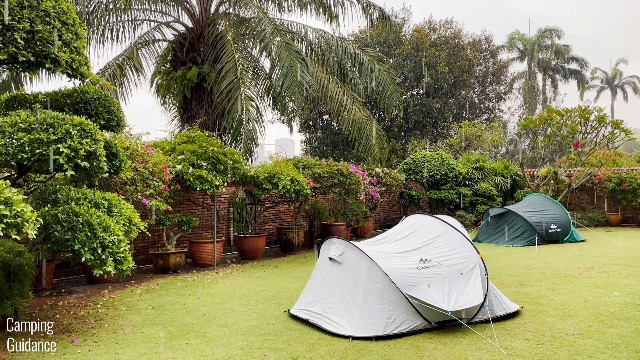
You can, because many pop up tents genuinely are camping tents, with the same waterproofing you’d get on a regular one: bathtub flooring, factory taped seams, a rainfly and a waterproof coating. All 7 of mine are camping tents.
The trap on AmazonPlenty of pop up tents sold there are beach tents or beach shades. They’re far less waterproof and were never meant for camping. Buy from a brand that specializes in outdoor gear and you avoid the whole problem.
Part 2 of 5
Do they leak?
They won’t leak as long as they’re sufficiently waterproof. Four features do most of the work, and they’re the ones I check before buying anything.
- Rainfly coverageThe more of the tent the fly covers, the better. A full coverage fly runs all the way to the ground.
- Bathtub flooringThe floor extends up the sides, so standing water can’t get in underneath. It matters most in a flood.
- Hydrostatic headA 1,000 mm fabric holds off more rain than a 500 mm one.
- Taped seamsThe rainfly seams and any seam exposed to the outside should be factory taped. Interior seams like pockets don’t need it.
Part 3 of 5
How waterproof each brand actually is
This comes down almost entirely to how seriously the brand rain tests. Decathlon do it properly. Coleman, on the evidence of my tents, do not.
| Quechua 2 Seconds | Teton Vista Quick | Coleman Pop Up | |
|---|---|---|---|
| My rain test | Dry through 3 days of storms | Dry after 1 hour of heavy rain | Soaked through in 15 min |
| Rainfly | Full coverage | Almost full, ~2 in gap | Roof mesh only |
| Flysheet rating | 2,000 mm PU-coated polyester | Not measured | Not measured |
| Flooring | Bathtub polyethylene, 5,000 mm | Bathtub polyester (2-Person only) | No bathtub |
| Seams | Thermobonded, taped | Factory taped | Taped, but poorly applied |
| Groundsheet | 120 g/sqm polyethylene | Not measured | Not measured |
Decathlon validate every Quechua tent in a lab under 200 L/hour for 3 hours, plus field testing. I ran the regular 2 Seconds through 3 days of afternoon thunderstorms, about 3 hours of rain a day.
It came through remarkably dry. The only water was a few drops at a back corner seam, and that was the factory tape degrading with age rather than a design fault.
- Quechua reviewsthe regular 2 Seconds · the Fresh & Black
- Teton reviewsVista Quick 1-Person · Vista Quick 2-Person
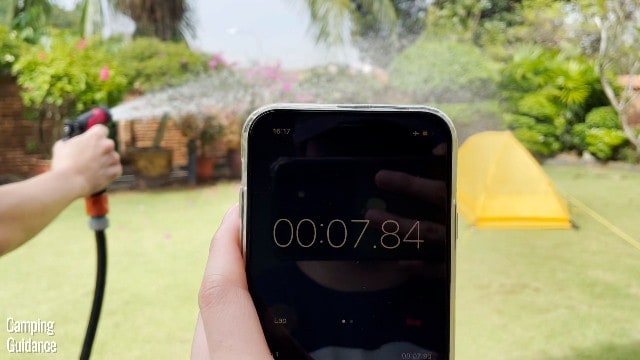
The Tetons sit in the middle. I gave the 1-Person 1 hour of non-stop heavy rain and the inside stayed completely dry, but the rainfly was already dampening at the hour mark. I’d call 1 to 2 hours their limit.
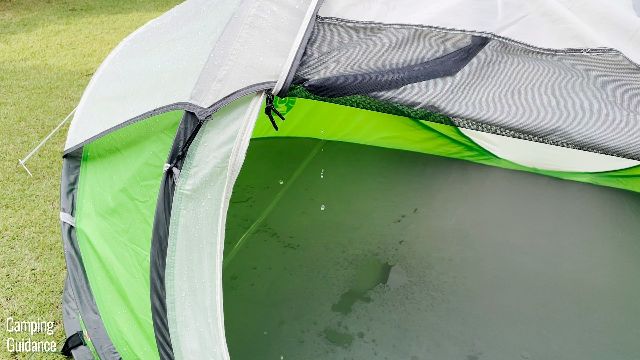
The Colemans were the worst by a distance. The whole tent was soaked after 15 minutes of heavy rain, rainfly included, and there are four reasons why.
- Tiny rainflyIt covers the roof mesh and nothing else.
- No bathtub floorSo sitting in a puddle means water comes in.
- Poor seam tapeNot applied as well as I expected, so water gets through the seam holes.
- The door designEven if the door doesn’t droop inward, water trapped in it runs straight down into the tent. That happened to me.
Part 4 of 5
How to waterproof one yourself
Two jobs, and they’re exactly the same two you’d do on a regular camping tent.
The biggest vulnerability across all 7 of mine was the seams, especially on the flooring. They all came factory taped, but I’ve had these tents a while and the tape wears out, which is when water starts dripping in.
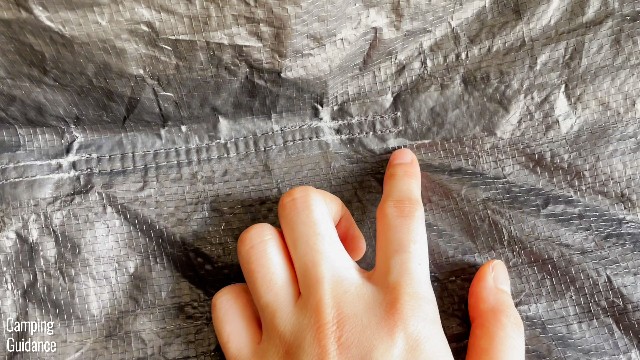
- Seal the seamsBuy seam sealant and apply it wherever you found a leak. For me that’s almost always the flooring.
- Redo the coatingBrush off any flaking coating inside the rainfly, apply sealant, then use a waterproofing spray on the outside.
Part 5 of 5
The best one for heavy rain
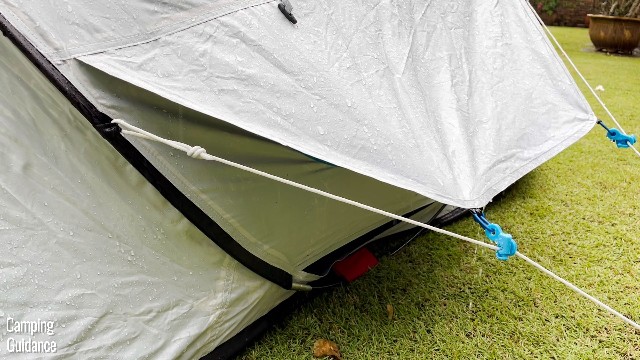
The Quechua 2 Seconds Fresh & Black, comfortably. Full coverage rainfly, bathtub flooring, taped seams, and 2 large vents you can leave open in the rain, so it’s well ventilated as well as well protected.
- Rainfly2,000 mm polyester, full coverage, seams all taped.
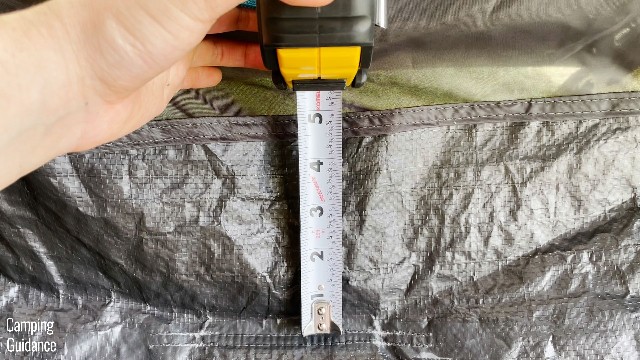
- Flooring5,000 mm polyethylene, bathtub extending about 5 in up.
- Across every testFrom the 1-hour light rain test to the 3-day heavy one, I never once found the tent body wet.
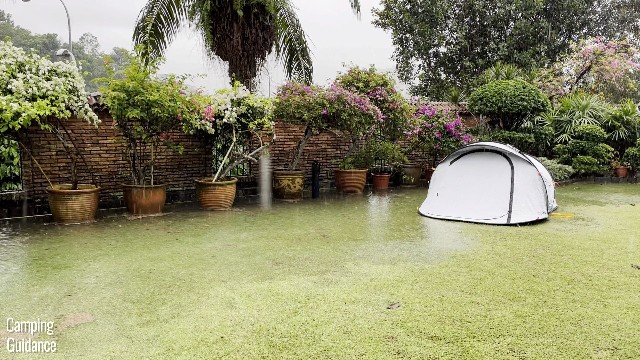
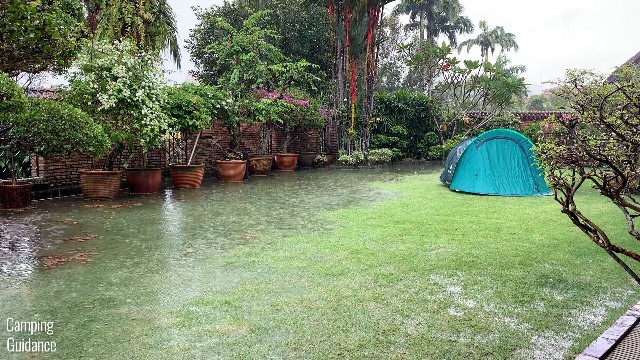
That bathtub floor earns its keep. After hours of rain my yard partially floods and the tent ends up sitting in about an inch of water, with nothing getting in through the floor.
- Fresh & Black 2-PersonCheck price on Decathlon
- Fresh & Black 3-PersonCheck price on Decathlon
- My full reviewQuechua 2 Seconds Fresh & Black
The bottom line
Pop up tents handle rain as well as the brand bothered to make them. A Quechua 2 Seconds will keep you dry through days of it. A Coleman pop up gives you about 15 minutes.
Common questions
Pop up tents in rain: FAQs
Do pop up tents leak?
Not if they’re properly waterproofed. Look for a full coverage rainfly, bathtub flooring, a hydrostatic head around 1,000 mm or better, and factory taped seams.
Which pop up tent is best in heavy rain?
The Quechua 2 Seconds Fresh & Black. A 2,000 mm full-coverage fly, 5,000 mm bathtub flooring about 5 in high, and it never let water in across any of my tests.
How do I waterproof my pop up tent?
Seal the seams with seam sealant, focusing on the flooring, then brush off flaking coating inside the rainfly, apply sealant and spray the outside with waterproofing spray.
Keep reading
Related guides
Every rain test here is one I ran myself, on tents I bought with my own money. Nothing on this page is sponsored.


