Rechargeable lanterns · Review
LuminAID PackLite Max Review (Bought & Tested!)
I bought this lantern with my own money and put it through 15 hands-on tests.
- Brightness 196 lm
- Shine distance 6.0 ft
- Run-time 39 hrs
- Battery 2,000 mAh
This page contains affiliate links, and that means that I may earn a commission if you buy something, at no extra cost to you. You can find my full disclosure policy here.
Test scorecard
Overall, the LuminAID PackLite Max is a solid solar-powered lantern. However, I much prefer LuminAID’s PackLite Titan instead, it has many more features than the Max, so that’s the one I’d recommend.
- Very compact and lightweight
- High quality
- Waterproof
- Decent brightness
- Short 1-year warranty
- No red light mode
Note See below for a comprehensive overview of the Titan V.S. Max.
If you prefer watching to reading, check out my video here instead.
See the 15 tests
In the Box
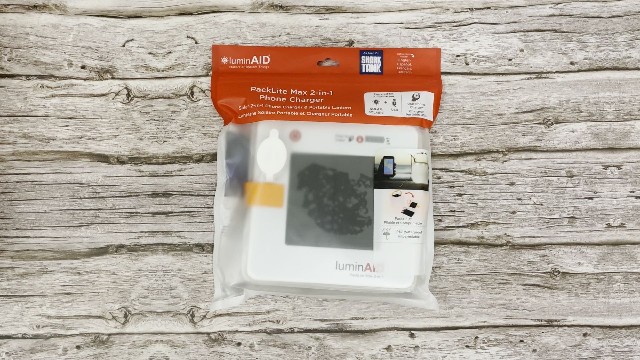
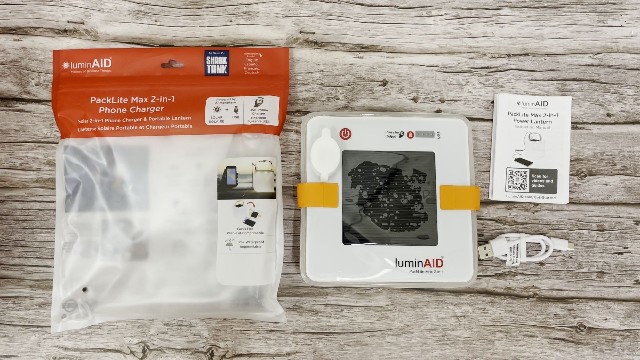
I picked the PackLite Max 2-in-1 from REI Co-Op up during one of their 20% off sales. Here’s what came in the box:
- The lantern
- Instructions
- Charging cable
Inflation and Deflation
Open the air valve at the bottom and breathe into it: one breath inflates it fully. Then cap the valve and push it back in until it’s flush.
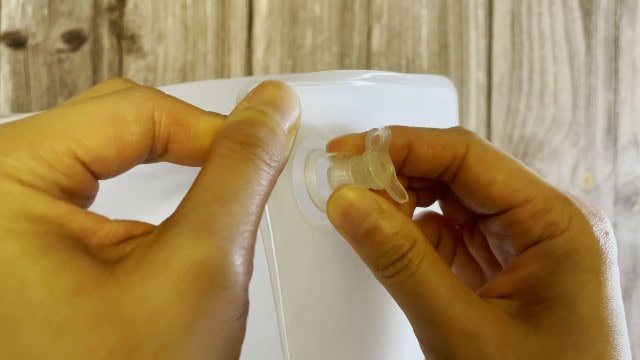
To deflate, squeeze the air out, then twist the lantern 90 degrees to tuck the fabric in.
Lighting Modes
The power button cycles five modes (Turbo, High, Medium, Low, Flashing).
Note If you prefer continuous brightness adjustment over discrete levels, look at lanterns like the Goal Zero Lighthouse Core.
Lumen Outputs
| Light mode | Official specs (lumens) | My testing (lumens) |
|---|---|---|
| Turbo | 150 | 196 |
| High | 75 | 110 |
| Medium | 18 | 56 |
| Low | 15 | 21 |
| Flashing | 15 | 21 |
The official specs are quite accurate, and you actually get about 30 to 50% more than advertised. I’d have liked the low setting to go dimmer, though.
Run Times
| Light mode | Official specs | My testing |
|---|---|---|
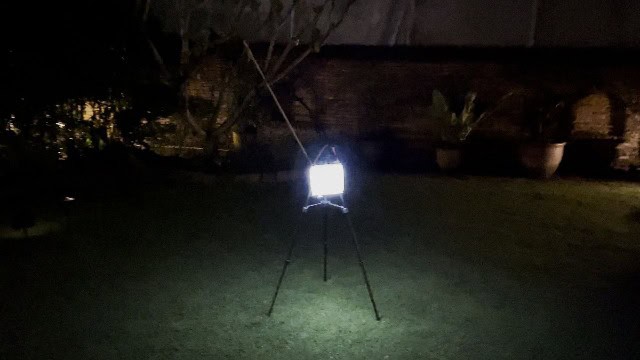
| Turbo | 3-5 hours | 4.75 hours |
| Low | 44-50 hours | 39 hours |
Lighting Area
- Shine radius 6.0 ft
- Lighting area 144 sq. ft.the Coleman WeatherMaster 10 is 143.6 sq. ft.
Very decent, it can light up even a 10-person tent.
Light Color
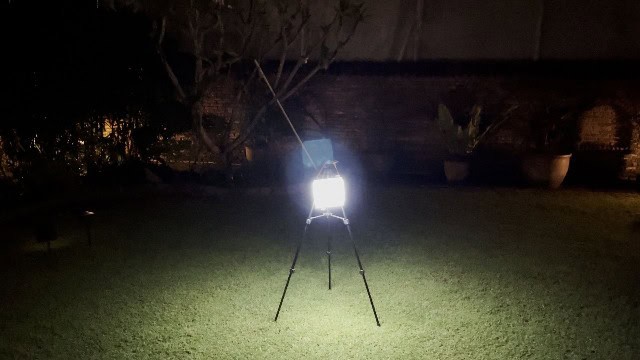
- Color temperature 5,900 to 6,500Ka cool white
- Red light mode None
I thought the light was a little harsh, a cool white that isn’t my favorite.
Battery Indicator Lights
Press the output button and the green battery lights come on. Here’s what each level meant during my low-brightness run-time test:

- 4 lights 100%
- 3 lights 100%
- 2 lights 49%
- 1 light 27%
- 0 lights 0%
Not the most accurate, and temperamental at times, though not a big deal overall.
USB Input
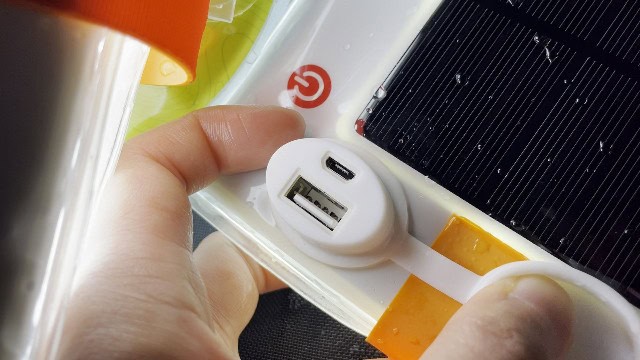
Inside the port cap are 2 ports (a micro-USB for charging the lantern, and an output for charging your phone). Hence “2-in-1”.
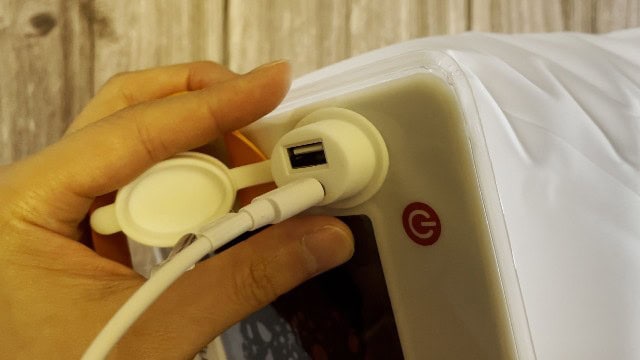
- Full charge via USB 1.5 hrs
- Fast charge 30 mingets you 2/3 of the battery capacity
USB Output
Plug your phone in and press the output button. Here’s what I got with my iPhone 12:
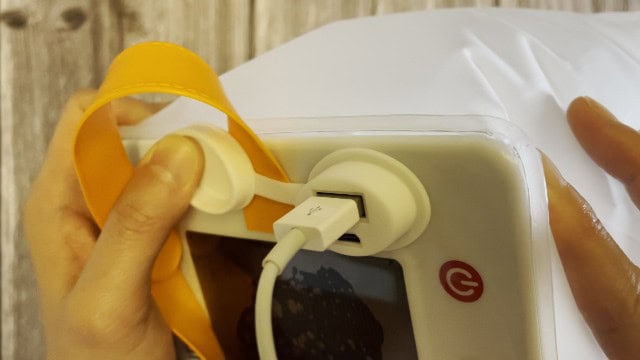
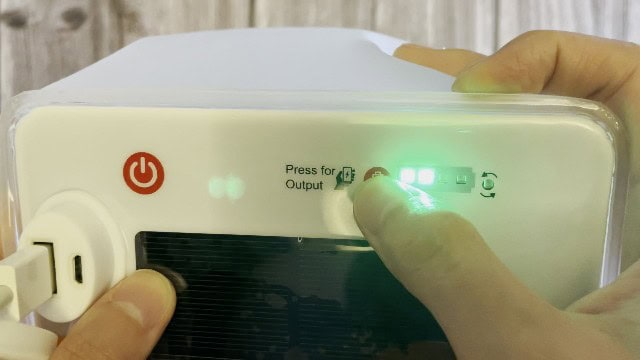
- iPhone 12 charge 20% to 68% (total 48%)
- Time taken 58 minutes
- Leftover light 4 hours on low mode
Not the best phone charger because of the relatively low capacity. It charges a phone only about 0.5 times.
Solar Charging
There’s a solar panel on top as well as the USB input.

- After 1 day of sun 30% charge12 hours, 7AM to 7PM
- Full solar charge 3 average days of sunfaster in direct sunlight, longer if cloudy
Great in a pinch during a power outage, or as a spare light in your car’s glove compartment.
Hand Strap
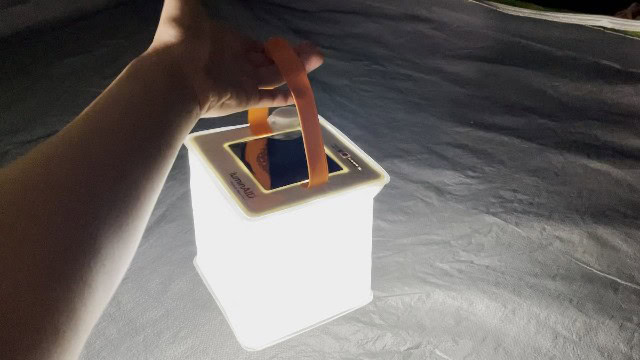
An adjustable orange hand strap at the top, which takes a carabiner for hanging it in a tent.
Waterproofing
Rated IP67 (submersible to 1 meter for up to 30 minutes). I tested it in a pool for 30 minutes; it was so buoyant I couldn’t keep it down, but it still worked great.
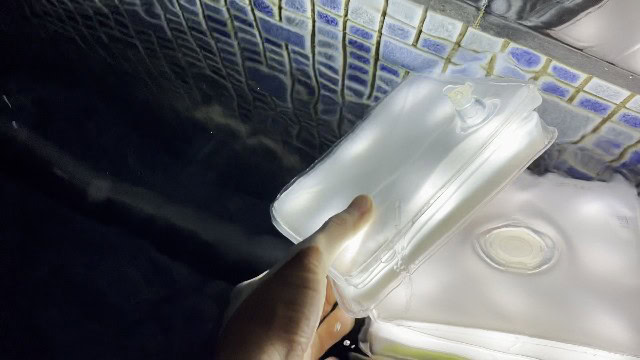
I found a single drop of water inside the port cap, and none in the ports themselves. Decently waterproof.
Drop Testing
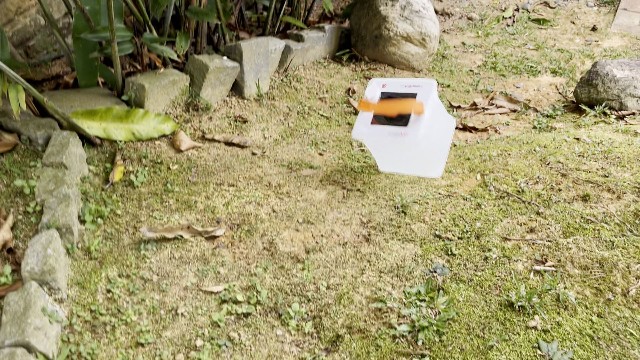
I’ve dropped mine from hand height dozens of times, down a small slope, and bounced it off a rock, still working perfectly fine.
Portability
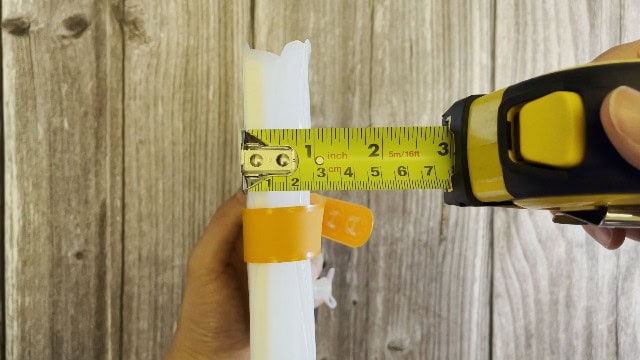
- Weight 7.7 oz
- Packed size, deflated 5.9 x 5.9 x 1 in
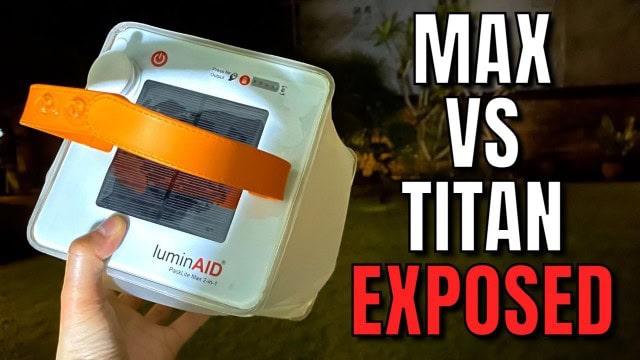
Max vs Titan Comparison
Why do I rate the Max below the Titan? Simply put, the Titan beats it in almost every test:
| Differences | PackLite Titan | PackLite Max |
|---|---|---|
| Inflation method | Twist | Breath |
| Inflation timing | 2 seconds | 10 seconds |
| Light modes | 10 modes | 5 modes |
| Red light mode? | Yes | No |
| Battery capacity | 4,000 mAh | 2,000 mAh |
| iPhone 12 charge | 82% | 48% |
| Max brightness | 316 lumens | 196 lumens |
| Tested run-time on dimmest | 250 hours | 39 hours |
| Min brightness | 1 lumen | 21 lumens |
| Lighting area | 211 sq. ft. | 144 sq. ft. |
| Lights up | Small campsite | 10-person tent |
| USB charge time | 2 hours | 1.5 hours |
| Solar panel size | 4.0 x 4.0 in | 3.1 x 3.1 in |
| Puncture-proof? | Yes | No |
| Emergency mode | SOS | Flashing |
| Hand-strap | Velcro | Plastic snap-on |
| Weight | 11.9 oz | 7.7 oz |
Note The only tests the Max wins are USB charge time (30 minutes faster) and weight (4.2 ounces lighter). Both bolded above.
That’s why the LuminAID PackLite Titan is the solar lantern I’d pick for power outages, an emergency kit, an off-grid trip, or storm season.
Pros, Cons, Recommendations
Now, what are the pros and cons, and would I recommend the LuminAID PackLite Max?
Very compact and lightweight
At 7.7 oz and 1 inch thick deflated, this is one of the most packable lanterns I own.
High quality
It survived submersion, dozens of hand-height drops, a slope and a rock without a problem.
Decent brightness
196 lumens on Turbo is 30% above the marketed figure, and enough for a 10-person tent.
Fast USB charging
A full charge in 1.5 hours, and 30 minutes gets you two-thirds of the battery (faster than the Titan).
Short 1-year warranty
Just 1 year, same as every other solar lantern brand.
No red light mode
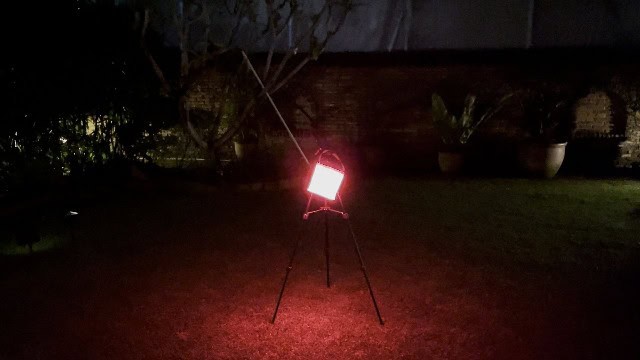
There’s no red light for preserving night vision, which the Titan has.
Overall recommendation
The LuminAID PackLite Max is a solid solar lantern, but the Titan beats it in almost every test I ran. Get the Max only if you want the lightest, fastest-charging option.
Bonus: Must Read!
To see how both LuminAID lanterns compare to other rechargeable and solar lanterns, check out my best rechargeable LED camping lights. (Want me to review other LuminAID lights? Reach out on my YouTube channel.)
Every figure above is from my own testing. Measured by hand, bought with my own money.