7 tests × 8 family tents
The 8 Best Family Camping Tents (Bought & Tested!)
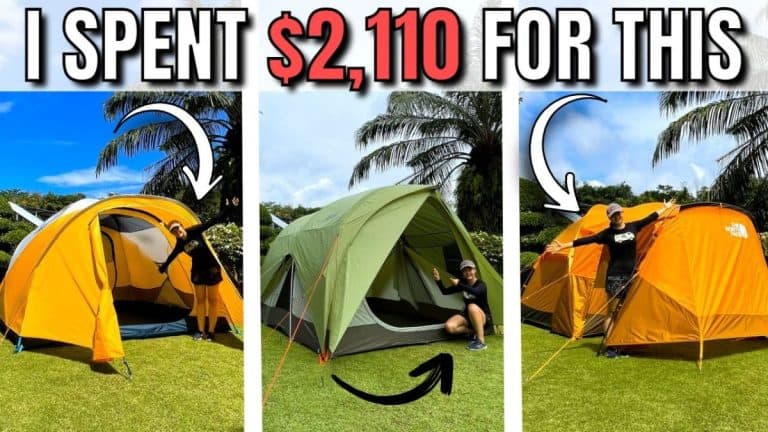
I spent almost $2,700 buying these eight family tents, and a good 7 months testing all of them.
This page contains affiliate links, and that means that I may earn a commission if you buy something, at no extra cost to you. You can find my full disclosure policy here.
The Podium
Quick Summary
Here’s everything I recommend.
The North Face Wawona 6
The best family tent I’ve ever tested — and the best in rain and wind.
8.1/ 10 overall

Runner-Up
REI Co-op Base Camp 6
 7.8/10
- Also: Best Off-Season Tent
- Full-length rainfly
- Most storage: 14 pockets, 20 loops
- 2 vestibules: 52.4 sq. ft. total
- Set up (1P): 17.5 mins
- Weight: 20.6 lbs
Best Instant Tent
Gazelle T4 Hub Tent
 8.3/10
- Sets up in 5 mins, packs away in 6
- Comes in a 4-person or 8-person size
- Thickest materials: 300D floor, 210D body
- Peak height: 77.5 in
- Fits 2 double pads
Best Budget Instant Tent
Core Instant Cabin 9
 6.9/10
- Also: Best Large Instant Tent
- Set up (1P): 12 mins
- 3 roof hubs, 15° walls
- Base area: 118.1 sq. ft.
- Peak height: 75.5 in
Most Spacious Tent
Core Straight Wall Cabin 10
 7.4/10
- Also: Tallest tent — 90 in peak
- Base area: 135.8 sq. ft.
- Affordable price
Best Budget Pick
Coleman Sundome 6
 6.8/10
- Least expensive
- Lightweight: 16.0 lbs
- Fits 2 queen beds
- Set up (1P): 11.5 mins
Jump to: The Rest of the Best ↓ How I Tested ↓ Why You Can Trust Me ↓
The video
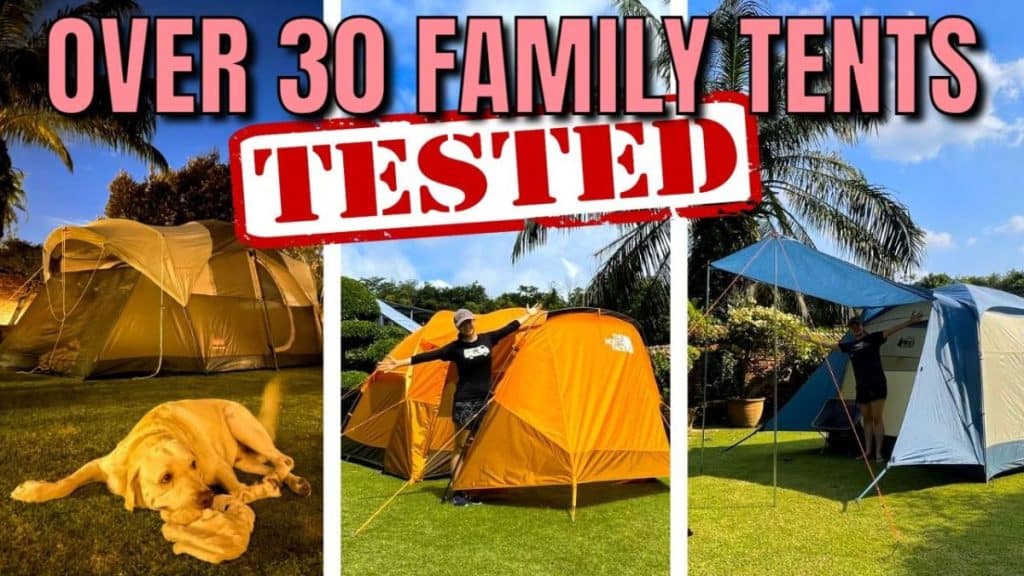
If you prefer watching to reading, check out my video here instead — instead of only the 8 best family tents, I listed a whopping 16.

Camping Guidance
30K+
Table of contents
- 1. The North Face Wawona 6 (Best Overall & Weather Protection)
- 2. REI Co-op Base Camp 6 (Runner-Up)
- 3. Gazelle T4-T8 Hub Tents (Best Instant Tent)
- 4. Core Equipment Instant Cabin 9 (Best Budget Instant Tent)
- 5. Core Equipment Straight Wall Cabin 10 (Most Spacious Tent)
- 6. Coleman Sundome 6 (Best Budget Pick)
- The Rest of the Best
- How I Tested All 8 Tents
- Why You Can Trust Me
Best Overall & Weather Protection
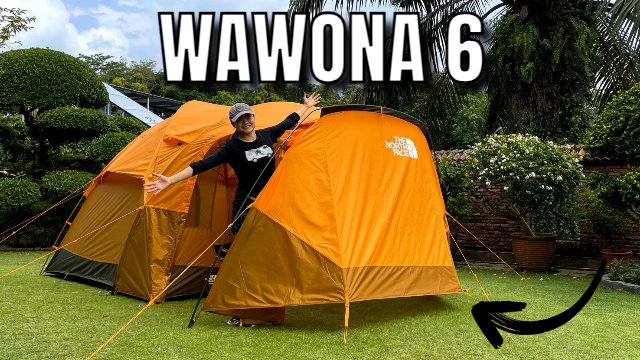
The North Face Wawona 6
Test scorecard · scored against other 6P tents
The North Face Wawona 6
8.1out of 10
Ease of Use6.5
Spaciousness7.8
Features8.6
Ventilation7
Rain Protection9.7
Quality9.3
Portability7.5
Key info
- Peak height77 in
- Base area75.7 sq. ft.
- Vestibule51.0 sq. ft.
- Weight19.4 lbs
- Packed size26 x 16 x 10 in
- Storage9 pockets, 8 loops
- Set up (1P)20 mins
Pros
- Best weather protection (rain & wind)
- High quality DAC MX poles
- Best vestibule I’ve ever tested
- Best value for money premium pick
Cons
- Inner tent base area is a little smaller than average
TL;DR
The Wawona 6 is my answer to the question my YouTube viewers ask the most — the best family tent I’ve ever tested.
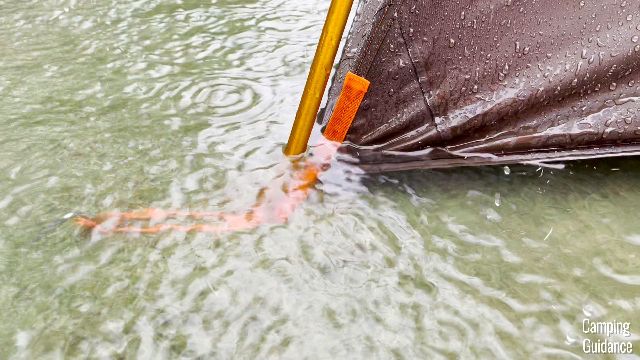
First up, it has the best weather protection (rain and wind) of any family tent here. It’s the only one I managed to put through a whopping 3 days of heavy afternoon rain — so heavy that my entire yard flooded, the bottom of the tent was completely underwater, and it didn’t leak at all.
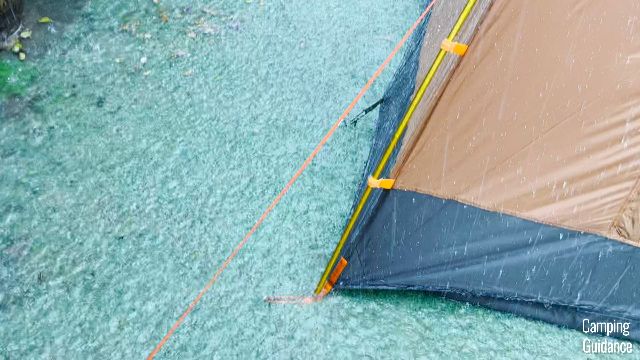
It also went through 15 mph winds completely fine, all guyed out. With the most guylines of any dome tent here (a whopping 11), plus the highest quality DAC MX aluminum poles, it’s naturally the best against wind.
Second, it has the best vestibule of any tent in this review — a great feature for storing wet gear and dirty shoes through serious rains. The lowest height in it is still a whopping 65 inches, so I could stand up in the entire vestibule. (I’m 5’3.)
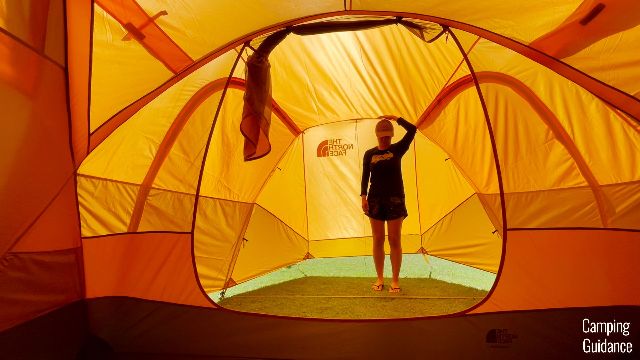
It even fits 2 camping chairs with lots of leftover space for a camping table. The Base Camp’s front vestibule fits 2 chairs too, but its back vestibule couldn’t fit one — the livability in the Wawona is way better.
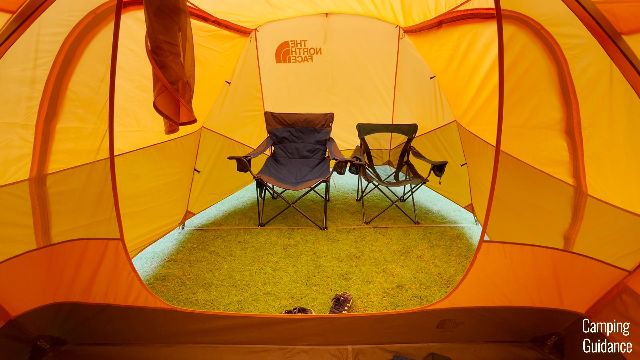
Third, it’s the best value for money premium pick. Of the higher-end 6-person tents from the big brands (Nemo, Big Agnes, MSR), only the Wawona and the Nemo Aurora Highrise sit at the affordable end — and I went for the Wawona because of that humongous vestibule.
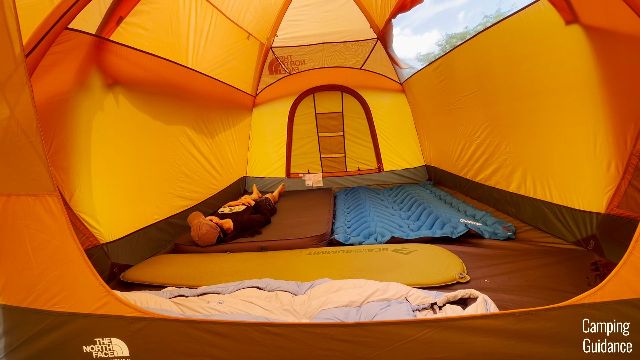
The one con: the inner tent is the smallest interior space I’ve ever seen in a 6-person tent. You can technically fit 6 people, but I recommend a maximum of 3 to 4 adults.
Check out the Wawona 6:
Runner-Up
REI Co-op Base Camp 6

Test scorecard · scored against other 6P tents
REI Co-op Base Camp 6
7.8out of 10
Ease of Use6.5
Spaciousness7.8
Features8.5
Ventilation6
Rain Protection8.7
Quality9
Portability8
Key info
- Peak height73 in
- Base area82.5 sq. ft.
- Vestibule52.4 sq. ft.
- Weight20.6 lbs
- Packed size28 x 13 x 9.5 in
- Storage14 pockets, 20 loops
- Set up (1P)17.5 mins
Pros
- Great for off-season camping
- Comes with a full-length rainfly
- 2 quite large vestibules for extra gear storage
- Has an amazing number of storage options
Cons
- Not the most suitable for summer camping
TL;DR
After the Wawona, my runner-up is the REI Base Camp 6 — my only 3+ season family tent, and the one to get for off-season camping.
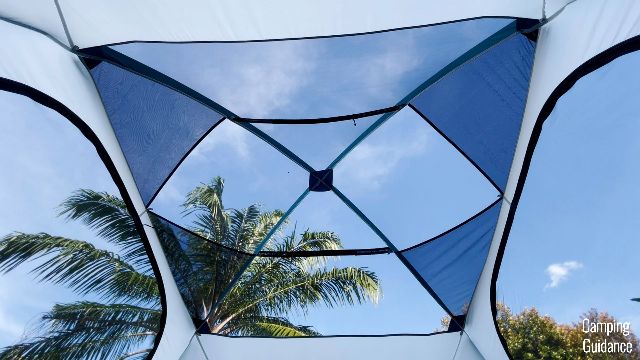
The Base Camp serves the one purpose the Wawona doesn’t: it’s a great off-season (or 3+ seasons) tent, while the Wawona is purely for 3-season summer camping. Look at how much mesh there is on the Wawona:

It’s also my only family tent with a full-length rainfly, extending all the way down to the ground. It got through my 1-hour heavy rain test with no leaks at all — and the rainfly never touches the inner tent walls, so I had no condensation issues either.
On top of that, you get two vestibules. The back one fits quite a bit of gear (but no chairs), and the huge front one easily fits 2 camping chairs.

And the storage is mind-boggling for a 6-person tent — a whopping 14 pockets all around the tent, and 20 loops to hang tons of stuff. No other family tent here even comes close.
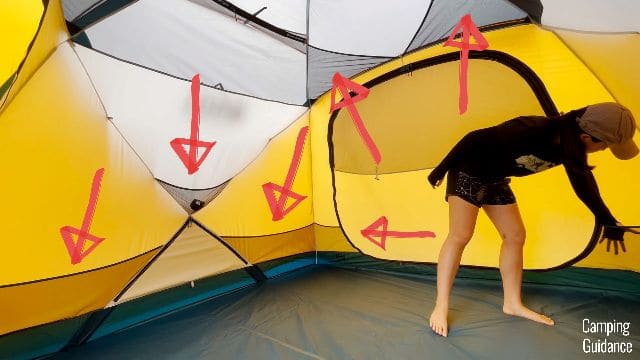
The biggest con: it’s not the most suitable for summer. With the rainfly on, it can get a little hot and stuffy — and even with it off, there’s just 2 not-too-big windows and a rather tiny skylight.
Essentially: go with the Wawona if you’re a summer camper, and the Base Camp if you’re an off-season camper. Winter is possible with good insulation — REI lists it as a 3+ season tent, not a 4-season family tent (though I have seen friends using this in light snow).
Check out the Base Camp 6:
Best Instant Tent
Gazelle T4-T8 Hub Tents
Test scorecard · scored on the T4, against other instant tents
Gazelle T4-T8 Hub Tents
8.3out of 10
Ease of Use8.8
Spaciousness10
Features8.3
Ventilation7.5
Rain Protection7.3
Quality9
Portability3
Key info (for the T4 I tested)
- Peak height77.5 in
- Base area61.0 sq. ft.
- Weight34.0 lbs
- Packed size68 x 13 x 10 in
- Storage6 pockets, 1 loft
- Set up (1P)5 mins
- Pack away (1P)6 mins
Pros
- Comes in a 4-person or 8-person size
- The easiest family tent to set up and pack away
- Extremely spacious for a 4-person tent
- Feature-rich (instant setup, lots of storage, removable floor)
- Very thick and high quality materials
Cons
- Gigantic packed size
TL;DR
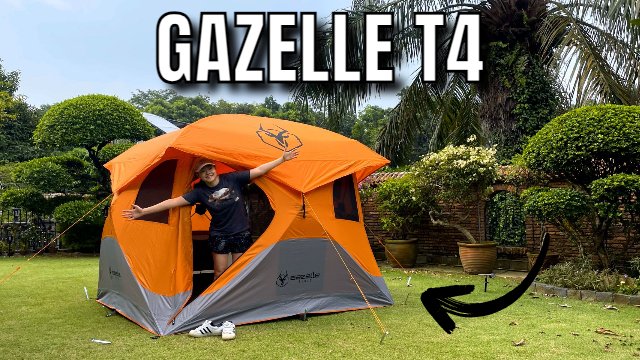
If you want an instant tent, it’s easily one of the Gazelles — my Gazelle T4 sets up in 5 minutes and packs away in 6, and nothing else even comes close.
All the poles come completely pre-attached — I just popped open the 5 hubs around the tent, and it almost literally just ‘pops open’. (I only have the T4, so my data and testing focus on that model.)
And unlike every other instant tent I’ve tested, it has a removable flooring — the air comes out super easily when packing away, making it easy to compress and stuff back into the carry bag.
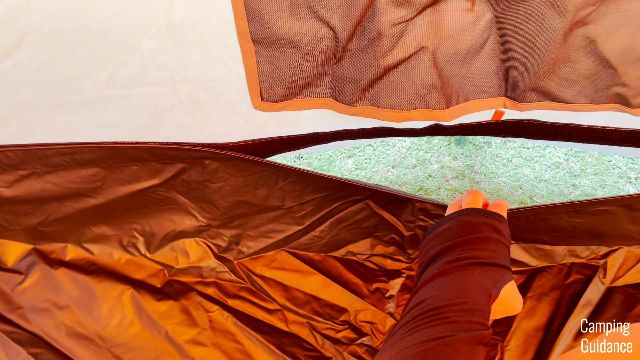
The peak height is massive for a 4-person tent (77.5 inches), the lowest height is a whopping 67 inches (taller than my 5’3!), and the side walls are completely vertical — I could literally walk around everywhere inside.
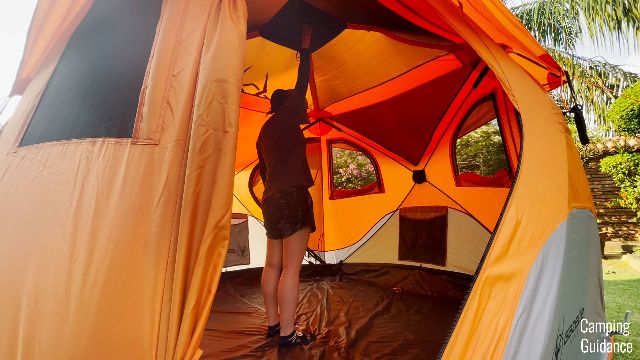
It fits 4 people perfectly — here are 2 double pads with a little leftover space. It’s also built from the thickest, highest quality materials I’ve seen in a camping tent: 300D polyester flooring, 210D body and rainfly. Way thicker than even The North Face and REI tents above — plus 2 doors, 6 huge pockets, and even a gear loft.

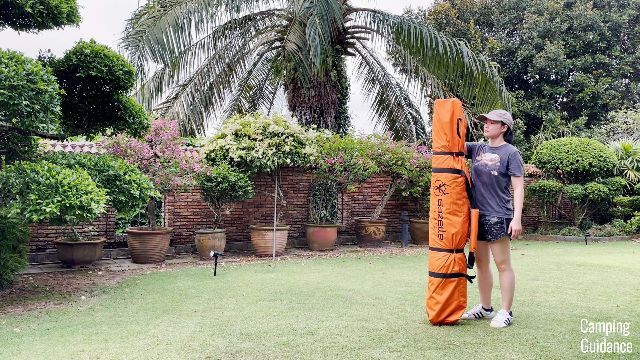
The biggest con: the packed size is humongous. It’s the only car camping tent I’ve seen with a packed size taller than me — not a tent you can lug far away from your car.
Need to fit a family of 6? The Gazelle Hub Tent comes in a T8-size — literally just double the T4 (thankfully, the price doesn’t double):
- Gazelle T8: Peak height 78 in · Base area 110 sq. ft. · Set up (1P) 10 mins · Weight 56 lbs · Packed length 68 in
Check out the Gazelle T4:
Check out the Gazelle T8:
Best Budget Instant Tent
Core Equipment Instant Cabin 9
Test scorecard · scored against other instant tents
Core Equipment Instant Cabin 9
6.9out of 10
Ease of Use6.2
Spaciousness8.5
Features6
Ventilation9
Rain Protection3.6
Quality6.5
Portability9
Key info
- Peak height75.5 in
- Base area118.1 sq. ft.
- Weight30.0 lbs
- Packed size46 x 13 x 12 in
- Storage2 pockets, 1 loop
- Set up (1P)12 mins
- Pack away (1P)9 mins
Pros
- One of the least expensive large instant tents (9-12P)
- Instant mechanism is decent quality for the affordable price
- Great setup and pack away timings
Cons
- 9-person configuration can’t fit 3 queens
- Not enough pockets and storage options
TL;DR
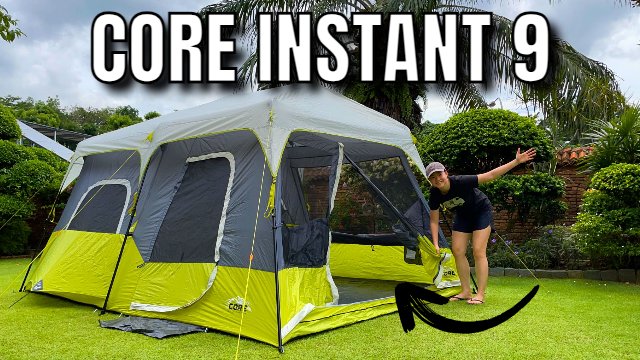
If the Gazelles are too expensive, the Core Instant Cabin 9 gives you a big, decent-quality instant tent for a budget price.
There aren’t many budget-friendly options for large instant cabin tents (9- to 12-person) — the main ones come from Core Equipment, Coleman, and Ozark Trail — and this Core beat out its competitors:
| Instant Tent | Peak Height | Wall Angle | Hubs |
|---|---|---|---|
| Core Instant 9 | 75.5 in | 15° | 3 |
| Coleman Instant 10 | 73.5 in | 35° | 1 |
I tested both of these thoroughly.
The Core has 2 inches more peak height than the Coleman despite the smaller capacity. Its walls slant at just 15 degrees against the Coleman’s 35 — the less slant, the more livable space — and it has 3 hubs holding the ceiling fabric up, instead of just 1.
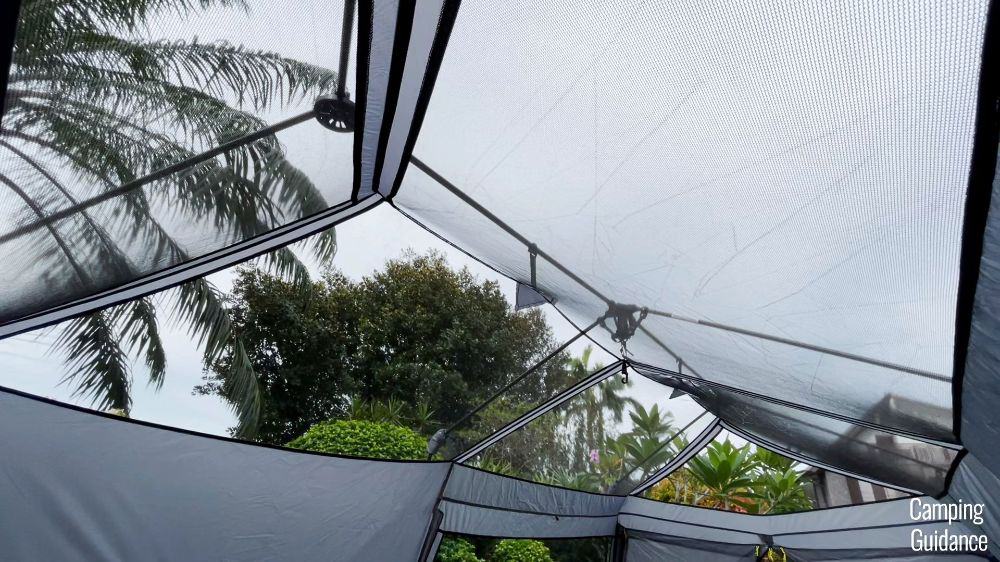
The instant mechanism is smoother and more user-friendly than Coleman’s too. My Coleman’s would sometimes jam up; the Core never did. (And my Ozark Trail Instant 6 — a really bad 65.5-inch peak, extremely slanted 30-degree walls, just 1 hub — was so bad I didn’t even feel the need to test it against the Core.)
It also beats my other large tents on set up and pack away — 12 and 9 minutes — and the carry bag is much larger than Coleman’s or Outdoor Products’, so there’s no huffing and puffing to get the tent back in.

Two cons. The 9-person sleeping area is a little strange — I could fit a maximum of 2 queen mattresses, not 3. And there’s only 2 pockets and 1 lantern loop — I usually expect a 9-person tent to have at least 9 pockets.

Check out the Core Instant 9:
Note: Dick’s stocks the lighted version of this cabin — the same tent with in-built lighting, a slightly different model from the one I tested.
Most Spacious Tent
Core Equipment Straight Wall Cabin 10

Test scorecard · scored against other 10P tents
Core Equipment Straight Wall Cabin 10
7.4out of 10
Ease of Use7
Spaciousness9.7
Features7
Ventilation7
Rain Protection7
Quality8.3
Portability5
Key info
- Peak height90 in
- Base area135.8 sq. ft.
- Weight30.5 lbs
- Packed size29 x 16 x 12 in
- Storage2 pockets, 1 loft, 1 loop
- Set up (1P)22 mins
- Pack away (1P)13 mins
Pros
- Extremely tall walls and peak height (maybe a little too tall?)
- Affordable price
Cons
- No other outstanding features
TL;DR
The Core Cabin 10 is the most spacious tent in this review — a whopping 90-inch peak height and 135.8 sq. ft. of floor space, at an affordable price.
If you’re looking for the biggest possible large family camping tent, this is now my pick. I’ve measured the peak height of every family tent I’ve tested (about 30 now!), and nothing even comes close to the Core’s 90 inches.
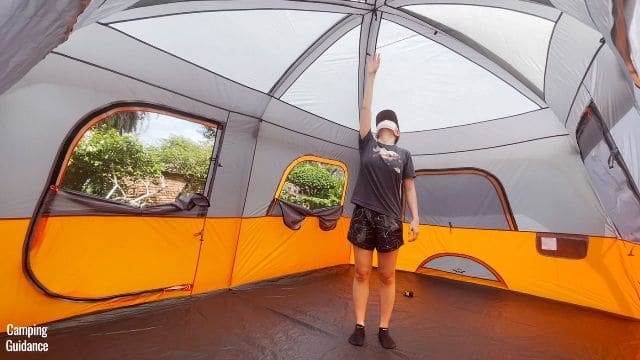
The walls are pretty vertical and tall too, with a lowest height of still a whopping 65 inches (taller than my 5’3!) — a really spacious cabin tent overall, at a really affordable price. Core Equipment is, after all, a budget-friendly brand.
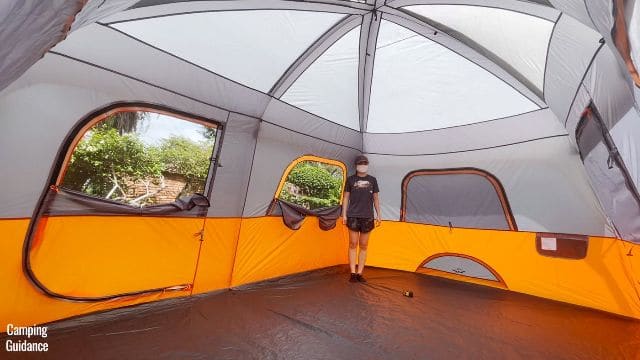
One thing though: if you’re not tall like me, the peak height can be a little too tall. I couldn’t reach the top, so every time I wanted to hang a lantern or reach the gear loft, I had to stand on a chair. My bro (about 5’7) reaches it fine — so I’d recommend it only if you’re at least his height.
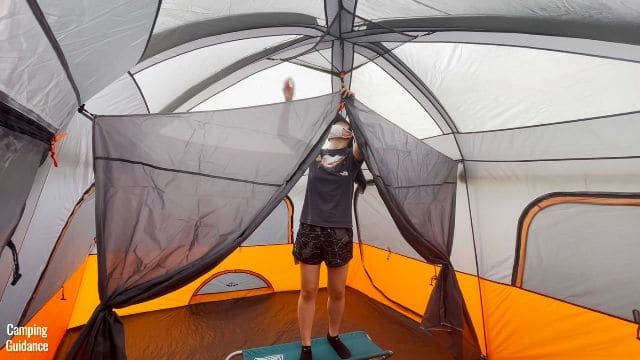
Beyond the spaciousness and affordability, there’s nothing else outstanding here — storage (2 pockets, 1 gear loft, 1 lantern loop), doors, divider, weather resistance, and setup speed are all just average. Buy it for space and value; skip it if you want frills.
Check out the Core Cabin 10:
Best Budget Pick
Coleman Sundome 6

Test scorecard · scored against other 6P tents
Coleman Sundome 6
6.8out of 10
Ease of Use9
Spaciousness5.8
Features5.8
Ventilation7.5
Rain Protection4.9
Quality6.3
Portability9.5
Key info
- Peak height74.5 in
- Base area92.6 sq. ft.
- Weight16.0 lbs
- Packed size27 x 12 x 9.5 in
- Set up (1P)11.5 mins
- Pack away (1P)10 mins
Pros
- Very inexpensive price tag
- Decent quality for the inexpensive price
- Decent amount of livable space
- Relatively easy setup and pack away
Cons
- Not top-notch quality
- Waterproofing prep work required for heavy rain camping
TL;DR
The Coleman Sundome 6 is easily my best budget pick for a cheap family camping tent — the least expensive decent-quality tent I’ve tested.
The construction is fairly solid — the seams aren’t as haphazard as other budget or no-brand tents — and the 6-foot peak height gives a decent amount of headroom. I could stand upright, stretch my arms out, walk around, even jump around a little.
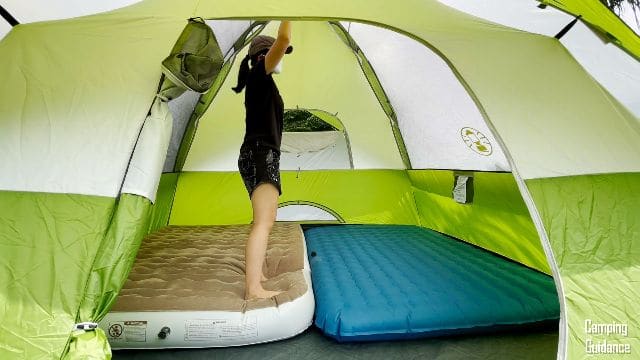
You can technically fit 6 people, but I’d recommend no more than 4 adults, 2 on each queen bed (it fits 2!). That’s still enough space for a small family.

Set up took me just about 11 minutes on my own, the pack away is easy too, and the carry bag can even be expanded to give you ample space to stuff the packed-up tent in.

Just don’t expect top-notch quality for the price: the flooring is budget polyethylene, the body and rainfly are no thicker than 68D to 75D polyester, and not many seams come factory taped — it lasted only 30 minutes in very heavy rain.
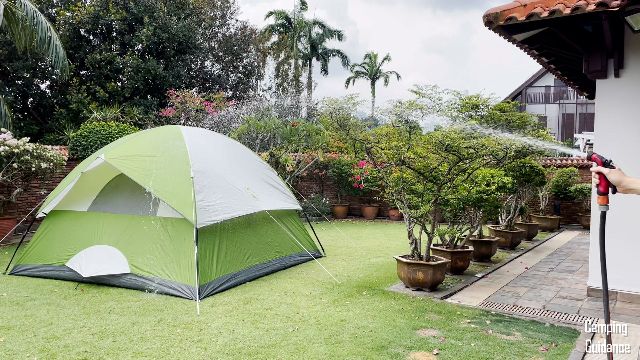
If you’ll be camping in hours of heavy rain, waterproof all the seams yourself and coat the entire tent in a waterproofing spray first.
Check out the Sundome 6:
Everything else I tested
The Rest of the Best
Above are my 6 Top Picks. The other 2 tents I bought and tested have both since been discontinued — I can’t recommend a tent you can’t buy, but their tested data stays in every table below, and my full reviews of both stay up:
- REI Co-op Wonderland 6 (7.5): My old fair-weather pick — the best cabin tent I’ve tested, with its peak height running the entire length of the tent, loads of mesh for summer, and the best doors of any family tent. REI has discontinued it.
- Eureka Copper Canyon LX 6 (7.0): My old Best Large Family Tent pick — I tested the LX 6 and recommended the LX 12 for the biggest families, with a 7-foot peak height and near-vertical walls. Eureka has discontinued the Copper Canyon LX line, so for space my Core Cabin 10 is the pick now.
The 7 testsHow I Tested All 8 Tents
I put every family tent through the same 7 scored tests — ease of use, spaciousness, comfort and features, ventilation, weather protection, quality, and portability. I test all my camping tents the same way, so the quantitative results let me fairly compare one tent to another.
Related
- All my own measurements: The heights, base areas and timings below are my personal measurements and calculations, and may differ from the brands’ marketed specifications
- Timings are 1-person: From taking the tent out of the carry bag to fully staked and guyed out — and the reverse for pack away
- The 2 discontinued tents stay in the data: The REI Wonderland 6 and Eureka Copper Canyon LX 6 are in every table below — the testing was real and earned — they just aren’t buyable any more
Ease of Use
For ease of use, I timed how quickly I could set up and pack away each tent, single-handedly — fastest first:

| Family Tent | Set Up (1P) | Pack Away (1P) |
|---|---|---|
| Gazelle T4 winner | 5 mins | 6 mins |
| Sundome 6 | 11.5 mins | 10 mins |
| Core Instant 9 | 12 mins | 9 mins |
| Eureka LX 6 (discontinued) | 14 mins | 12 mins |
| Base Camp 6 | 17.5 mins | — |
| Wonderland 6 (discontinued) | 19.5 mins | — |
| Wawona 6 | 20 mins | — |
| Core Cabin 10 | 22 mins | 13 mins |
| The Others | 16-28 mins | 13-17 mins |
All timings are 1-person, from carry bag to fully staked and guyed out. The instant Gazelle just pops open on its 5 pre-attached hubs. “The Others” covers the rest of the 30+ family tents I’ve tested.
- Instant tents win this test outright: The Gazelle T4 and Core Instant 9 both have pre-attached poles — no threading, no sleeves
- More features = a longer set up: A no-vestibule Sundome 6 takes 11 minutes, while the Wawona 6 with its huge vestibule takes a whopping 20 — both are 6-person tents
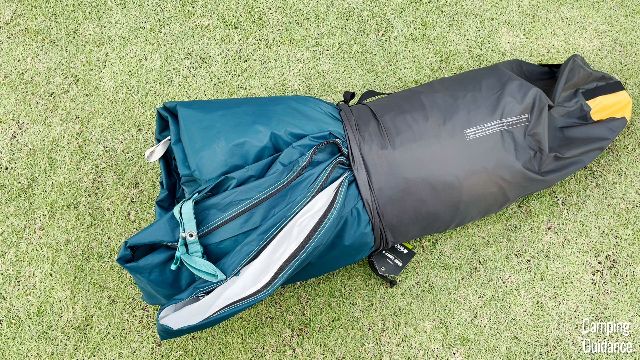
- Pack away follows the same order: The Gazelle’s removable flooring lets the air out super easily, so it packs away the fastest too
Spaciousness
For spaciousness, I measured the peak height, the lowest height, and the floor space of each tent:
| Family Tent | Peak Height | Lowest Height |
|---|---|---|
| Core Cabin 10 winner | 90 in | 65 in |
| Eureka LX 6 (discontinued) | 84 in | 66 in |
| Wonderland 6 (discontinued) | 81 in | 76 in |
| Gazelle T4 | 77.5 in | 67 in |
| Wawona 6 | 77 in | — |
| Core Instant 9 | 75.5 in | 64 in |
| Sundome 6 | 74.5 in | — |
| Base Camp 6 | 73 in | — |
| The Others | 68-77 in | 39-61 in |
Lowest height matters for cabin and hub tents, where you can stand at the walls — a dash means the dome slopes too low at the sides for the figure to mean much. “The Others” covers the rest of the 30+ family tents I’ve tested.
- The Wonderland’s 76-inch lowest height was in a league of its own: Give or take a few inches, you got its peak height across the entire length of the tent (now discontinued)

| Family Tent | Inner Tent | Vestibule | Total Area |
|---|---|---|---|
| Core Cabin 10 winner | 135.8 sq. ft. | — | 135.8 sq. ft. |
| Base Camp 6 | 82.5 sq. ft. | 52.4 sq. ft. | 134.9 sq. ft. |
| Wawona 6 | 75.7 sq. ft. | 51.0 sq. ft. | 126.7 sq. ft. |
| Core Instant 9 | 118.1 sq. ft. | — | 118.1 sq. ft. |
| Eureka LX 6 (discontinued) | 93.4 sq. ft. | — | 93.4 sq. ft. |
| Sundome 6 | 92.6 sq. ft. | — | 92.6 sq. ft. |
| Wonderland 6 (discontinued) | 82.5 sq. ft. | — | 82.5 sq. ft. |
| Gazelle T4 | 61.0 sq. ft. | — | 61.0 sq. ft. |
| The Others | 60.6-126 sq. ft. | — | 60.6-126 sq. ft. |
Only 2 tents in this review have vestibules (the Wawona and Base Camp) — huge vestibules are usually a luxury reserved for the more expensive brands. “The Others” covers the rest of the 30+ family tents I’ve tested.
- Vestibules flip the totals: The Wawona and Base Camp have the smaller inner tents here, but their vestibules push their total floor space right up near the 10-person Core Cabin’s
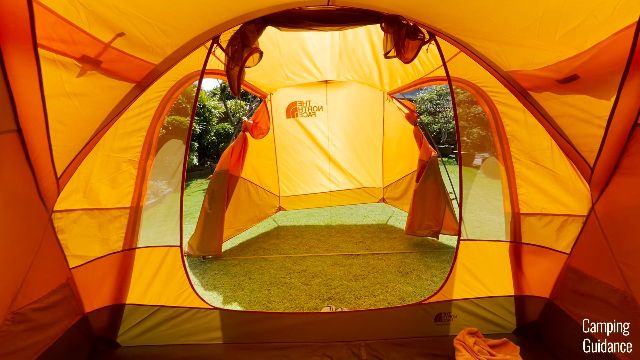
- They also add weight, packed size and setup time: Which is why only the pricier brands (The North Face, REI, Marmot, Nemo, Big Agnes) bother with them
Comfort and Features
For comfort and features, I focused on the door quality, the storage options, and extras like room dividers and power ports — most storage first:
| Family Tent | Pockets | Loops | Total |
|---|---|---|---|
| Base Camp 6 winner | 14 | 20 | 34 |
| Wawona 6 | 9 | 8 | 17 |
| Wonderland 6 (discontinued) | 8 | 7 | 15 |
| Eureka LX 6 (discontinued) | 6 | 5 | 11 |
| Gazelle T4 | 6 | 0 | 6 |
| The Others | 2-4 | 2-4 | 2-6 |
The Gazelle T4 also has a gear loft. Full counts for my 2 Core picks: Core Instant 9 (2 pockets, 1 loop) and Core Cabin 10 (2 pockets, 1 loft, 1 loop). “The Others” covers the rest of the 30+ family tents I’ve tested.
- Storage is where the premium tents pull away: The Base Camp’s 34 storage spots against 2 pockets and 1 loop in my budget Core tents — I usually expect at least as many pockets as the tent’s capacity
- The best doors I’ve seen on a family tent were the Wonderland’s: 2 extremely huge, tall doors — unzipping and stowing one took no more than 7 seconds (yes, I timed myself!) (now discontinued)
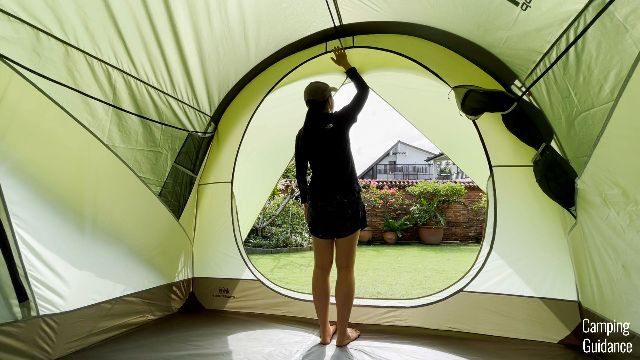
- Pricier tents get 2 large doors, budget tents get 1 smaller one: The REI, North Face and Gazelle doors are big, snag-free and user-friendly; the Coleman and Core doors are smaller and snaggier
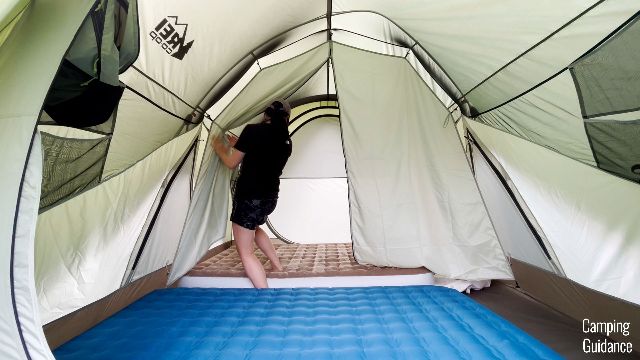
- Room dividers follow the same money rule: The pricier tents come with better dividers — and weirdly, none of them have power ports, while the budget tents do
Ventilation
For ventilation, I tested every tent on both hot days (rainfly off, everything open) and rainy days (how much can stay open in rain). Here’s my estimated mesh-to-fabric ratio for each tent — I measured every window, vent, and ceiling panel:
| Family Tent | Amount of Mesh |
|---|---|
| Wonderland 6 (discontinued) | 50% |
| Gazelle T4 | 40% |
| Core Instant 9 | 39% |
| Eureka LX 6 (discontinued) | 35% |
| Wawona 6 | 33% |
| Sundome 6 | 30% |
| The Others | 20-29% |
Estimations — but each one comes from measuring the windows, vents and ceiling mesh by hand. “The Others” covers the rest of the 30+ family tents I’ve tested.
- The Wonderland’s mesh was in a league of its own: It extends down the sides of the tent — easily more than half the tent is mesh — while no other tent here has mesh beyond the ceiling (now discontinued)

- Family tents can’t match smaller tents here: Their massive profiles cap the mesh percentage — my smaller backpacking tents run as much as 80% mesh

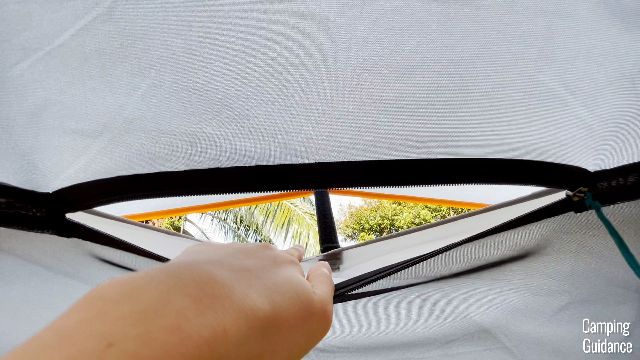
- Rainy days flip the ranking: The winners are well-placed vents and awnings over windows — my Base Camp has 4 vents I could open and shut from inside the tent, and the Wonderland has tiny awnings over its windows
Weather Protection
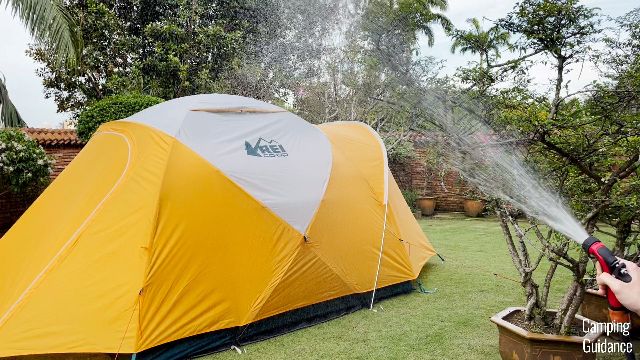
For weather protection, I looked at both rain and wind. Every tent went through a heavy rain test — and when it didn’t rain, I made my own with a water hose:
| Dome Tent | Guylines | Poles |
|---|---|---|
| Wawona 6 winner | 11 | DAC MX |
| Base Camp 6 | 6 | Aluminum |
| Sundome 6 | 6 | Fiberglass |
Dome family tents only — for wind, dome shapes shed gusts far better than the massive profiles of cabin tents.
- The Wawona is the only tent that survived 3 days of heavy rain: My yard flooded, one corner sat underwater, and every seam held — the seam taping is that thorough
- The full-length rainfly saved the Base Camp: It passed my 1-hour heavy rain test dry — only the more expensive tents come fully seam-taped with proper waterproofing coats
- Budget tents need prep work: The Sundome’s un-taped seams let water in after 30 minutes of very heavy rain — seal the seams and add a waterproofing spray before any wet trip

- Cabin tents catch wind badly: My Eureka blew away in a very light breeze (at most 5 mph) the moment I left it unstaked — keep any cabin tent staked down and guyed out
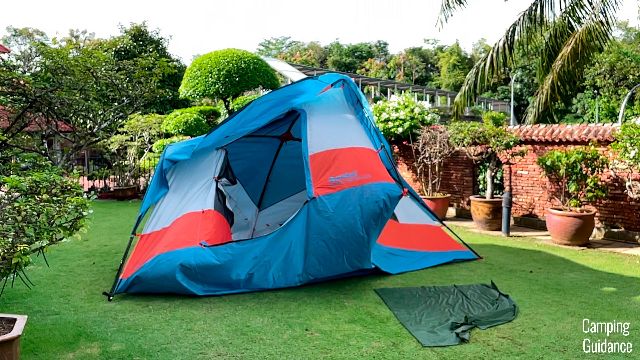
- Guylines and poles decide the wind test: The Wawona’s 11 guylines and DAC MX poles took 15 mph winds guyed out without a flinch
Quality
For quality, I looked at the materials — flooring, tent body, poles — and the consistency of the stitching and seam taping:
- Flooring runs from budget polyethylene to 300D polyester: The Gazelle T4’s 300D flooring and 210D body are the thickest I’ve seen in a camping tent; the budget Coleman floors are polyethylene, with 68-75D bodies
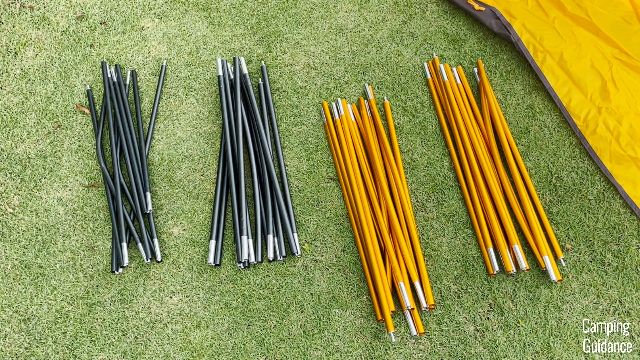
- Only the 3 expensive tents get aluminum poles: The Wawona (top-of-the-line DAC MX), Base Camp and Wonderland — my budget tents all run thinner fiberglass
- Warranty tells you the quality tier: Eureka backs the Copper Canyon with a lifetime warranty; Coleman and Core give 1 year, Ozark Trail just 6 months
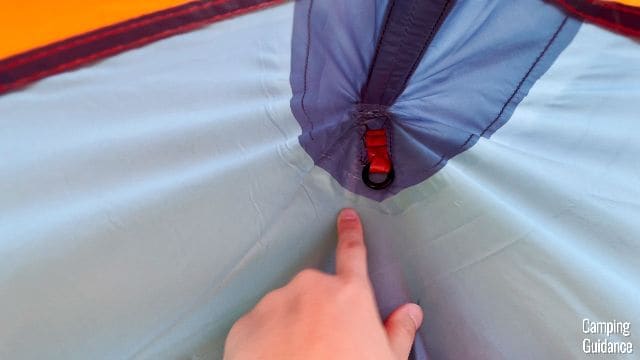
- Premium seams are taped and consistent: Notice how well-taped the Eureka’s corner seams are — budget tents ship with loose threads and un-taped seams instead
Portability
For portability, I weighed and measured every packed-up tent — lightest first. These are all car camping tents, not backpacking tents (not even for short backpacking trips!):
| Family Tent | Weight | Packed Size |
|---|---|---|
| Sundome 6 winner | 16.0 lbs | 27 x 12 x 9.5 in |
| Wawona 6 | 19.4 lbs | 26 x 16 x 10 in |
| Base Camp 6 | 20.6 lbs | 28 x 13 x 9.5 in |
| Eureka LX 6 (discontinued) | 22.4 lbs | 29 x 13 x 9 in |
| Wonderland 6 (discontinued) | 23.6 lbs | 30 x 15 x 10 in |
| Core Instant 9 | 30.0 lbs | 46 x 13 x 12 in |
| Core Cabin 10 | 30.5 lbs | 29 x 16 x 12 in |
| Gazelle T4 | 34.0 lbs | 68 x 13 x 10 in |
- The lightest family tent is still 16 lbs: The Sundome 6 — that’s the price of a full-size family tent, whatever the brand
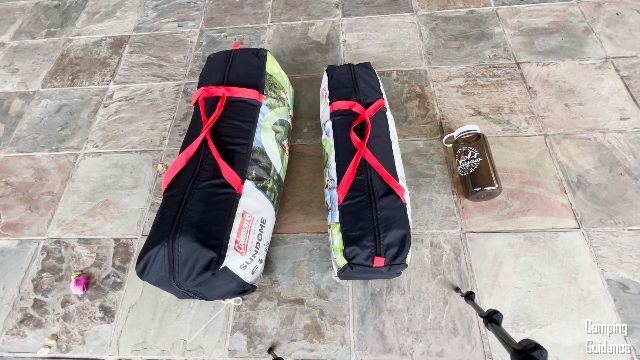
- Instant tents pack the longest: The Gazelle T4 is a 4-person tent with a 68-inch packed length — taller than me — because its poles never detach. Don’t expect to carry one far from your car
All Test Scores
The scoreboard
Based on the 7 tests above, here are the overall scores of all the family tents I scored for this review.
- Gazelle T4 Hub TentBest Instant Tent8.3
- The North Face Wawona 6Best Overall & Weather Protection8.1
- REI Co-op Base Camp 6Runner-Up7.8
- REI Wonderland 6 (discontinued)7.5
- Core Straight Wall Cabin 10Most Spacious Tent7.4
- Eureka Copper Canyon LX 6 (discontinued)7.0
- Core Instant Cabin 9Best Budget Instant Tent6.9
- Coleman Sundome 6Best Budget Pick6.8
Highlighted rows = my 6 picks reviewed above. Each tent is scored against its own peer group (6-person, instant, or 10-person tents), which is how the Gazelle T4 tops the board while the Wawona 6 stays my Best Overall pick across every category. The REI Wonderland 6 and Eureka Copper Canyon LX 6 have both been discontinued — their tested data stays in every table above, minus the buy links.
The methodWhy You Can Trust Me
Unlike most “best family tent” lists you’ll find on the internet, I actually bought, own, used, and thoroughly tested all of these tents.
$2,700
Buying the 9 family tents in this review cost me a grand total of almost $2,700 — all my own savings. And that doesn’t even include the other 20+ family tents I tested that didn’t make the cut. I don’t accept free products, sponsorships, or anything else that could bias a review.
7 months
I spent at least a week testing each tent — setting it up, taking it down, sleeping in it, you name it. Across the 30+ family tents I’ve tested, that’s a good 7 months in these tents.
7 tests
Every tent went through the same 7 scored tests: ease of use, spaciousness, comfort and features, ventilation, weather protection, quality and portability. Every score above comes from those tests.
30,000+
I also run a YouTube channel with over 30,000 subscribers that focuses just on reviewing camping gear. It’s my jam 🙂
I’d estimate I’ve spent just south of $10,000 on tents so far — and I’m planning to empty my bank account to buy even more of them.
Every figure above is from my own testing. Measured by hand, bought with my own money.