Rechargeable lanterns · Review
Coleman Rugged Rechargeable 400 Lantern Review (Bought & Tested!)
I bought this lantern with my own money and put it through 14 hands-on tests.
- Brightness 675 lm
- Shine distance 8.6 ft
- Run-time 20.75 hrs
- Battery ~3,500-4,000 mAh
This page contains affiliate links, and that means that I may earn a commission if you buy something, at no extra cost to you. You can find my full disclosure policy here.
Test scorecard
Overall, the Coleman Rugged 400 Lantern is a decent rechargeable LED lantern, but with way fewer features than I would have liked. Because I have loads of other lights to use, I don’t really recommend this one over the others.
- Easy to use
- Very bright
- Great shine distance
- Cable storage
- Bulky
- Low mode is too bright
- Lacks a lot of features (battery lights, SOS modes, etc.)
If you prefer watching to reading, check out my video here instead.
See the 14 tests
In the Box
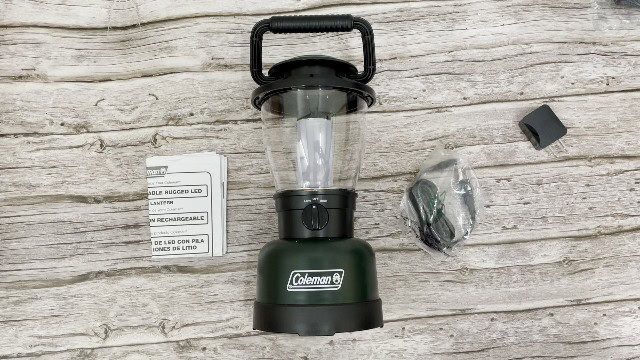
Here’s everything I got in the box after buying the Coleman Rugged Rechargeable Lantern:
- Coleman Rugged 400 lantern (batteries are in-built)
- Instructions
- Charging cable in charger storage
- USB plug adapter
Charging Input & Battery
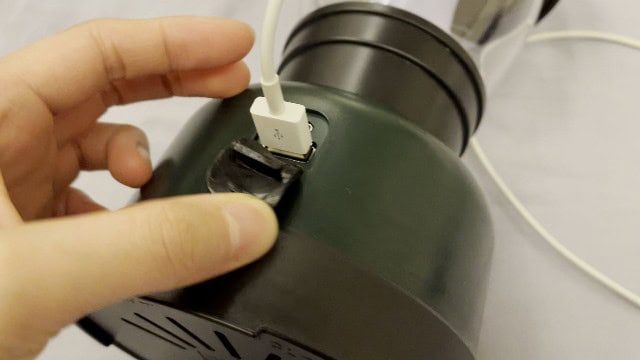
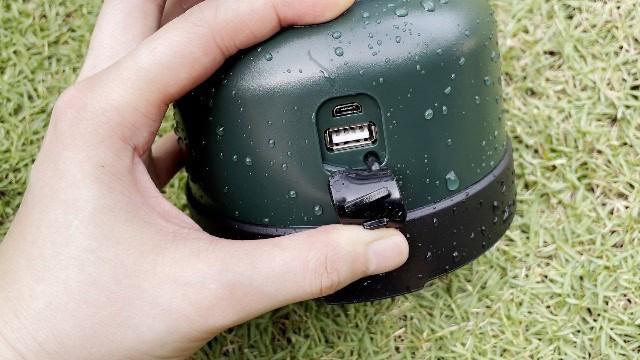
Peel off the rubber flap at the back and you’ll find 2 ports (a micro-USB input on top, a regular USB-A output below).

- Full charge 6 hrs 15 minindicator turns red while charging, green when done
- Battery In-builtno removable pack, and no solar panel option

Charging Output
The USB-A output charges phones and other devices. Here’s what I got with my iPhone 12 from a full charge:
- Day 1 63% charge in 2 hrs 5 min
- Day 2 16% charge in 40 min
- Total 79% charge
- Leftover light 45 min on high, or 3.5 hrs on low
- Estimated capacity 3,500-4,000 mAhColeman doesn’t publish a capacity, so this is my own estimate
The connection got spotty near the end, dropping in and out, usually a sign the battery is nearly flat.
Light Modes
A switch in the middle gives just 2 modes (low to the left, high to the right). It isn’t dimmable beyond the low setting.

Lumen Output
| Lighting mode | Official specs | My testing |
|---|---|---|
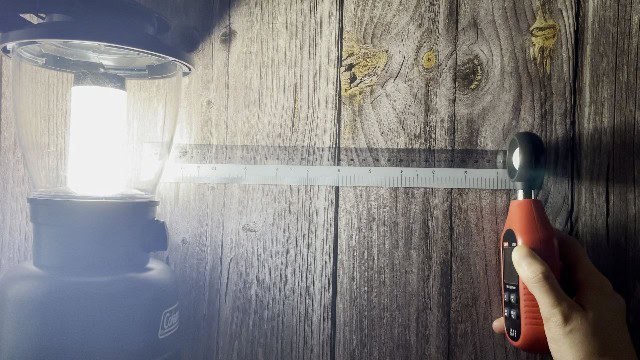
| High | 400 lumens | 675 lumens |
| Low | 100 lumens | 178 lumens |
Run Times
| Lighting mode | Official specs | My testing |
|---|---|---|
| High | 4 hours | 4.25 hours |
| Low | 20 hours | 20.75 hours |
The official specs are pretty accurate here. Good for you, Coleman.
Shine Distance
| Lighting mode | Official specs | My testing |
|---|---|---|
| High | 12 meters | 8.6 feet |
| Low | 6 meters | 6.9 feet |

Light Quality
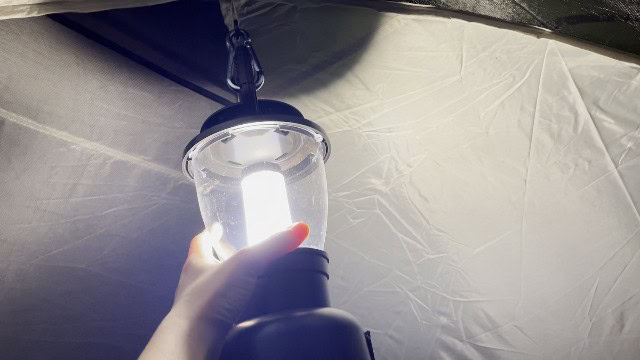
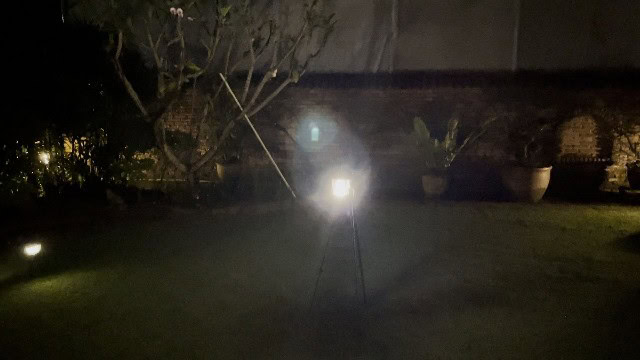
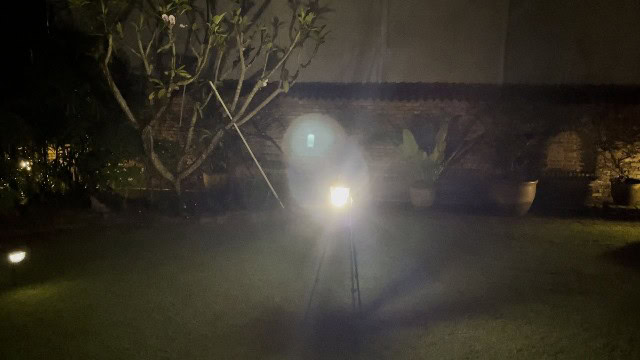
Coleman doesn’t specify a color temperature. The lantern was a little glaring up close even on low. The inside LED casing could be more frosted to soften it.
Handle
A single big handle at the top, the perfect size for most hands and comfy to carry.
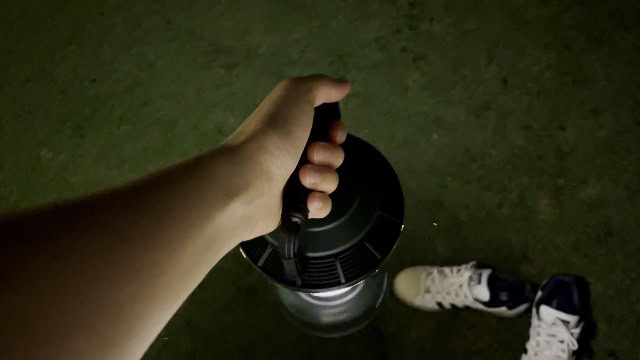
It isn’t detachable, so I couldn’t hook it into a tent directly, but a carabiner solves that.

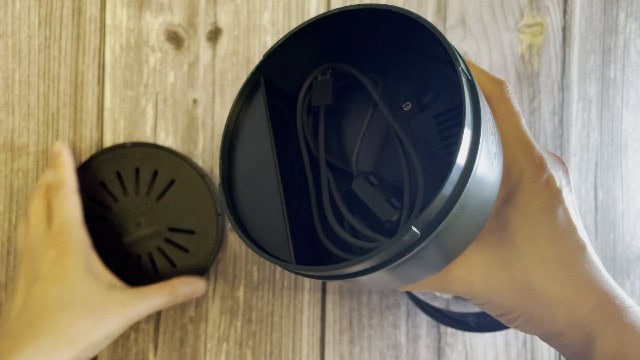
Charger Storage
The storage compartment at the bottom is the perfect size for the charging cable plus a few smaller items.
Portability
- Weight 21.8 oz lantern only, without the cable in its base
- Packed size 5 x 5.5 x 10.5 in
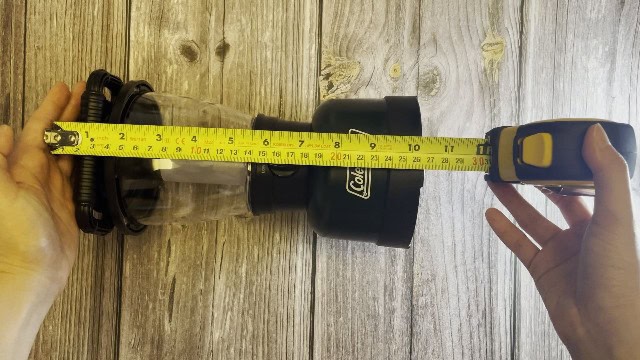
Note For comparison, the lightest USB-rechargeable lantern I own (excluding solar) is the Goal Zero Lighthouse Mini at a mere 8 ounces.
IP Rating
The Coleman is rated IPX4 (protected from splashing water at any angle, so it takes rain decently well, but it isn’t fully waterproof).
I put it through 30 minutes of heavy rain and it still worked fine afterward, though water got in near the USB port because the black flap isn’t the most watertight.

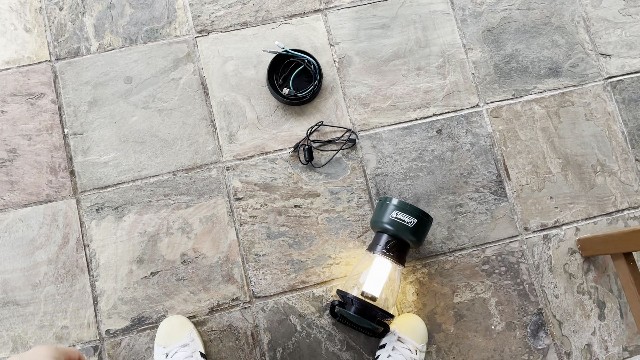
Drop Testing
I’ve dropped it a few times and everything held up, though the charger storage at the bottom pops open and everything falls out.
Warranty
It has a 3-year warranty, which is decently long.
Pros, Cons, Recommendations
Now, what are the pros and cons, and would I recommend the Coleman Rugged 400?
Easy to use
If you want a lantern with a simple on-off switch and nothing else, this is the way to go. It took me 2 seconds to get the hang of it.
Lifetime LEDs
It charges via USB rather than taking batteries like most Coleman lanterns, so it’s more environmentally friendly. And the lifetime LEDs never need replacing, according to Coleman.
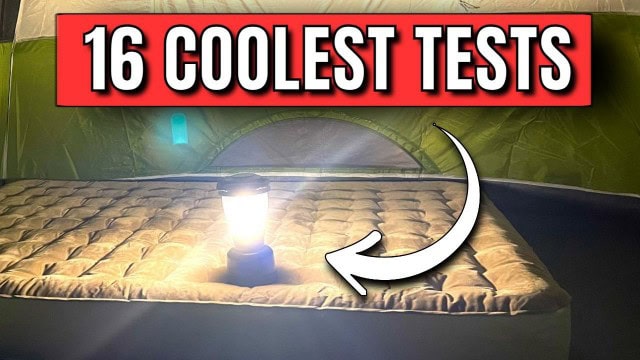
Lighting area of 232 sq. ft.
- Lighting area on high 232 sq. ft.a 14-person tent is about 230 sq. ft.
- Lighting area on low 149.6 sq. ft.the Coleman WeatherMaster 10 is about 143.6 sq. ft.

Cable storage
The charging cable storage at the bottom is unique and interesting to have.
Bulky
It can afford that cable storage because it’s a bulky lantern. And that’s the least of the problems.
Low mode is too bright
The biggest issue is too few light modes. Low comes in at 178 lumens, which is way too bright for me at night. Once your eyes adjust to the dark it’s blinding. I’m used to a 0 to 10-lumen low setting for just a little illumination.
Short run time
Because low is so bright, the max run time on low is under 21 hours, not great for an extended power outage.
No emergency mode
There’s no flashing or SOS mode, which most other lanterns have.
No battery life indicator
There’s no battery indicator at all, so you can’t tell how much charge is left at any time.
Overall recommendation
If you swear by the Coleman brand, this is one perfectly functional and good lantern for a short car camping trip, and it’ll light up any Coleman tent you use. For me though, it just doesn’t make the cut.
Bonus: Must Read!
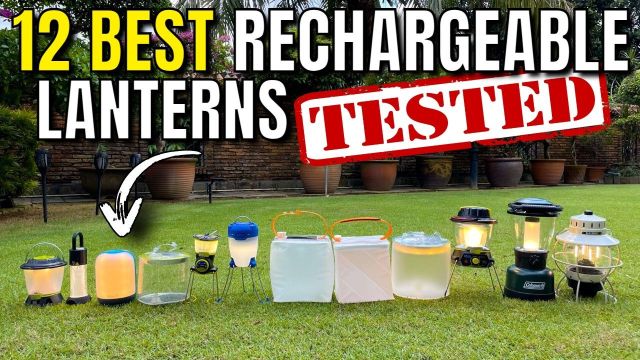
I have plenty of other USB rechargeable camping lanterns that I’d reach for first. Here’s the full comparison.
Every figure above is from my own testing. Measured by hand, bought with my own money.