Camping percolators · Review
GSI Outdoors Enamelware Percolator Review (Bought & Tested!)
I bought this percolator with my own money and put it through 9 hands-on tests.
- Model 8-cup
- Max capacity 5 cups
- Min capacity 4 cups
- Material Enamel
This page contains affiliate links, and that means that I may earn a commission if you buy something, at no extra cost to you. You can find my full disclosure policy here.
Test scorecard
The GSI Outdoors Enamelware Percolator was a disappointment. It’s not user-friendly at all, and there was pretty heavy rusting and chipping after only light usage. Perhaps I just got a lemon, but based on all my testing I can’t recommend this percolator.
- Lifetime warranty from GSI Outdoors
- Boils over easily
- Not user-friendly at all
- Rusting and chipping
If you prefer watching to reading, check out my video here instead.
See the 9 tests
In the Box
It arrived in a nice Amazon box, but GSI’s own packaging was just plastic and thin foam.

Here is everything that came in it:
- Enamel coffee pot
- Spreader
- Filter basket
- Stem
- Perking knob
- Instructions
Specifications
These are my own measurements:
- Height to the perking knob 9.0in
- Length, handle to spout 8.0in
- Lid diameter 4.0in
- Base diameter 6.0in
- Weight 20.7oz
- Made in Mexico
Official Instructions
GSI’s own method didn’t work for me, and it’s worth knowing why before you buy.
- GSI’s fill line Always below the filter basketThat capped me at about 40oz
- GSI’s heat setting Highest
- GSI’s perk time No more than 3 minutes
The basket sits very low on the stem and reaches deep into the pot, which is what eats the capacity.
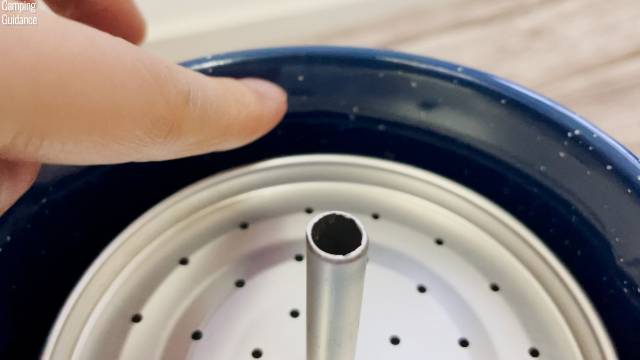
I tried their method and my coffee came out tasting burnt.
How to Use
Here is the recipe I use instead:
- Water per cup 6oz
- Grounds per cup 10-11g (0.35-0.39oz)
- Grind CoarseMedium roast
Then I brew it like this:
- Pour the grounds into the filter basket.
- Drop in the stem, filter basket and spreader, then close the lid.
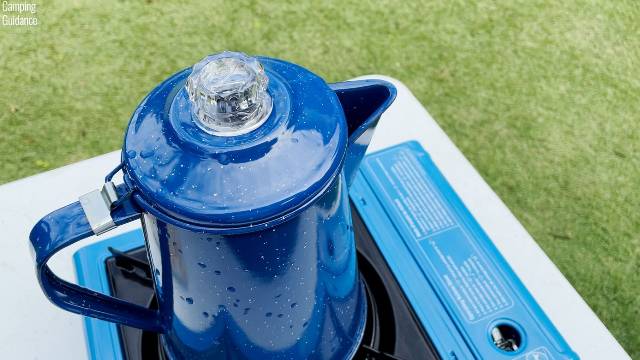
- Bring the water to a boil on medium heat, and you can see it perking through the PercView knob on top.
- Lower the heat to medium-low and percolate for 7 minutes, then turn it off.
- Let it sit a few minutes so the basket drains and the grounds settle.
Brew Time
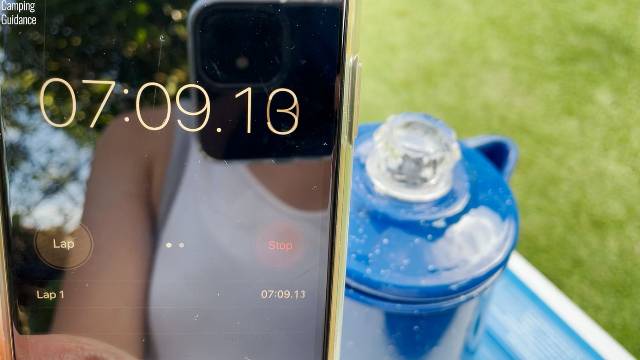
For brew time I measured the time to first perk, which is how long the water takes to start boiling.
| Water | Time to first perk |
|---|---|
| 3 cups (18oz) | 4 min 45 sec |
| 5 cups (30oz) | 7 min |
| 6 cups (36oz) | 8 min |
Capacity
- Marketed 8 cups
- Most water it holds 40ozGSI’s own fill line is below the filter basket
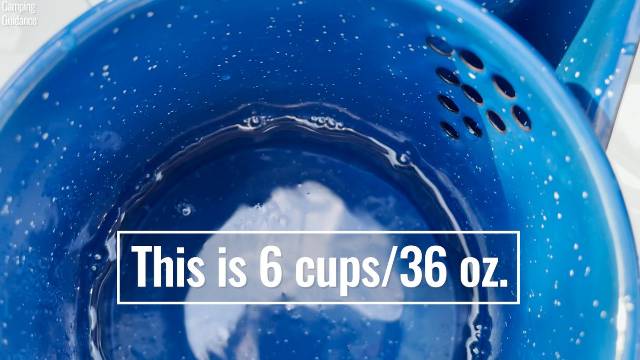
- Most coffee I could brew 5 cups (30oz)36oz boiled over after about 4.5 minutes of percolation
- Least coffee I could brew 4 cups (24oz)At 3 cups the brew comes out looking like tea
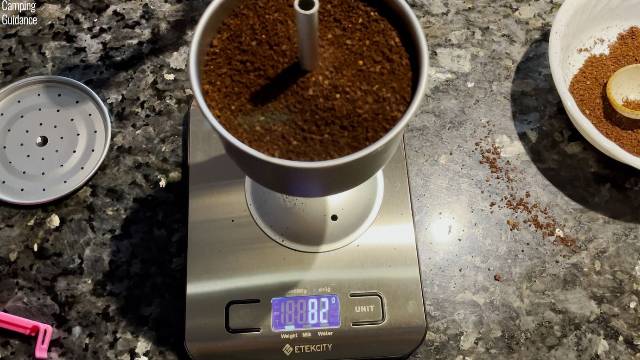
- Filter basket holds 82g (2.9oz) of coarse groundsMore than enough for a full 5-cup brew
- Other sizes 12-cup
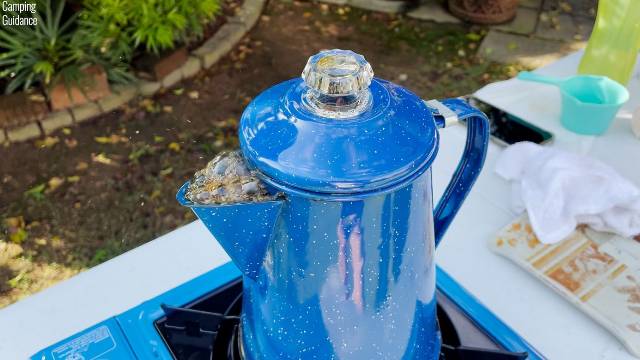
It is sold as an 8-cup percolator. At 36oz it started boiling over after about four and a half minutes of percolation on medium-low.
5 cups (30oz) brewed perfectly. At 4 cups (24oz) the coffee wasn’t as strong but was still drinkable.
At 3 cups my brew looked like tea rather than coffee, and my 32g (1.1oz) of grounds went barely used.
So the real range is 4 to 5 cups, which is extremely limited for a percolator sold as an 8-cup.
Ease of Use
There is no scale or cup-level marking anywhere on the pot. Worse, I can’t even use the spout holes as a gauge, because it boiled over with the water sitting well below them.
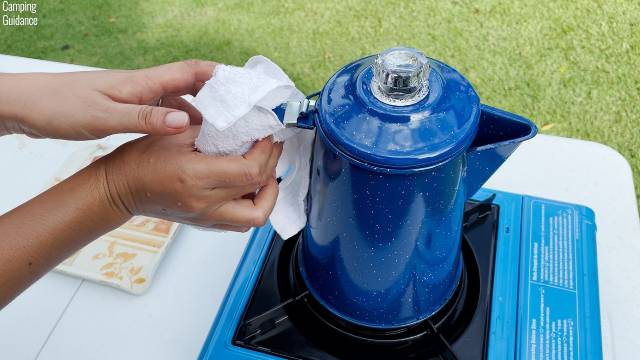
The handle is the same material as the pot, so it gets really hot after percolation and I need a cloth to hold it. The lid is very loose too, so I have to hold that down while pouring.
It does have a transparent PercView knob, so you can see when the water starts boiling and how dark the coffee is getting.
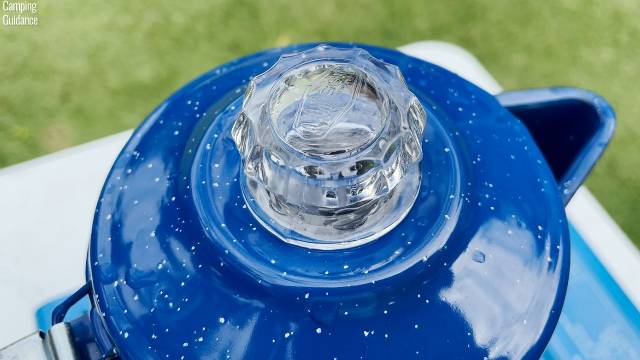
The wide base makes it stable on the stove. A coarse grind kept all but a minimal amount of grounds out of my last cup.
Clean Up
I toss the grounds and run water through every component, and they all come apart easily for a proper wash.
Percolating plain water is the most effective way I’ve found to shift the coffee oils.
Quality
- Pot, lid and handle Heavy-gauge steel with an enamel finish
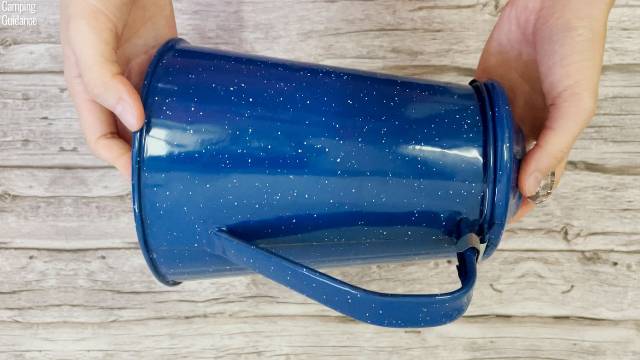
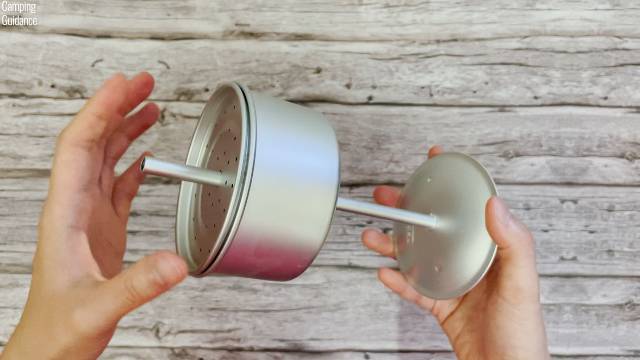
- Stem, basket and spreader AluminumThey feel a bit flimsy
- Perking knob Resin
- Warranty LifetimeAgainst manufacturing defects
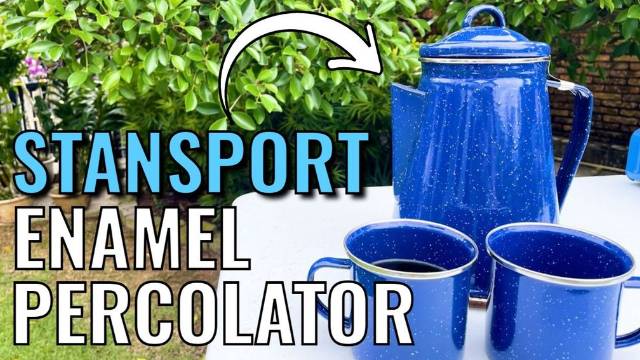
After only light use I found rust forming on the rim of the lid and on the handle. The Stansport Enamel 8-Cup Percolator I tested went the same way around the lid rim, the spout and the base.
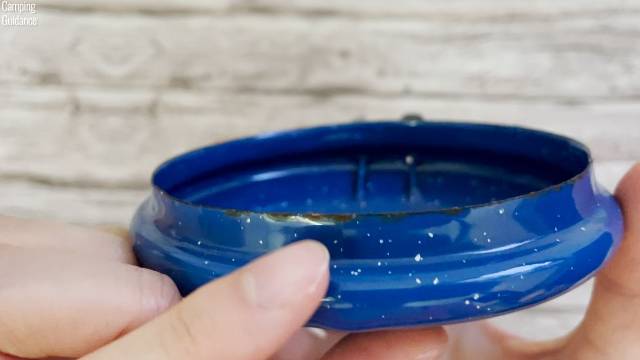
Some enamel had already chipped off out of the box. The aluminum hinge joining the lid to the handle is flimsy, comes off easily and bends without much force.
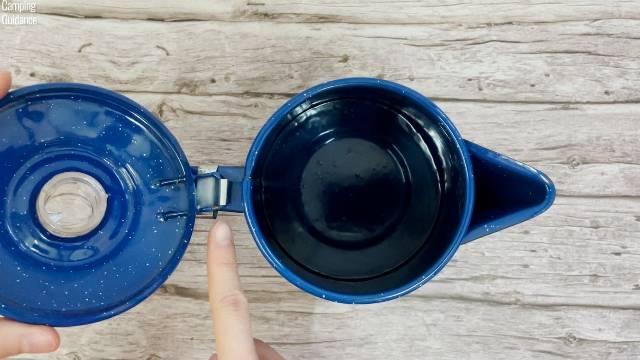
The knob never seats properly no matter how I screw it in, and the filter basket and stem rattle around inside the pot.
Overall quality is disappointing, though GSI Outdoors does back it with a lifetime warranty.
Pros and Cons
Now, what are the pros and cons, and would I recommend the GSI Outdoors Enamelware Percolator?
A lifetime warranty from GSI Outdoors
You get a lifetime warranty against manufacturing defects from a trusted brand. I’m sorry, but I couldn’t think of anything else that was good about this one.
The capacity is extremely limited
I could brew only 4 to 5 cups out of a percolator sold as an 8-cup.
It isn’t user-friendly at all
There are no markings, the spout holes are useless as a gauge because it boils over below them, and the handle gets extremely hot.
Rusting and chipping
Rust appeared on the lid rim and handle after light use, and some enamel had already chipped off out of the box.
Overall recommendation
For this one the cons clearly outweigh the pros, so there’s no way I can recommend it as a good camping percolator, let alone the best on the market.
It isn’t expensive, but even so the GSI Outdoors Enamelware Percolator is hard to justify.
GSI Outdoors makes another stovetop percolator in stainless steel rather than enamel, and you can read my GSI Outdoors Glacier Percolator review here instead.
Bonus: Must Read!
I know this because I tested the GSI Enamelware against 8 other camping percolators. Check out my Best Camping Percolators article to see which one I actually recommend.
Or, check out the GSI Enamel Percolator:
I measured every number on this page myself.