6-Person Tents · Vs review
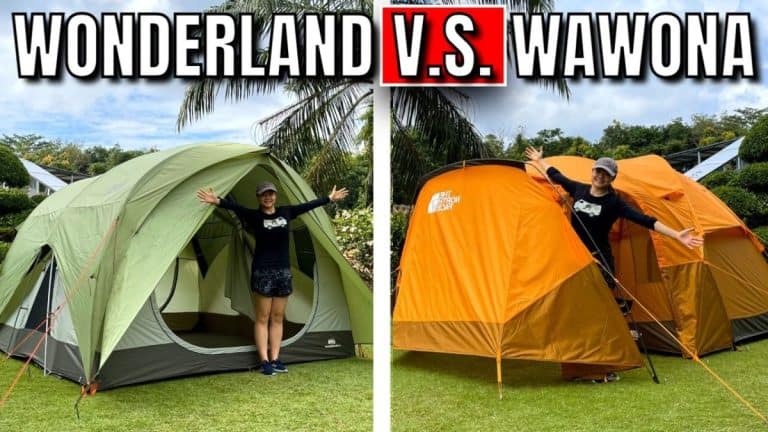
The North Face Wawona 6 V.S. REI Base Camp 6 (I Bought & Tested Both!)
Two 6-person tents, side by side in my yard, across 11 head-to-head tests.
This page contains affiliate links, and that means that I may earn a commission if you buy something, at no extra cost to you. You can find my full disclosure policy here.


The short answer
Buy the Wawona 6 for summer and for weather you can't predict. Buy the Base Camp 6 for the shoulder season.
The Wawona 6 has the DAC MX poles, 11 guylines, every seam taped and a 51.0 sq ft porch I can stand up in — it sat in inches of floodwater through days of thunderstorms without a single leak. The Base Camp 6 answers with a full-length rainfly, 34 pockets and loops against 17, and vents I can open and shut without leaving the tent. The split is the season: the Base Camp is the 3+ season tent, the Wawona is the summer one.
Side by side
Where they actually differ
| Measured | Wawona 6 | Base Camp 6 |
|---|---|---|
| My score | 8.1 / 10Best overall | 7.8 / 10 |
| Set up (1 person) | 20 minutes | 17.5 minutes |
| Pack away (1 person) | 14 minutes | 15 minutes |
| Peak height | 77 inches | 73 inches |
| Length × width | 116 × 94 inches | 109 × 109 inches |
| Base area | 75.7 square feet | 82.5 square feetAlmost 10% more |
| Base shape | RectangleFits 2 almost-queen beds | SquareFits 1 queen bed |
| Vestibules | 151.0 sq ft | 252.4 sq ft — 31.1 front, 21.3 back |
| Vestibule height | 65–74 inchesI can stand up in all of it | 62 inchesFront vestibule |
| Pockets + loops | 9 + 8 = 17 | 14 + 20 = 34Double |
| Windows | 3 | 2 |
| Vents | 4Outside access only | 4Open and shut from inside |
| Rainfly | Partial | Full length |
| All seams taped | Yes | NoFlooring seams inverted, not taped |
| Heavy rain (1 hour) | Passed | Passed |
| Poles | DAC MX | Aluminum |
| Guylines | 11 | 6 |
| Door zippers | SBS | YKKDoors only |
| Carry bag | Top-loadingWide opening | Side-loading |
| Weight | 19.4 lbs | 20.6 lbs |
| Packed size | 26 × 16 × 10 inches | 28 × 13 × 9.5 inches |
✓ = the better result, from my own testing. Shared: both are 6-person tents I bought myself · both have 2 doors · both have 4 vents · both passed the 1-hour heavy rain test.
Which applies to you?
Get this one if…
Get the Wawona 6 if…
- You camp in summer, and you want the ventilation for it.
- Heavy rain or wind is on the cards — DAC MX poles, 11 guylines, every seam taped.
- You want a porch you can stand up in: 51.0 sq ft at 65–74 inches tall, big enough for 2 camping chairs and a table.
- You're sleeping 2–4 people and want 2 almost-queen beds.
Get the Base Camp 6 if…
- You camp in the shoulder season — less mesh, full rainfly, vents you can shut from inside.
- You want the storage: 14 pockets and 20 loops, double the Wawona.
- You want the quicker pitch (17.5 minutes) and a rainfly that goes up first time.
- You want 82.5 sq ft of inner floor and only need one queen bed.


Set Up & Pack Away
| Measured | Wawona 6 | Base Camp 6 |
|---|---|---|
| Set up (1 person) | 20 minutes | 17.5 minutes |
| Rainfly attempts | 2–3 | 1 |
| Pack away (1 person) | 14 minutes | 15 minutes |
| Carry bag | Top-loadingWide opening | Side-loading |
Both went up fine on my own, and the colour-coding — poles, sleeves, clips, webbings, rainfly grommets — does most of the thinking for you.

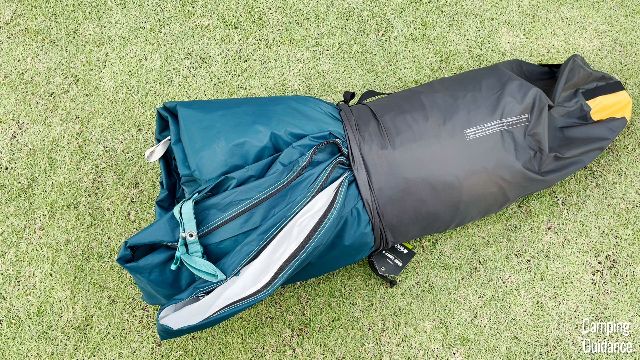
The Wawona's extra minutes are all rainfly: too much fabric, too many pole clips, catching on the tent body every time, so it takes me 2 goes and sometimes 3. The Base Camp's went up first time. Packing away flips it — the Wawona's top-loading bag swallows everything, while squeezing a rolled Base Camp through the side of its sack is a fight. Even, on balance, and my own ratings put both at 6.5 for ease of use.
Base Area & Sleeping
| Measured | Wawona 6 | Base Camp 6 |
|---|---|---|
| Length × width | 116 × 94 inches | 109 × 109 inches |
| Base area | 75.7 square feet | 82.5 square feetAlmost 10% more |
| Base shape | Rectangle | Square |
| Queen beds that fit | 2 almost-queens | 1 |
| Measured vs marketed | 4 in short on length, 2 in short on width | At most 1 in off |
The Base Camp has more floor; the Wawona has the better-shaped floor. A square takes exactly one queen bed, while the Wawona's rectangle took 2 almost-queens despite being the smaller tent. I'll take the shape.
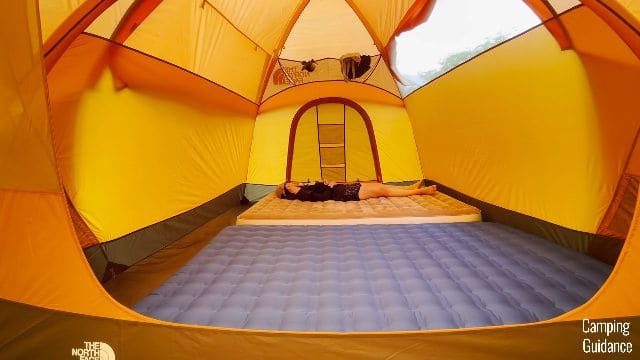
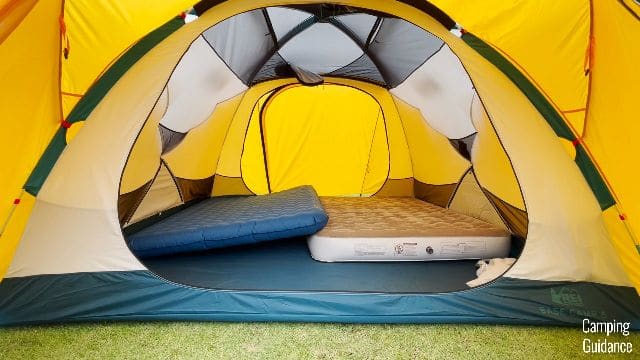
One mark against the Wawona: it is sold as 120 by 96 inches. That's a chunk of floor I paid for and didn't get. The Base Camp measured within an inch.
Peak Height
| Measured | Wawona 6 | Base Camp 6 |
|---|---|---|
| Peak height | 77 inches | 73 inches |
Four inches to the Wawona. Neither is the tallest tent I've tested — I reach the top of both without going on tiptoes — but on a dome tent every inch at the centre buys standing room further out.
Doors & Zippers
| Measured | Wawona 6 | Base Camp 6 |
|---|---|---|
| Doors | 21 full size, 1 small back door | 2Both 74 × 59 inches |
| Holding a door open | Toggles — 15 seconds | Door pocket — 4 seconds |
| Door zippers | SBS | YKKDoors only |
| Window zippers | SBS | No brand |
Both front doors are big and unzip snag-free, one-handed, in about 3 seconds. What happens next splits them: the Base Camp's door fabric stuffs into a pocket above the door, the Wawona's has to be rolled and tied with 2 toggles. I timed it — 4 seconds against 15.
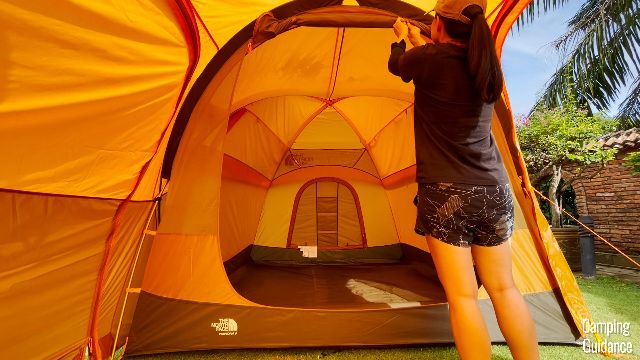
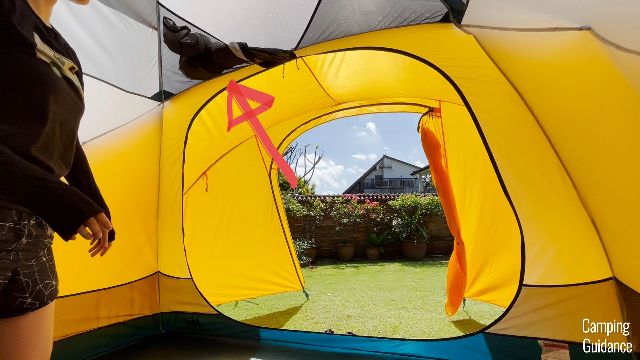
And the Wawona doesn't really have 2 doors. The back one is small enough that I duck through it, and propping it open means unzipping the inner window fabric, tying that, then tying the door. The Base Camp's two are identical, each taking up most of a wall.
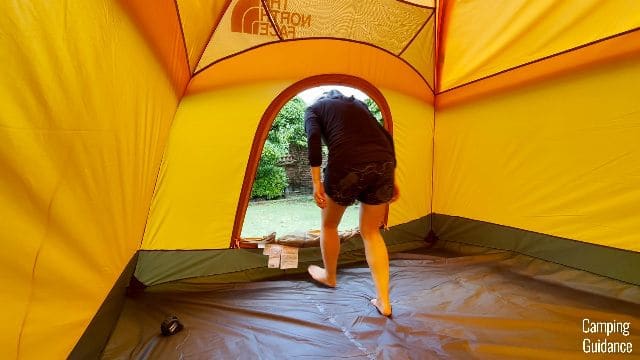
The Base Camp is a zipper grade up, but only on the doors — its windows run no-brand zippers where the Wawona is SBS throughout. Branded zippers matter most where the strain is, so I'll still take the Base Camp's.
Storage
| Measured | Wawona 6 | Base Camp 6 |
|---|---|---|
| Pockets | 9 | 14 |
| Loops | 8 | 20 |
| Total | 17 | 34Exactly double |
Not close. 14 pockets, most of them big, running all the way round the tent, plus 20 loops — 5 overhead, 6 on each pair of walls, 3 more out on the front porch. The Wawona has literally half that.
Vents & Windows
| Measured | Wawona 6 | Base Camp 6 |
|---|---|---|
| Vents | 42 window, 2 front | 42 roof, 2 floor |
| Vents worked from inside | 0 of 4 | 4 of 4 |
| Windows | 3 | 2 |
| Windows worked from inside | 1 of 3 | 2 of 2 |
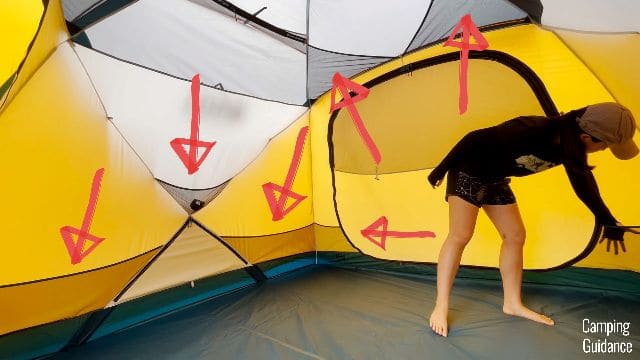
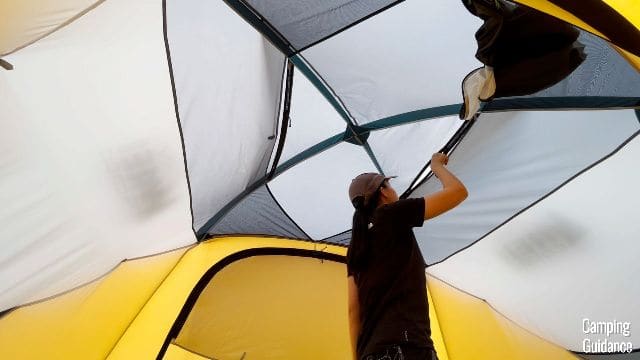
Same vent count, completely different experience. Every Base Camp vent opens and shuts from inside — one of very few tents I own that can — so when horizontal rain came in during my rain test I shut the roof vent without getting up.
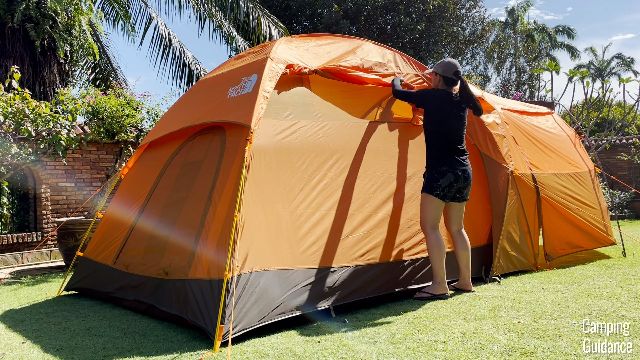
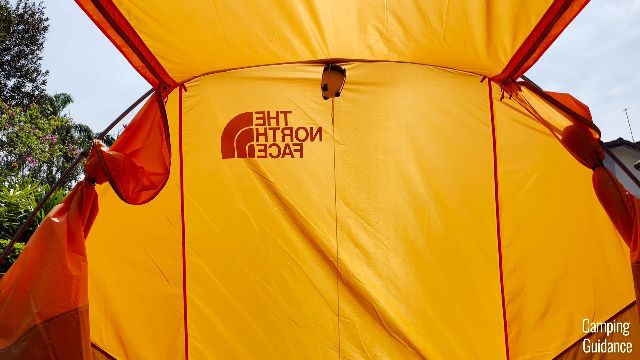
None of the Wawona's can, and nor can 2 of its 3 windows. My workaround is to guy those windows out using the loop under each one, which gets me air on hot days and in rain without running outside when the weather turns.
Hot-Day Ventilation
| Measured | Wawona 6 | Base Camp 6 |
|---|---|---|
| Mesh | Three-quarters of the front wall, plus a mesh ceiling joining all 4 walls | A small skylight, 2 part-door windows, 2 triangle panels |
| My ventilation rating | 7.0 / 10 | 6.0 / 10 |
Rainfly off, three-quarters of the Wawona's front wall is mesh, with panels on all 4 walls meeting in a mesh ceiling. Open the back window and air moves through the whole tent.

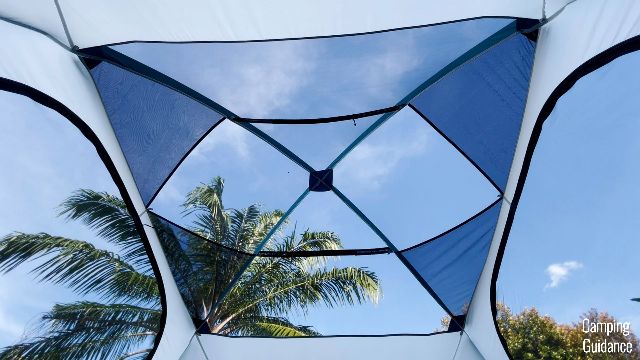
Rainfly off the Base Camp, you get a small skylight, 2 not-even-half-door windows and 2 triangle panels at the bottom. Good tent. Hot and stuffy in July.
Shoulder-Season Warmth
| Measured | Wawona 6 | Base Camp 6 |
|---|---|---|
| Mesh | Lots | Little — more fabric than mesh |
| Rainfly | Partial | Full length — properly double-walled |
| Vents | 4, outside access | 4, small, shut from inside |
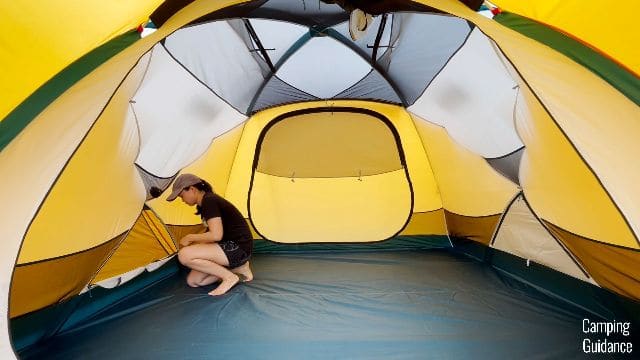
Everything that makes the Base Camp warm in the shoulder season is what makes it stuffy in July: little mesh, a full rainfly sealing it into a proper double wall, and 4 small vents you can shut from inside at any moment. In colder temperatures, this is the one I take.
Rain Protection
| Measured | Wawona 6 | Base Camp 6 |
|---|---|---|
| Heavy rain (1 hour) | Passed | Passed |
| Days of thunderstorms, sitting in inches of water | Passed — not a single leak | Not tested |
| All seams taped | Yes | NoFlooring seams inverted, not taped |
| Water sprayed straight at the tent body | Not needed | Leaked at the corners after about an hour |
| Rainfly | Partial | Full length |
| My weather protection rating | 9.7 / 10 | 8.7 / 10 |
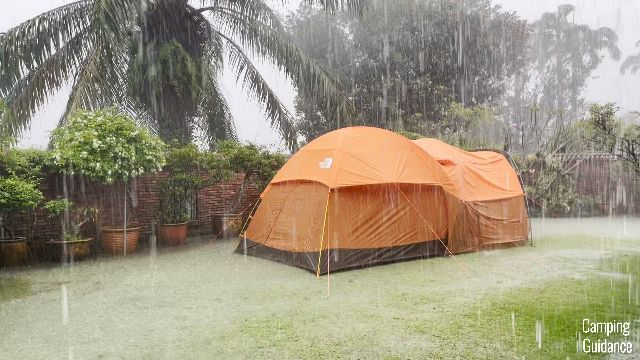
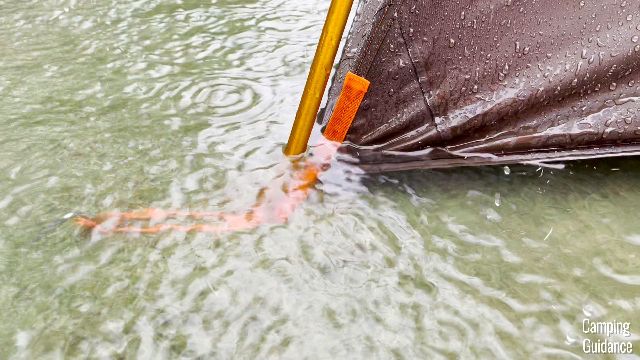
Both passed the 1-hour test, so I pushed harder. The Wawona went through days of thunderstorms — the heaviest rain I saw all year, my whole yard flooded, the bottom of the tent sitting in inches of water — and not a drop got in. You never have to seal a seam on it yourself.
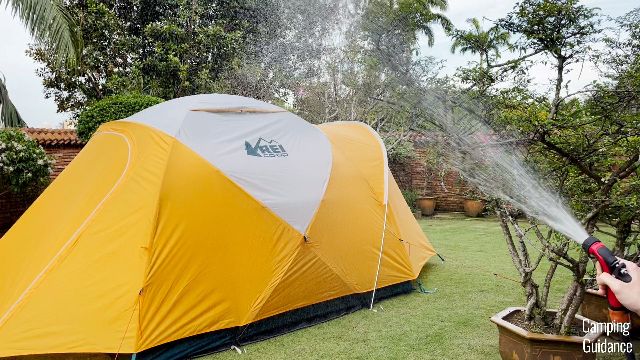
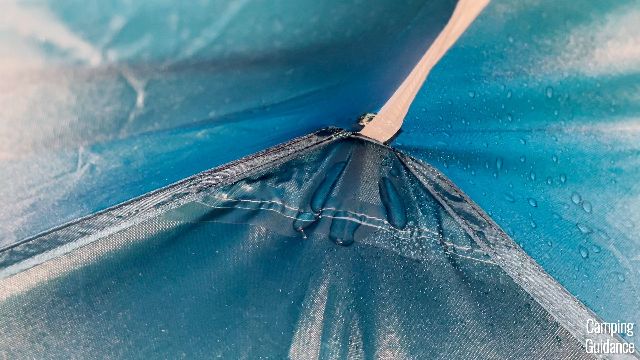
The Base Camp's full-length rainfly is genuinely good, and it is the reason the tent stays dry: water runs off the fly straight to the ground, barely touching the inner tent. But the flooring seams underneath are inverted, not taped, and spraying water at the tent body instead of the fly had the corners leaking after about an hour.
So the Base Camp is dry as long as the rainfly does its job. The Wawona is dry either way.
Vestibules
| Measured | Wawona 6 | Base Camp 6 |
|---|---|---|
| Vestibules | 1 | 2 |
| Vestibule area | 51.0 square feet | 52.4 square feet31.1 front + 21.3 back |
| Vestibule height | 65–74 inches | 62 inchesFront |
| What fits | 2 camping chairs and a big camping table | 2 chairs in front; the back one won't take a stool |
The Base Camp has more vestibule on paper, spread across two of them. Ignore that — what matters is whether you can use the space.
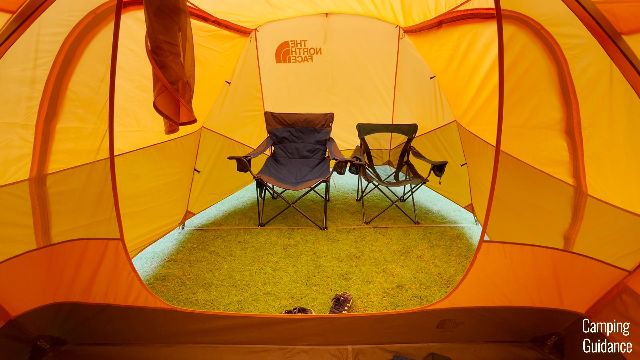
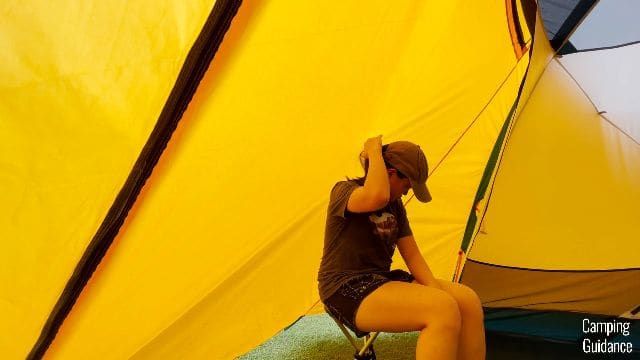
The Wawona's porch is 74 inches at the tall end, so at 5'3" I stand upright anywhere in it, with room for 2 camping chairs and a big table. The Base Camp's front vestibule takes 2 chairs fine; its back one wouldn't let me sit up straight on an REI Trail Stool. For living in it, the Wawona wins hands down.
Poles, Guylines & Wind
| Measured | Wawona 6 | Base Camp 6 |
|---|---|---|
| Poles | DAC MX | Aluminum |
| Guylines | 11 | 63 a side |
| Wind tested | 10–15 mph — held up | Light wind only |
| Bent poles after testing | None, not in the slightest | None |
DAC MX is top-of-the-line aluminum — it snaps together more easily and it is a lot stronger than the Base Camp's regular aluminum. Through weeks of crazy rain and some wind, not one of my Wawona's poles bent even slightly. A friend put the previous version through 50 mph winds and his poles came out better than my regular-aluminum REI ones did on a tent that never saw a wind test.
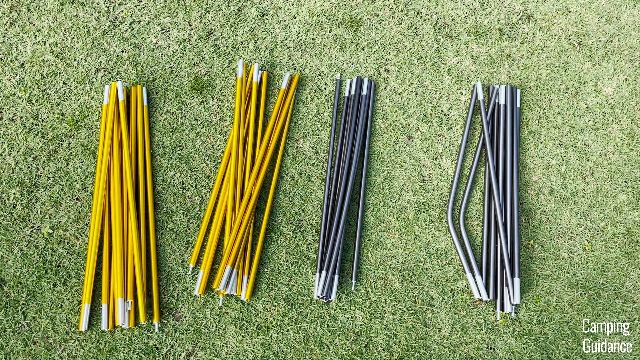
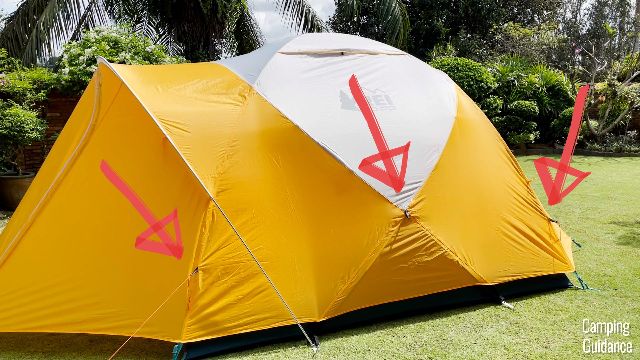
The Wawona also has 11 guy-out points to the Base Camp's 6, and guying it out almost completely is what got it through my 10–15 mph test without drama.
My recommendation
If I'm camping in the shoulder season with colder temperatures, I take the REI Co-op Base Camp 6. Not much mesh, a full rainfly over it so it's properly double-walled, and 4 small vents I can shut from inside — three things that all keep the heat in. It's also the one with the storage.
For everything else, it's The North Face Wawona 6. It's a 3-season summer tent with the ventilation to match, and the DAC MX poles and fully taped seams make it the one I'd trust in heavy rain or strong wind. It scored 8.1 against the Base Camp's 7.8, and it's my best overall pick of the seven 6-person tents I tested.
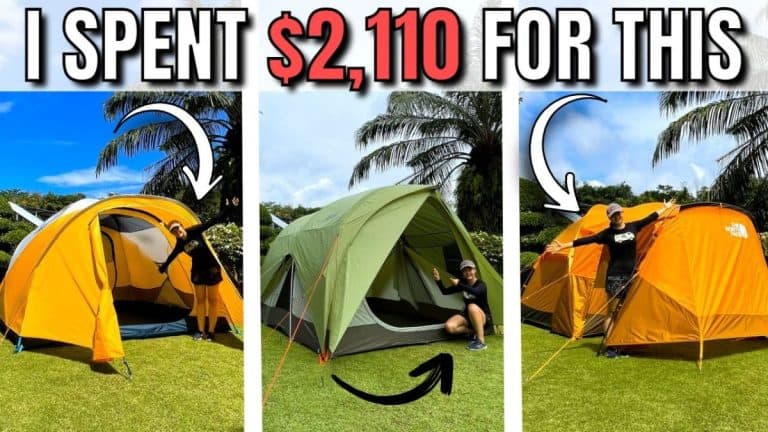
Bonus: I spent over $2,000 buying and 6 months testing seven different 6-person tents against each other — set-up timings, rain tests, base areas, the lot. Every figure on this page comes out of that run.
Every figure on this page comes from my own measurements of the tents I bought and tested in my own yard — not from a spec sheet.