6 tests × 12 lanterns
The 12 Best Rechargeable LED Lanterns (Bought & Tested!)
These 12 lanterns set me back by about $700 (yes, I actually buy each camping lantern with my own savings), and I also spent about 6 months testing all of them out.
This page contains affiliate links, and that means that I may earn a commission if you buy something, at no extra cost to you. You can find my full disclosure policy here.
The Podium
Quick Summary
Here’s everything I recommend.
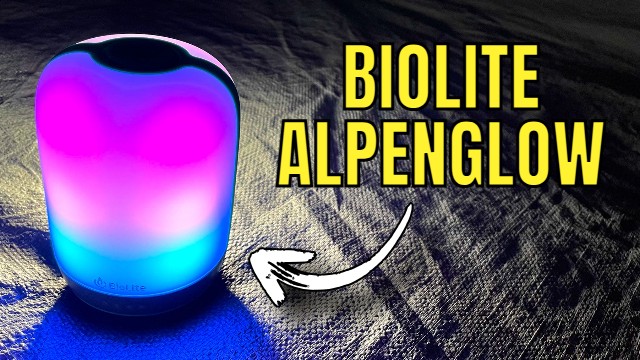
BioLite AlpenGlow 500
The most light modes of any camping lantern.
8.2/ 10 overall

Best Solar Lantern
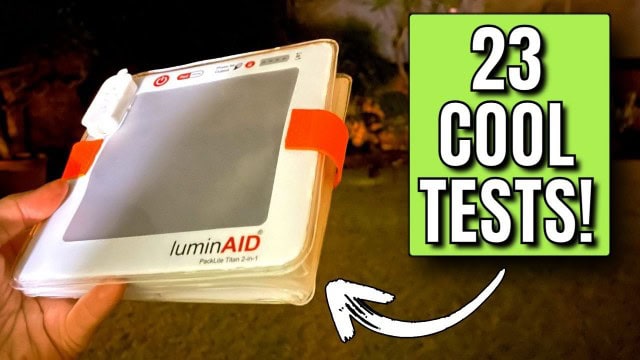
LuminAID PackLite Titan
 7.9/10
- Twist-to-inflate — no breath required
- Max brightness: 316 lumens
- Max run time: 250 hours
- Capacity: 4,000 mAh
- IPX rating: IP67
Brightest Lantern
Goal Zero Lighthouse 600
 6.8/10
- Max brightness: 985 lumens
- Max run time: 355 hours
- Capacity: 5,200 mAh
- Dynamo hand crank
Best Durability
Ledlenser ML6
 8.3/10
- IPX rating: IP66
- Best warranty (7 years)
- Removable 18650 battery
- Max brightness: 720 lumens
- Max run time: 269 hours
Best Budget Pick
Goal Zero Lighthouse Mini
 6.8/10
- Very affordable
- Compact and lightweight
- Max brightness: 530 lumens
- Max run time: 616 hours
- Capacity: 3,200 mAh
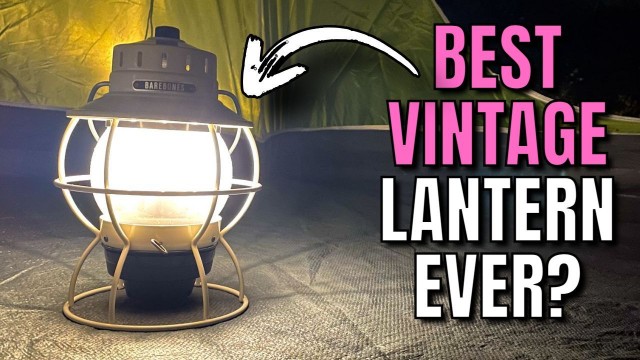
Best Vintage Lantern
Barebones Railroad
 5.8/10
- Beautiful aesthetic
- Removable rechargeable battery
- Uses a USB-C cable
- Max brightness: 382 lumens
- Max run time: 522 hours
Jump to: The Rest of the Best ↓ How I Tested ↓ Why You Can Trust Me ↓
The video

If you prefer watching to reading, check out my video here instead.

Camping Guidance
32K
Table of contents
- 1. BioLite AlpenGlow 500 (Most Feature-Rich)
- 2. LuminAID PackLite Titan (Best Solar Lantern)
- 3. Goal Zero Lighthouse 600 (Brightest Lantern)
- 4. Ledlenser ML6 (Best Durability)
- 5. Goal Zero Lighthouse Mini (Best Budget Pick)
- 6. Barebones Railroad (Best Vintage Lantern)
- The Rest of the Best
- How I Tested All my Lanterns
- Why You Can Trust Me
Most Feature-Rich
BioLite AlpenGlow 500
Test scorecard
BioLite AlpenGlow 500
8.2out of 10
Brightness9.7
Run-Time8
Features10
Ease of Use7.3
Durability6.3
Portability7
Key info
- Max lumen output690 lumens
- Max run time203 hours
- Battery capacity6,400 mAh
- Charge time5 hours (via USB)
- IPX ratingIPX4
- Weight14.5 ounces
- Packed size3.6 x 3.6 x 5.4 inches
Pros
- Generous battery capacity
- Great range of brightness settings
- The most light modes of any camping lantern
Cons
- No emergency mode
TL;DR
The BioLite AlpenGlow 500 has the most light modes of any camping lantern in this review — if you like all the colors, it’s a great camping lantern to have.
Here’s what I love about the AlpenGlow. It has the most impressive battery life of any camping lantern in this review, here’s a quick table on the best few:
| Camping Lantern | Battery Capacity (mAh) |
|---|---|
| BioLite AlpenGlow 500 | 6,400 |
| Goal Zero Lighthouse 600 | 5,200 |
| Goal Zero Lighthouse Core | 4,400 |
| BioLite Luci Charge 360 | 4,000 |
| LuminAID PackLite Titan | 4,000 |
The internal capacities of some of the best rechargeable lanterns I tested for this review.
The battery capacity of 6,400 mAh gave me almost 2 full charges of my iPhone 12, plus another 6 hours of leftover light on the dimmest brightness mode.
On top of that, my AlpenGlow even has a great range of brightness settings, ranging from a 7-lumen nightlight, to the max output of 690 lumens.
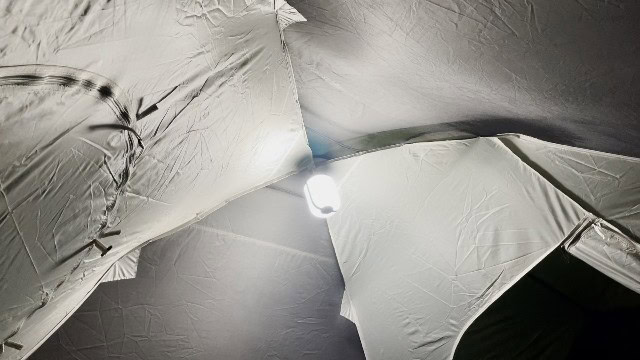
Like the Ledlenser ML6, it also has a continuous dimming, simply by pressing and holding the top button.
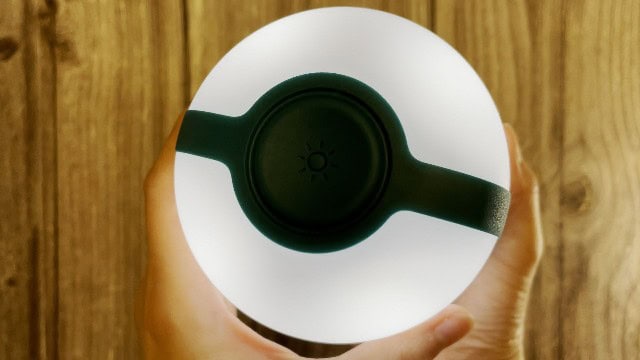
And the best pro of the AlpenGlow 500 that beats out every other camping lantern in this review? You not only have a cool light mode, there’s also a warm light mode, and you can even pick from every single color of the rainbow.
It also comes equipped with:
- Multicolor mode (three different hues at the same time)
- Fireworks mode (6 continuous explosions of light)
- Directional lighting
- Candle flicker
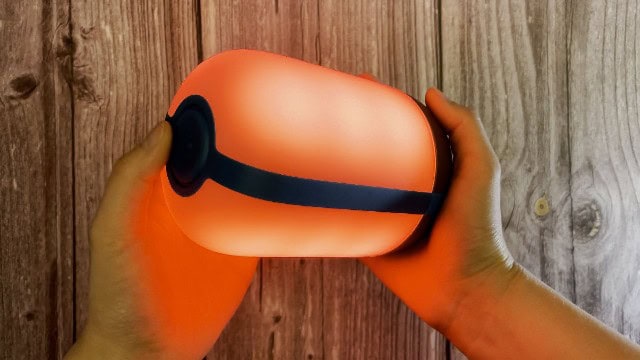
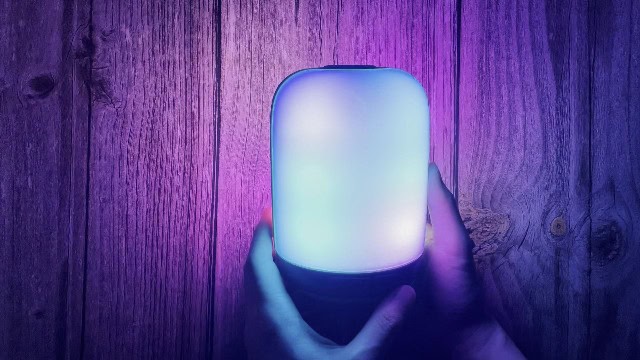
The only mode it doesn’t have though, is a strobe, SOS, or other emergency mode. So, this is definitely more of a fun car camping lantern than some survival lantern you take out in emergencies.
Check out the BioLite AlpenGlow 500:
Best Solar Lantern
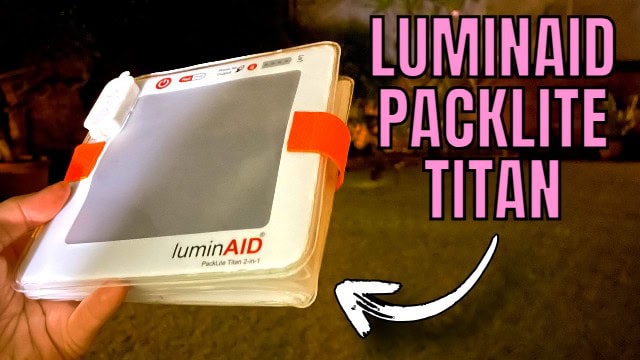
LuminAID PackLite Titan
Test scorecard
LuminAID PackLite Titan
7.9out of 10
Brightness7
Run-Time8.5
Features8
Ease of Use8
Durability7.7
Portability9
Key info
- Max lumen output316 lumens
- Max run time250 hours
- Battery capacity4,000 mAh
- Charge time5 hours (via USB), 4 days (via solar)
- IPX ratingIP67
- Weight11.9 ounces
- Packed size5.8 x 5.8 x 1.1 inches
Pros
- Best performing and feature-rich solar lantern
- No breath required for inflation
- Larger than average integrated solar panel
Cons
- Heaviest solar lantern that I have
TL;DR
I tested 4 different solar lanterns in this review, and the LuminAID PackLite Titan was easily the best of the lot.
All 4 solar lanterns here charge over both USB and solar. Here’s a table summarizing some of the tests that I put them through:
| Solar Lantern | Max Lumens | Area (sq. ft.) | Min Lumens | Max Run-Time | Colors |
|---|---|---|---|---|---|
| LuminAID PackLite Titan | 316 | 211 | 1 | 250 hours | 2 |
| BioLite Luci Charge 360 | 330 | 113 | 21 | 54 hours | 1 |
| LuminAID PackLite Max | 196 | 113 | 21 | 39 hours | 1 |
| BioLite Luci Original | 34 | 15 | 0 | 51 hours | 1 |
Test results from 4 of the solar lanterns I included in this review.
The Titan has a max lumens of 316 lumens, not the most on the list (that’s the BioLite Luci Charge 360), but its lighting area is almost double all the other lanterns here.
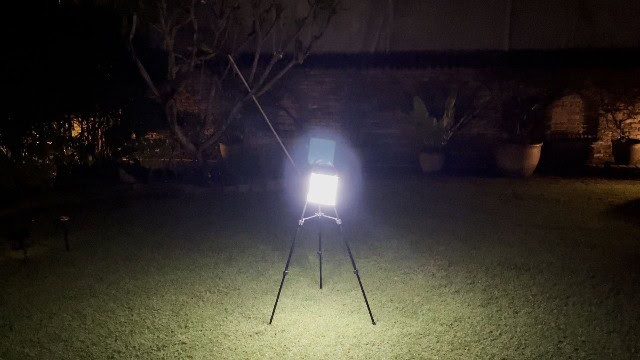
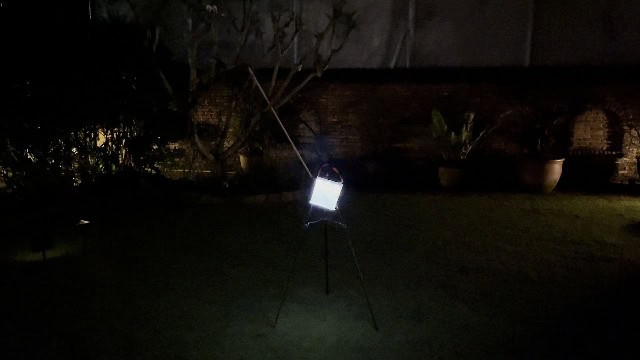
And because of its 1-lumen minimum output, it ran for a whopping 250 hours, 5 times all the other lanterns.
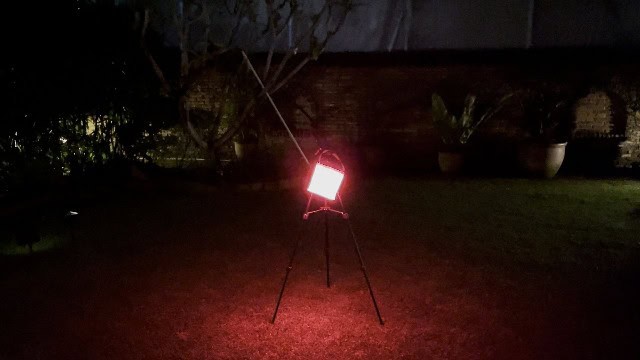
And it also has 2 colors, which is white and red, while the other solar lanterns in this review have only 1 (white, no red).
On top of that, the PackLite Titan is my only solar lantern that comes with a twist-to-inflate design. Just twist the lantern, and it’ll pop up without needing to breathe into it, and this takes only 2 seconds.
On the other hand, all the other solar lanterns in this review require you to breathe into the lantern to inflate it, and this takes more like 10-15 seconds, which is 5 times as long.
| Solar Lantern | Inflation Time | Inflate by Breath |
|---|---|---|
| LuminAID PackLite Titan | 2-3 seconds | No |
| LuminAID PackLite Max | 10-15 seconds | Yes |
| BioLite Luci Charge 360 | 10-15 seconds | Yes |
| BioLite Luci Original | 10-15 seconds | Yes |
Inflation methods and timings of the 4 solar lanterns in this review.
And another huge benefit is the bigger solar panel size of the Titan, coming in at 4 by 4 inches. How does this compare to the others’ solar panels?
| Solar Lantern | Solar Panel (in) |
|---|---|
| LuminAID PackLite Titan | 4.0 x 4.0 |
| BioLite Luci Charge 360 | 3.5 x 3.5 |
| LuminAID PackLite Max | 3.1 x 3.1 |
| BioLite Luci Original | 2.9 x 2.9 |
Solar panel sizes of the 4 solar lanterns in this review.
How does this affect solar charging? I put all 4 solar lanterns out to charge on an average day — not too sunny, not too cloudy.
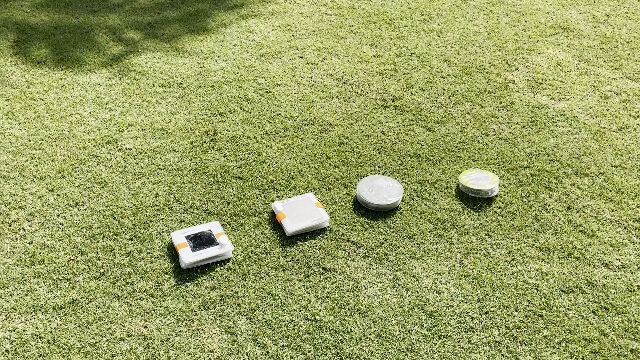
Then I discharged them all, running each at as similar a lumen output as possible:
| Solar Lantern | Lumen Output | Run-Time |
|---|---|---|
| LuminAID PackLite Titan | 191 lumens | 2.5 hours |
| BioLite Luci Charge 360 | 172 lumens | 2 hours |
| LuminAID PackLite Max | 196 lumens | 1.5 hours |
| BioLite Luci Original | 150 lumens | 1 hour |
Solar lantern run times and lumen outputs after 1 day of solar charging.
Even though the Titan was running at almost the highest output of all the lanterns, 191 lumens, it also lasted the longest, coming in at a whopping 2 and a half hours. Basically, it has the most efficient solar charging, thanks to the bigger solar panel.
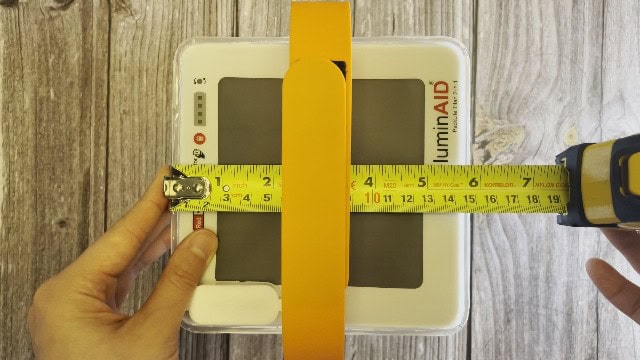
But of course, with all the pros also come a few cons, and the Titan is not only the most expensive solar lantern that I bought, but also the heaviest:
- BioLite Luci Original: 6.1 oz
- LuminAID PackLite Max: 7.7 oz
- BioLite Luci Charge 360: 10.2 oz
- LuminAID PackLite Titan: 11.9 oz
If portability’s your thing, feel free to pick a lighter alternative from the list above, they’re all pretty decent picks.
Check out the LuminAID PackLite Titan:
Brightest Lantern
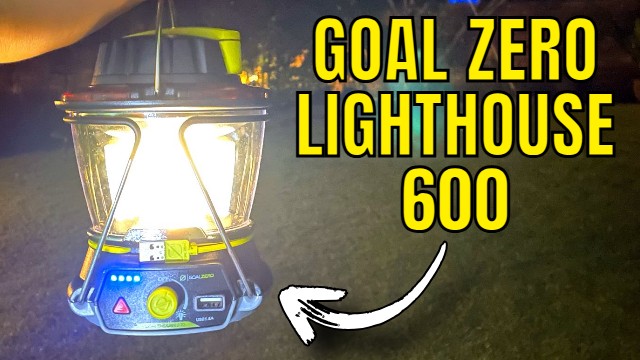
Goal Zero Lighthouse 600
Test scorecard
Goal Zero Lighthouse 600
6.8out of 10
Brightness10
Run-Time6.5
Features6
Ease of Use7.3
Durability5.7
Portability4
Key info
- Max lumen output985 lumens
- Max run time355 hours
- Battery capacity5,200 mAh
- Charge time6.5 hours (via USB)
- IPX ratingNone
- Weight19.8 ounces
- Packed size4.8 x 4.3 x 6.3 inches
Pros
- Extremely bright
- Largest shine distance and lighting area
- Directional lighting modes
- Dynamo hand crank
Cons
- Run-time on brightest setting is short
- Not waterproof
TL;DR
If you’re looking for a camping lantern with an insanely bright light, the Goal Zero Lighthouse 600 is the best camping lantern for your camping trips.
It has continuous dimming over a superb range of brightness settings, ranging from 2 lumens, up to a massive, whopping, 985 lumens. This is the brightest light of all the lanterns in this review.
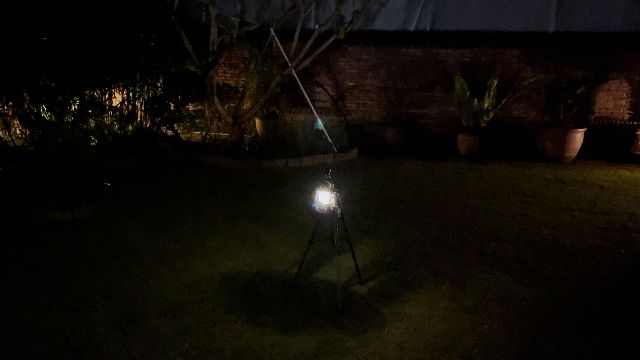
On the max brightness, it has a shine radius of 13.3 feet, which is also a huge lighting area of 556 square feet.
That’s the size of a studio apartment, a 37-person tent, or a small campsite. There’s no other camping lantern in this review that can come close to that.

However, the run-time on this mode is only 2.5 hours, so just take note of that.
If you want to conserve battery, the Lighthouse 600 also has directional lighting, which halves your battery usage.

In fact, on the dimmest setting on half the lantern, it can run for a whopping 355 hours, which is quite impressive.
On top of that, the Lighthouse 600 also has a dynamo hand crank, which no other lantern in this review has. And when you crank it at 120 rounds per minute for 1 minute, you can get 10 minutes of light on low power.
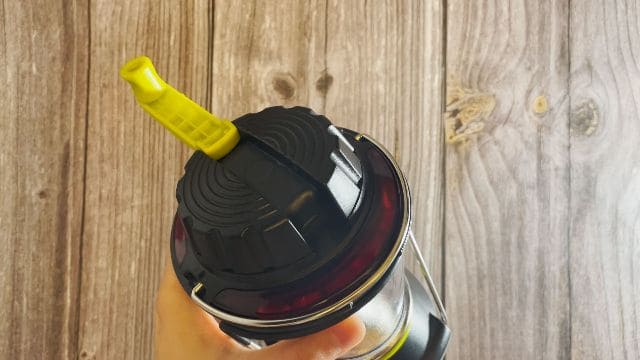
The biggest con of this lantern is its lack of a waterproof rating. When I tested my Goal Zero lanterns in the rain, water seeped in through the USB port and ended up inside the casing of the lantern.
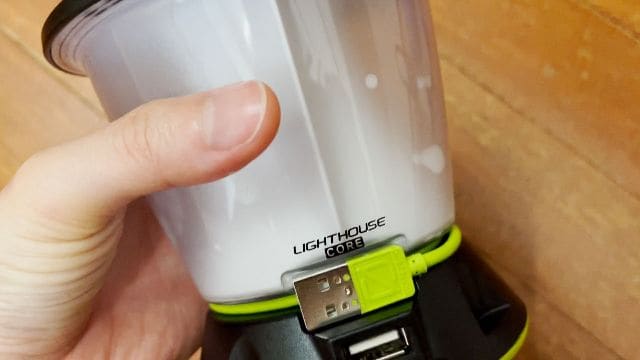
It’s still perfectly functional, but extended periods out in the rain will probably kill it.
Check out the Goal Zero Lighthouse 600:
Best Durability
Ledlenser ML6
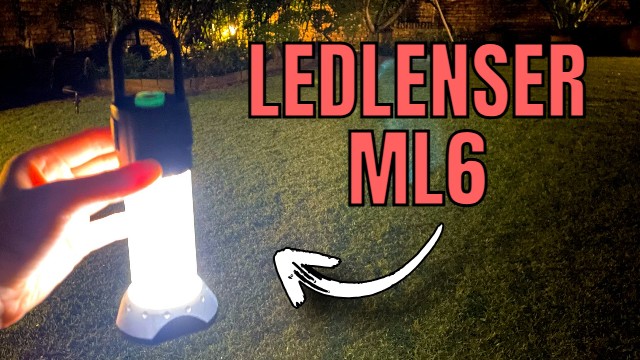
Test scorecard
Ledlenser ML6
8.3out of 10
Brightness9
Run-Time7.5
Features9
Ease of Use7.3
Durability8.3
Portability8.5
Key info
- Max lumen output720 lumens
- Max run time269 hours
- Battery capacity3,000 mAh
- Charge time4 hours (via USB)
- IPX ratingIP66
- Weight10.6 ounces
- Packed size2.3 x 2.5 x 7.3 inches
Pros
- IP66 rating — put it through any kind of rain
- Generous warranty length of 7 years
- Removable 18650 lithium-ion battery
- Fantastic range of light settings
- Extremely feature-rich
Cons
- A little pricey
- Battery life is only average
TL;DR
If you’re looking for the most durable rechargeable lantern, the best one I’ve got for you is the Ledlenser ML6 Camping Lantern — the highest durability score here, plus a 7-year warranty.
That durability starts with the ML6’s IP66 rating — one of the highest ratings of any lantern I own, and I could put it through any kind of rain.
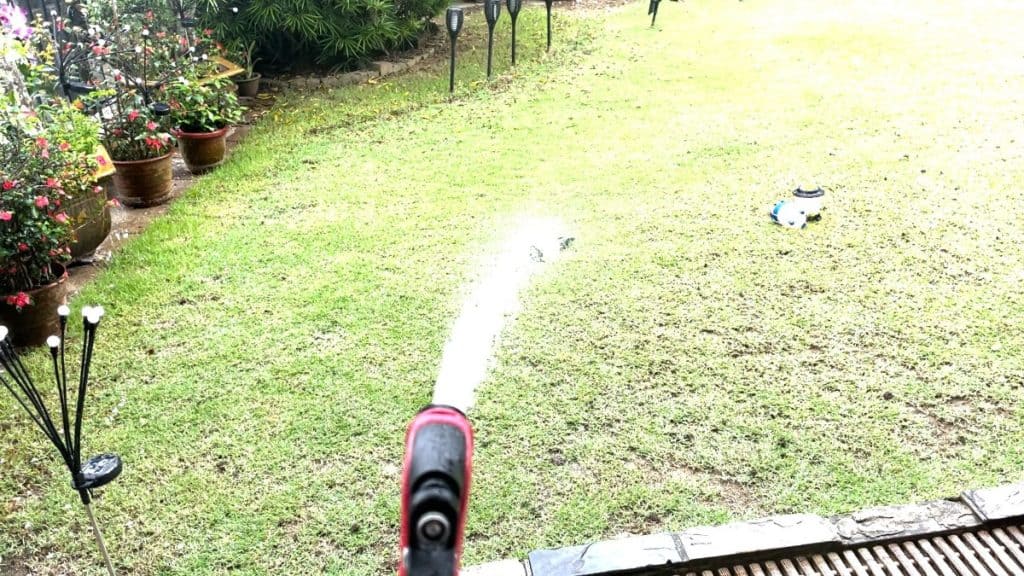
I tested it with my water hose. A little water got around the ports, but it still worked perfectly.
The ML6 also passed my drop test — I dropped it from about hand height and it kept working. No scratches, no issues at all.
Last but definitely not least, the ML6 comes with a whopping 7-year warranty — the warranty length is simply the most generous compared to every other lantern in this review:
| Camping Lantern | Warranty Length |
|---|---|
| Ledlenser ML6 | 7 years |
| Black Diamond Apollo | 3 years |
| Coleman Rugged 400 | 3 years |
| Goal Zero Lighthouse 600 | 2 years |
| Barebones Railroad | 2 years |
| LuminAID PackLite Titan | 1 year |
| BioLite AlpenGlow 500 | 1 year |
| BioLite Luci Charge 360 | 1 year |
The warranty lengths of some of the rechargeable lanterns I tested for this review.
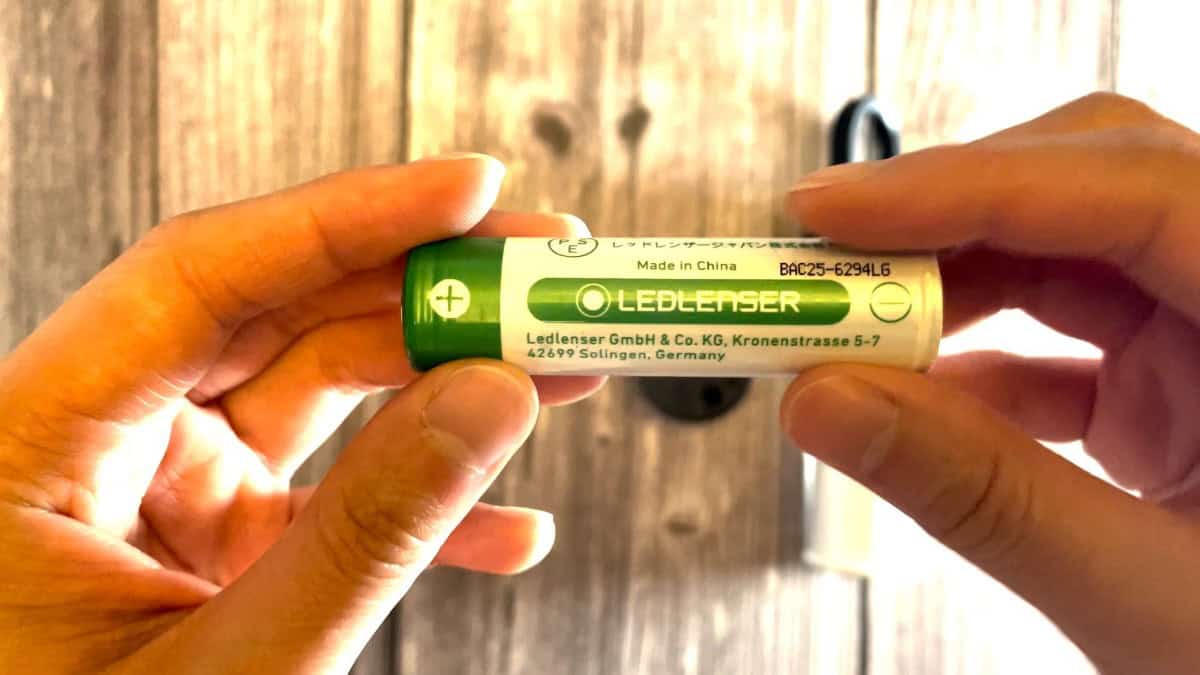
And it’s one of the rare few rechargeable lanterns that actually comes with a removable 18650 lithium-ion battery. (Only this and the Barebones have removable batteries.) So, you can easily change out the battery over the years, instead of changing out the entire lantern.
Durability aside, the ML6 is still a fantastic light. It has its fantastic range of brightness settings, from a perfect 0-lumen nightlight, to a whopping 720-lumen boost mode with a bright white light.
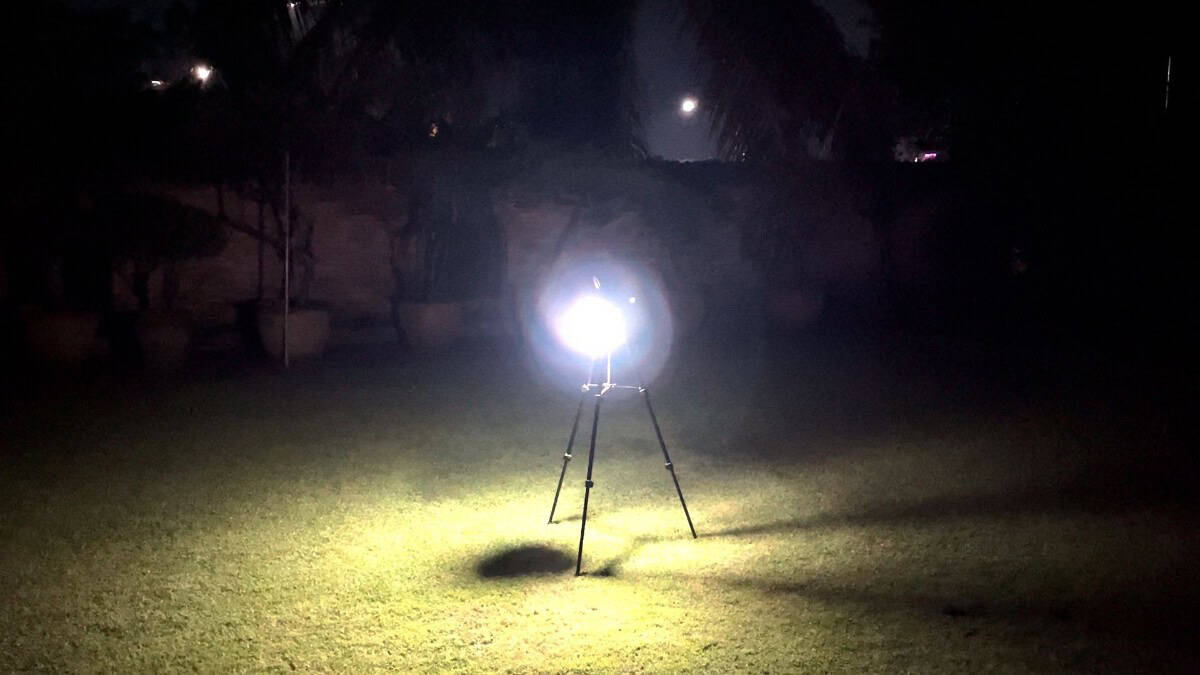
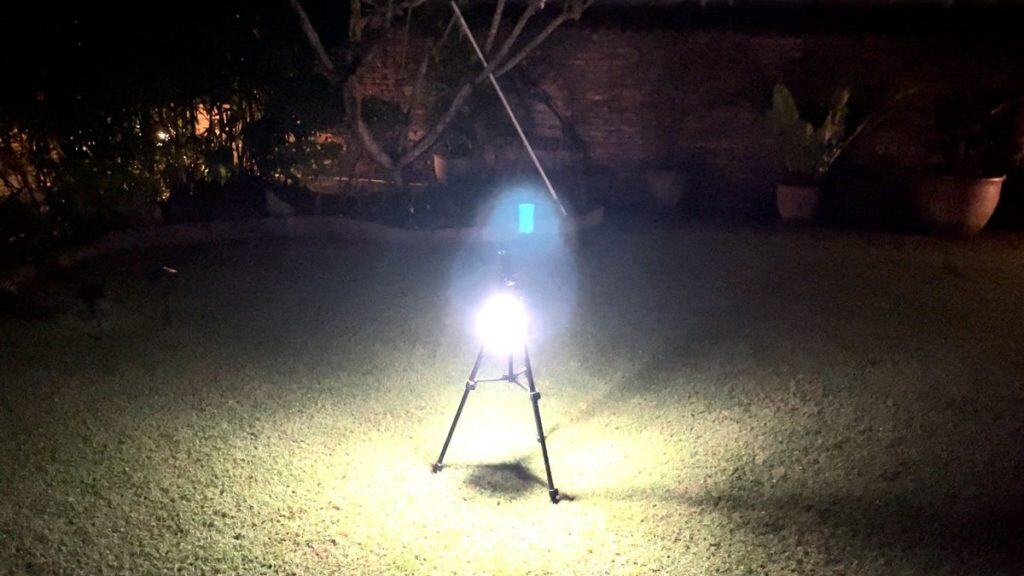
It has continuous dimming too, so you can literally pick any light setting that suits you best, unlike other lanterns that have discrete levels of adjustment instead (like the PackLite Titan).
On top of that, it also has a red light mode, a breathe mode, a strobe mode, and an SOS mode. The strobe white is the best emergency mode I’ve seen on a camping light.
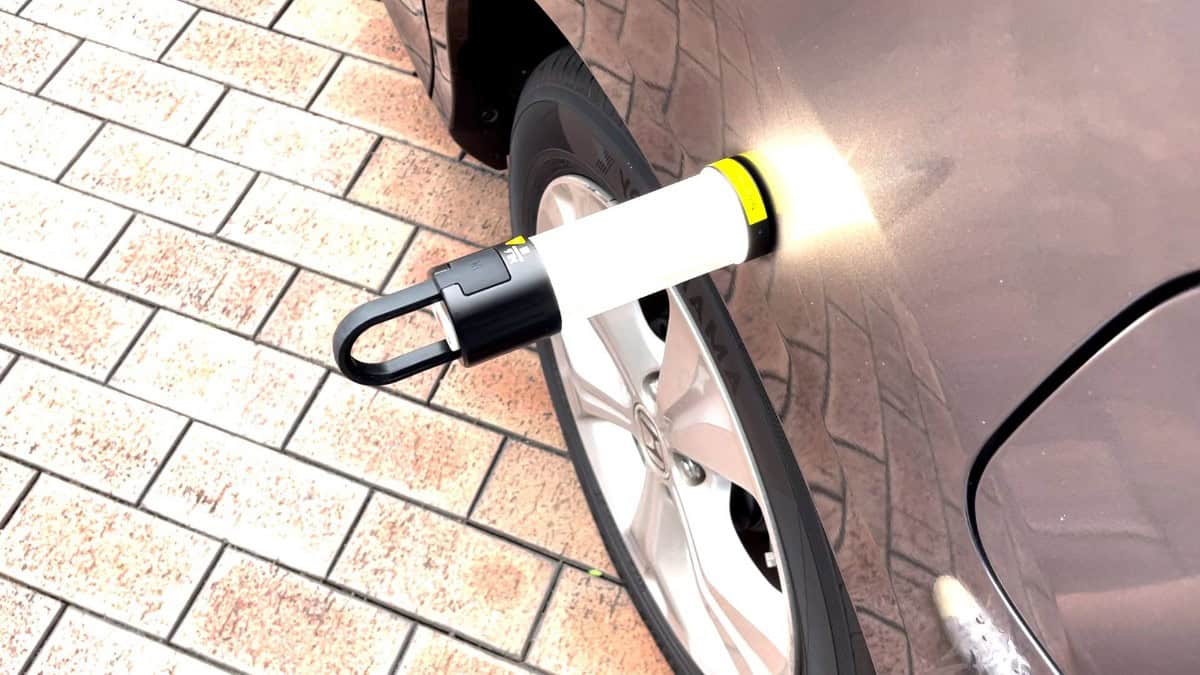
In terms of physical features, the Ledlenser ML6 is incredibly feature-rich, and it’s complete with:
- 2 hooks
- Magnetic base
- Tripod thread
- Battery indicator lights
- Glow-in-the-dark ring
Because of everything you get, it is a little bit on the expensive side, second only to the Barebones Railroad. But I still think it’s well worth the money.
I also think that the battery life can be more impressive, instead of just 3,000 mAh. That gives my iPhone 12 only a 59% charge, plus 76.5 hours of leftover light on the dimmest setting. That’s not bad, but it’s not the best.
Check out the Ledlenser ML6:
Best Budget Pick
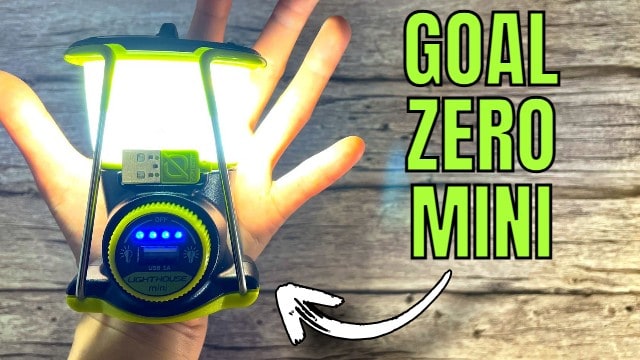
Goal Zero Lighthouse Mini
Test scorecard
Goal Zero Lighthouse Mini
6.8out of 10
Brightness7.7
Run-Time8
Features4
Ease of Use7.7
Durability5.7
Portability9.5
Key info
- Max lumen output530 lumens
- Max run time616 hours
- Battery capacity3,200 mAh
- Charge time5 hours (via USB)
- IPX ratingNone
- Weight8.0 ounces
- Packed size2.9 x 2.9 x 4.0 inches
Pros
- Very affordable for a good quality lantern
- Compact and lightweight
- Relatively feature-rich
Cons
- Not waterproof
- Average in all other tests
TL;DR
If you’re looking for a decent performing lantern on a budget, the best pick I have for you is the Goal Zero Lighthouse Mini.
It’s half the price of every lantern above, like the Ledlenser, AlpenGlow, Titan, and Lighthouse 600.
On top of that, it’s one of the more compact camping lanterns in this review (as portable and lightweight as any solar lantern), making it perfect for not just camping but also shorter backpacking trips.

The Lighthouse Mini is also incredibly feature rich. It features a continuous adjustment brightness from 0-lumen nightlight to its 530-lumen brightest setting.

On the 0-lumen nightlight setting, and on half the lantern (it has directional lighting too!), the Mini can run for a whopping 616 hours.

It’s also complete with:
- Adjustable legs
- The legs can act as a hook
- A hook at the top
- A magnetic base
- A tripod thread


One feature it doesn’t have is waterproofing — water will seep through the exposed USB port when left out in the rain.
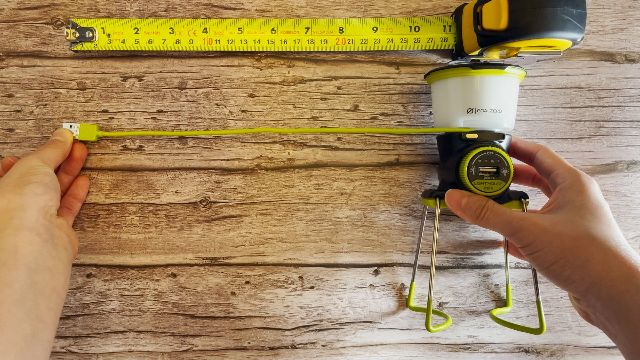
Apart from affordability and features, the Lighthouse Mini performs only average in all the other tests (like battery life, etc.), so just take note of that. Nevertheless, this Lighthouse Mini is a fantastic value for money pick.
Check out the Goal Zero Lighthouse Mini:
Best Vintage Lantern
Barebones Railroad
Test scorecard
Barebones Railroad
5.8out of 10
Brightness8
Run-Time9.5
Features3
Ease of Use5.7
Durability5.3
Portability3
Key info
- Max lumen output382 lumens
- Max run time522 hours
- Battery capacity4,400 mAh
- Charge time7.75 hours (via USB)
- IPX ratingNone
- Weight30.0 ounces
- Packed size6.5 x 6.5 x 9.3 inches
Pros
- Beautiful aesthetic
- Removable rechargeable battery
- Uses a USB-C cable
Cons
- Not waterproof
- No USB output and other features
TL;DR
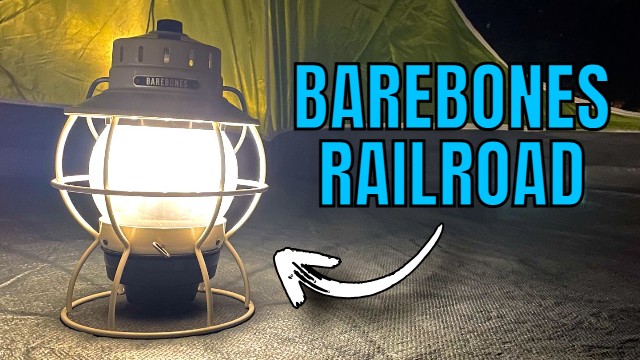
If you’re looking for a vintage-looking or traditional camping lantern, the best one I’ve got for you is the Barebones Railroad Lantern.
The biggest pro about this camping lantern is its beautiful aesthetic. It definitely looks like a Union Pacific lantern, just upgraded a hundred times over.
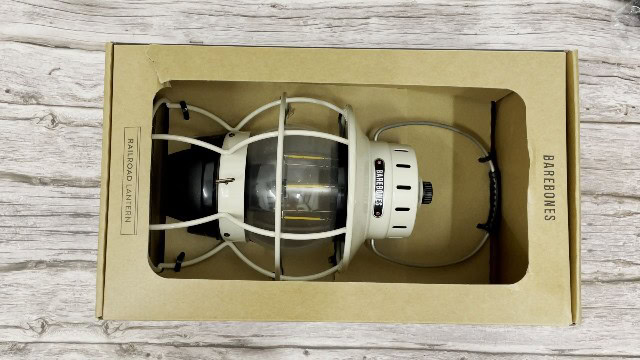
If this aesthetic is what you’re looking for, this is the best out there.
It also uses a USB-C cable for charging (unlike most other lanterns here that use micro-USB), and comes with a replaceable battery that’s proprietary to Barebones:

However, if you’re not looking for a vintage-type lantern, I’d recommend not going for this because it lacks a bunch of features, like:
- No phone charger capability
- No emergency lights
- Not waterproof
Check out the Barebones Railroad:
Everything else I tested
The Rest of the Best
Above are the 6 recommended camping lanterns. Here are 6 more that I bought and tested, but just didn’t make the cut:
Solar Lanterns
- BioLite Luci Charge 360: The Luci 360 is my runner-up solar lantern pick, if the LuminAID Titan is out of your budget. It’s also slightly lighter and more waterproof. Read my full review →
- LuminAID PackLite Max: The Titan beats this in every way, except for weight. Read my full review →
- BioLite Luci Original: The light was too cool and too glaring and it made camping painful. I prefer a matte finish and warm light. Read my full review →
Standard Lanterns
- Black Diamond Apollo: I’ve had my Apollo for 5 years now. While it’s a perfectly functional and hardy lantern, and it was a great pick 5 years ago, it’s now been overtaken by other winners (like the Ledlenser and BioLite). Read my full review →
- Goal Zero Lighthouse Core: Not a terrible lantern, but I don’t see why I’d go for this when I have so many better ones above. Read my full review →
- Coleman Rugged Rechargeable 400: Again, not a terrible lantern, but it got demolished by every other lantern above. Read my full review →
The 6 testsHow I Tested My Rechargeable Camping Lanterns
I tested each of my best camping lanterns for brightness, run time, features, ease of use, durability, and portability. Here are the results from each of the tests.
Brightness
For this first brightness test, I looked at the number of lumens, the brightness adjustment, and the lighting area.
I used a lux meter to manually record how many lumens each lantern gave out, regardless of its marketed specifications. I also took note of whether the brightness adjustment was continuous, or in discrete levels:
| Camping Lantern | Max Lumens | Min Lumens | Adjustment |
|---|---|---|---|
| Goal Zero 600 winner | 985 | 2 | Continuous |
| Ledlenser ML6 | 720 | 0 | Continuous |
| BioLite AlpenGlow 500 | 690 | 7 | Continuous |
| Coleman Rugged | 675 | 178 | 2 levels |
| Goal Zero Mini | 530 | 0 | Continuous |
| Goal Zero Core | 382 | 0 | Continuous |
| Barebones Railroad | 382 | 0 | Continuous |
| Black Diamond Apollo | 362 | 23 | Continuous |
| BioLite Luci 360 | 330 | 21 | 3 levels |
| LuminAID PackLite Titan | 316 | 1 | 4 levels |
| LuminAID PackLite Max | 196 | 21 | 4 levels |
| BioLite Luci Original | 34 | 0 | 3 levels |
After that, I used the same lux meter to measure the shine radius of each lantern, then used the radius to calculate the lighting area and measured it against actual tent sizes:
| Camping Lantern | Shine Radius (ft) | Lighting Area (sq. ft.) | Tent Size |
|---|---|---|---|
| Goal Zero 600 winner | 13.3 | 556 | 37-person |
| BioLite AlpenGlow 500 | 10.8 | 366 | 24-person |
| Barebones Railroad | 8.6 | 232 | 14-person |
| Coleman Rugged 400 | 8.6 | 232 | 14-person |
| LuminAID PackLite Titan | 8.2 | 211 | 13-person |
| Ledlenser ML6 | 7.8 | 191 | 12-person |
| Black Diamond Apollo | 7.3 | 167 | 11-person |
| Goal Zero Mini | 7.0 | 154 | 10-person |
| Goal Zero Core | 6.5 | 133 | 9-person |
| LuminAID PackLite Max | 6.0 | 113 | 8-person |
| BioLite Luci 360 | 6.0 | 113 | 8-person |
| BioLite Luci Original | 2.2 | 15 | 1-person |
*Obviously, there’s no such thing as a 37-person or even a 24-person tent, but it gives you a decent idea of how big a lighting area the first 2 lanterns have.
Run Time
The run-time test is just how long each of these lanterns can last on a single charge. I gave each lantern a full charge, then set them aside while timing their run-times with a stopwatch.
First, the maximum run-time — the run-time on the dimmest brightness setting:
| Camping Lantern | Max Run-Time (hours) |
|---|---|
| Goal Zero Mini winner | 616 |
| Barebones Railroad | 522 |
| Goal Zero 600 | 355 |
| Ledlenser ML6 | 269 |
| Goal Zero Core | 259 |
| LuminAID PackLite Titan | 250 |
| BioLite AlpenGlow 500 | 203 |
| Black Diamond Apollo | 189 |
| BioLite Luci 360 | 54 |
| BioLite Luci Original | 51 |
| LuminAID PackLite Max | 39 |
| Coleman Rugged 400 | 21 |
Then, the minimum run-time — the run-time on the maximum brightness setting:
| Camping Lantern | Min Run-Time (hours) |
|---|---|
| Black Diamond Apollo winner | 20.0 |
| Barebones Railroad | 5.25 |
| BioLite AlpenGlow 500 | 5.25 |
| BioLite Luci Original | 5.25 |
| LuminAID PackLite Titan | 5.0 |
| LuminAID PackLite Max | 4.75 |
| Coleman Rugged 400 | 4.25 |
| Ledlenser ML6 | 4.0 |
| BioLite Luci 360 | 3.75 |
| Goal Zero Core | 3.5 |
| Goal Zero Mini | 3.5 |
| Goal Zero 600 | 2.5 |
Features
For the features test, I looked at the number of colors, emergency modes, directional lighting, candle flicker, and glow-in-the-dark rings. Here’s everything you need to know in a neat table:
| Camping Lantern | No. of Colors | Strobe/SOS | Directional | Candle | Glowing |
|---|---|---|---|---|---|
| BioLite AlpenGlow winner | 7+ | No | Yes | Yes | No |
| Ledlenser ML6 | 2 | Yes | No | No | Yes |
| LuminAID PackLite Titan | 2 | Yes | No | No | No |
| Black Diamond Apollo | 1 | Yes | No | No | No |
| Goal Zero 600 | 1 | Yes | Yes | No | No |
| BioLite Luci Original | 1 | Yes | No | No | No |
| BioLite Luci 360 | 1 | Yes | No | No | No |
| LuminAID PackLite Max | 1 | Yes | No | No | No |
| Goal Zero Core | 1 | No | Yes | No | No |
| Goal Zero Mini | 1 | No | Yes | No | No |
| Barebones Railroad | 1 | No | No | No | No |
| Coleman Rugged 400 | 1 | No | No | No | No |
Ease of Use
For the ease of use test, I looked at power sources, mobile charging, battery level lights, handles/hooks, magnetic bases, and legs or tripod threads.
For each camping lantern’s power sources, here are the results:
| Camping Lantern | USB | Solar | Batteries |
|---|---|---|---|
| Black Diamond Apollo winner | Yes | No | Yes |
| BioLite Luci Original | Yes | Yes | No |
| BioLite Luci 360 | Yes | Yes | No |
| LuminAID PackLite Titan | Yes | Yes | No |
| LuminAID PackLite Max | Yes | Yes | No |
| Goal Zero Core | Yes | No | No |
| Goal Zero Mini | Yes | No | No |
| Goal Zero 600 | Yes | No | No |
| Ledlenser ML6 | Yes | No | No |
| Barebones Railroad | Yes | No | No |
| BioLite AlpenGlow 500 | Yes | No | No |
| Coleman Rugged 400 | Yes | No | No |
*I like having 2 or more power sources for a more reliable light source. All of the camping lanterns here are electric lanterns with rechargeable batteries — no gas powered lanterns (like propane lanterns) here.
For the mobile charging segment, I looked at the internal battery capacity, and used a full charge of each camping lantern to charge up my iPhone 12 as a power bank:
| Camping Lantern | Capacity (mAh) | iPhone 12 | No. of Charges | Leftover Light |
|---|---|---|---|---|
| BioLite AlpenGlow 500 winner | 6,400 | 141% | 1.8 | 6 hours |
| Goal Zero 600 | 5,200 | 124% | 1.6 | None |
| Goal Zero Core | 4,400 | 76% | 1.0 | 40 hours |
| BioLite Luci 360 | 4,000 | 97% | 1.2 | None |
| LuminAID PackLite Titan | 4,000 | 82% | 1.0 | 15 hours |
| Coleman Rugged 400 | 3,500 | 79% | 1.0 | 3.5 hours |
| Goal Zero Mini | 3,200 | 74% | 0.9 | None |
| Ledlenser ML6 | 3,000 | 59% | 0.7 | 76.5 hours |
| Black Diamond Apollo | 2,600 | 55% | 0.7 | None |
| BioLite Luci Original | 2,000 | 49% | 0.6 | None |
| LuminAID PackLite Max | 2,000 | 48% | 0.6 | 4 hours |
| Barebones Railroad | 0 | 0 | 0 | 0 |
And here are the remaining ease of use segments in one table:
| Camping Lantern | Battery Lights | Handles/ Hooks | Magnetic | Legs | Tripod |
|---|---|---|---|---|---|
| Goal Zero Mini winner | Yes | 2 | Yes | Yes | Yes |
| Ledlenser ML6 | Yes | 2 | Yes | No | Yes |
| BioLite Luci 360 | Yes | 2 | No | No | No |
| BioLite Luci Original | Yes | 2 | No | No | No |
| Goal Zero Core | Yes | 1 | Yes | No | No |
| Black Diamond Apollo | Yes | 1 | No | Yes | No |
| Goal Zero 600 | Yes | 1 | No | Yes | No |
| BioLite AlpenGlow 500 | Yes | 1 | No | No | No |
| LuminAID PackLite Titan | Yes | 1 | No | No | No |
| LuminAID PackLite Max | Yes | 1 | No | No | No |
| Barebones Railroad | Yes | 1 | No | No | No |
| Coleman Rugged 400 | No | 1 | No | No | No |
Durability
For durability, I looked at 3 main mini-tests: IP rating and waterproofing, drop-proofing, and warranty length.
| Camping Lantern | IP Rating | Drop-Proofing | Warranty Length |
|---|---|---|---|
| Ledlenser ML6 winner | IP66 | Hand | 7 years |
| BioLite Luci Original | IP67 | Overhead | 1 year |
| BioLite Luci 360 | IP67 | Overhead | 1 year |
| LuminAID PackLite Max | IP67 | Overhead | 1 year |
| LuminAID PackLite Titan | IP67 | Overhead | 1 year |
| Black Diamond Apollo | IPX4 | Hand | 3 years |
| BioLite AlpenGlow | IPX4 | Hand | 1 year |
| Coleman Rugged | IPX4 | Hand | 3 years |
| Goal Zero Mini | None | Hand | 2 years |
| Goal Zero 600 | None | Hand | 2 years |
| Goal Zero Core | None | Hand | 2 years |
| Barebones Railroad | None | Hand | 2 years |
Portability
And for portability, I simply looked at weight and packed size:
| Camping Lantern | Weight (oz) | Packed Size (in) |
|---|---|---|
| BioLite Luci Original winner | 6.1 | 5.1 x 5.1 x 1.3 |
| LuminAID PackLite Max | 7.7 | 5.9 x 5.9 x 1.0 |
| Goal Zero Mini | 8.0 | 2.9 x 2.9 x 4.0 |
| BioLite Luci 360 | 10.2 | 5.9 x 5.9 x 1.5 |
| Black Diamond Apollo | 10.2 | 3.3 x 3.3 x 4.5 |
| Ledlenser ML6 | 10.6 | 2.3 x 2.5 x 7.3 |
| LuminAID PackLite Titan | 11.9 | 5.8 x 5.8 x 1.1 |
| Goal Zero Core | 12.7 | 4.3 x 4.3 x 4.8 |
| BioLite AlpenGlow | 14.5 | 3.6 x 3.6 x 5.4 |
| Goal Zero 600 | 19.8 | 4.8 x 4.3 x 6.3 |
| Coleman Rugged | 21.8 | 5.0 x 5.5 x 10.5 |
| Barebones Railroad | 30.0 | 6.5 x 6.5 x 9.3 |
All Test Scores
The scoreboard
Based on all the quantitative data above, here are the scores of all the lanterns in this review.
- Ledlenser ML6Best Durability8.3
- BioLite AlpenGlow 500Most Feature-Rich8.2
- LuminAID PackLite TitanBest Solar Lantern7.9
- Black Diamond Apollo7.1
- Goal Zero Lighthouse 600Brightest Lantern6.8
- Goal Zero Lighthouse MiniBest Budget Pick6.8
- BioLite Luci Charge 3606.6
- LuminAID PackLite Max6.6
- BioLite Luci Original6.5
- Goal Zero Lighthouse Core6.2
- Barebones RailroadBest Vintage Lantern5.8
- Coleman Rugged 4005.1
Highlighted rows = the 6 award winners reviewed above.
See every sub-score and test weightage

The methodWhy You Can Trust Me
$700
The first part is buying all 12 lanterns in this review with my own money — no free or sponsored gear posts, ever.
6 months
Next, I tested each one of them over months — this review took 6 months to produce!
4 weeks
After that, I spent about 4 weeks analyzing the data and comparing all the lanterns to each other, to find out which is the best possible.
30,000+
I also run a YouTube channel with over 30,000 subscribers that focuses just on reviewing camping gear. It’s my jam 🙂
If you’re still having trouble picking the best camping lantern for your next camping trip, feel free to reach out to me via the comments on my YouTube channel.
Every figure above is from my own testing – measured by hand, bought with my own money.